

Care and Travel Planning
Build a meaningful comparison by separating the proposed procedure, included services, travel expenses and financial consequences of a changed plan.
A search result can help you find an option to investigate, but its price is not yet your budget. A procedure estimate, surgical package and travel-inclusive proposal may describe different purchases. The useful next step is to turn each proposal into the same set of cost categories, leaving unknown amounts visibly marked rather than treating them as free.
Match the procedure scope before comparing prices
Two proposals are comparable only when they describe sufficiently similar clinical work. If one covers a single procedure and another combines several, the price difference cannot tell you which offers better value.
Start with the clinician's named procedure, treatment areas and proposed stages. A label such as “body contouring” or “body lift package” is not detailed enough by itself. Clarify whether additional procedures are proposed, excluded or left for assessment. Treatment suitability and whether procedures should be combined belong with the qualified treating clinician.
Use the resulting scope as the heading of your comparison. If clinicians recommend different plans, resolve that clinical difference before trying to equalize their prices. Do not add procedures merely to make a package look competitive.
PlacidWay's plastic-surgery cost guide also distinguishes procedure-only pricing from fuller packages. That distinction is useful for organizing proposals, but a published guide does not establish your treatment plan or a provider's current offer.
Choose quote clarity, not a particular package format
An itemized proposal and a bundle can both be useful. Prefer whichever makes the complete purchase and responsible suppliers clear. A bundle with explicit inclusions may simplify budgeting; separate charges may make individual responsibilities easier to understand.
For each proposal, use this compact cost checklist:
- Procedure and treating clinician's fee.
- Anesthesia and facility charges.
- Tests, medications, garments or materials specified in the plan.
- Clinical follow-up, including its duration and exclusions.
- Lodging, transportation and other travel services.
Mark each category as included, separately priced, excluded or not yet specified. Also identify who supplies it and who invoices you. “Included” should describe a specific service, not simply a promise of support.
Calculate the comparable total from quoted care charges plus known required exclusions and planned travel expenses. List items without confirmed prices separately so you can see what the total does not yet cover. A blank anesthesia line is not a zero-cost anesthesia line, and a travel-inclusive label does not establish how many lodging nights or which journeys are covered.
| Proposal format | Useful when | Trade-off | Not established without explicit terms |
|---|---|---|---|
| Procedure-only estimate | You are researching a clearly named procedure. | Not yet a complete care or trip budget. | Excluded charges and who pays them. |
| Itemized care quote | You want to see individual services and suppliers. | Separate invoices may need separate terms. | Unlisted services and later changes. |
| Bundled care and travel proposal | Its specified services fit your actual plan. | Convenience does not establish flexibility. | Extra nights, payer responsibility and refunds. |
Work through a lower headline quote before choosing it
A lower headline amount deserves further comparison, not automatic rejection or acceptance. The deciding issue is whether the difference remains after both proposals cover the same needs.
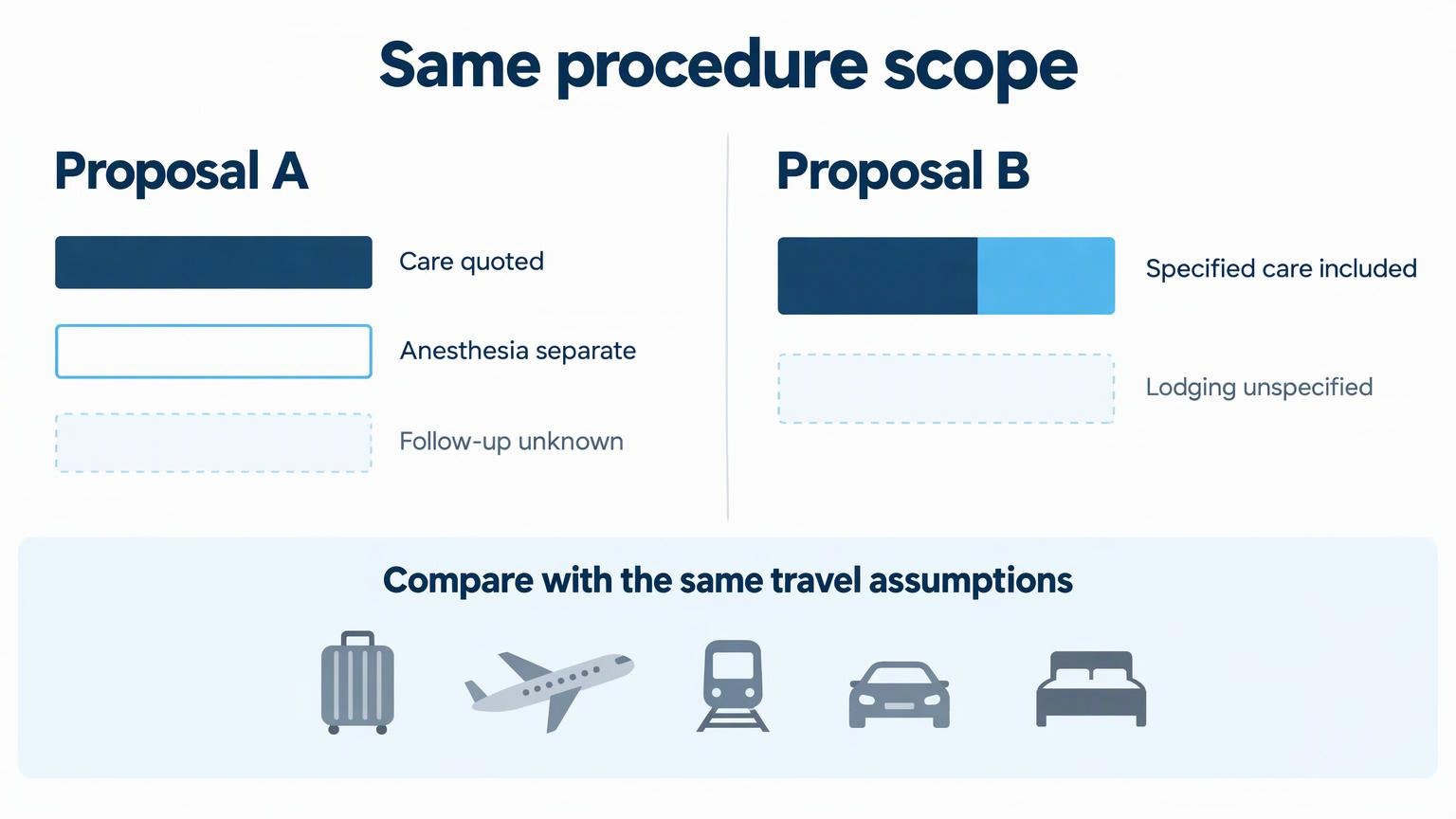
Say you receive proposals for the same clinician-defined procedure scope. One lists a lower surgical amount but prices anesthesia separately and leaves follow-up charges unanswered. The other includes anesthesia, facility use and specified follow-up visits, but says nothing about lodging.
Your budget must cover both care and the stay. The first proposal cannot yet be ranked as cheaper because a required care cost is still unknown. The second cannot be called a complete trip price because lodging is missing.
Obtain the missing care charges from the responsible provider through its established quote process, then add the same travel assumptions to both comparisons. If the first remains less expensive and its responsibilities are clear, it may be the better financial fit. If missing prices prevent a dependable budget, the more complete proposal is easier to evaluate. Neither result establishes clinical suitability or provider quality.
Let the follow-up plan shape the travel budget
Follow-up affects cost through both clinical services and the itinerary needed to attend them. Establish the treating clinician's follow-up plan before treating a departure date or lodging reservation as settled.
The useful details are who conducts follow-up, which visits are included, where they occur and how further assessments are charged. Flight timing and length of stay depend on the clinician and the actual care plan. A package's lodging allowance is not individual clearance to fly.
Separate accommodation from care. A hotel room provides lodging; it does not establish nursing services, wound care or clinical supervision. Likewise, help changing a flight is a logistics task, not evidence of clinical support.
Plan the handoff after returning home as well: identify the treating provider's follow-up contact, how records can be obtained and whether any proposed local follow-up has actually been arranged. Do not assume a clinician at home has accepted responsibility. These details help you identify potential additional consultations and travel needs without inventing a fixed recovery schedule.

Separate payment terms, changed bookings and insurance
A planned total does not tell you what happens when the plan changes. Review the care provider's payment terms, each travel supplier's contract and any insurance policy as separate documents.
Before paying, identify the contracting party, currency, deposit, balance deadline and cancellation or refund conditions. Establish what happens if clinical assessment changes or rules out the proposed procedure. Do not assume a deposit is refundable because surgery has not occurred, or that a revised plan keeps the original price.
Suppose the treating clinician advises a longer stay. An extra hotel night remains a lodging service, even though clinical advice caused the change. That advice does not determine who pays, whether the night is included or what hotel change terms apply. You cannot establish those details unless the applicable contracts specify them.
Similarly, changing a flight raises the airline or booking supplier's fare and change conditions. Insurance is a separate question: coverage for cancellation, additional medical expenses or evacuation depends on the actual policy, exclusions and claim conditions. A supplier refund and an insurance reimbursement are not interchangeable.
Use the terms to test affordability before committing money: could you still fund the trip if a booked service changed without a refund or covered claim?
Prepare a comparison file and use the appropriate handoff
Prepare your comparison privately, then direct each unanswered question to the party responsible for it. The treating clinician answers scope and follow-up questions; the contracting supplier explains its prices and terms; a confirmed travel contact can discuss ordinary itinerary details later.
Keep the provider's full name, proposed facility, dated proposal and terms together. Request evidence of current professional credentials and facility authorization for the proposed work, and check that the identities match the people and location in your proposal. A low price, polished website or package description cannot resolve those identity questions.
We publish travel and consultation-planning guidance at Hospitality Cancun. Use that guidance to organize your research, while obtaining clinical recommendations and treatment quotes directly from the responsible provider. For a Cancun visit, the practical next decision is whether your provider-defined care plan leaves enough information to plan lodging and travel, or whether a clinical question still needs resolution first.
Frequently Asked Questions
How should I compare quotes in different currencies?
Preserve each supplier's original currency and convert the amounts using the same dated exchange-rate reference for your private comparison. Establish the currency actually charged and any applicable payment or conversion charges before paying. A converted planning figure is not a promise of the final amount billed.
Can I compare a nonsurgical offer with a surgical quote?
Not as interchangeable purchases based on price alone. They describe different proposed services. First have the qualified treating clinician explain whether either approach addresses your goals and is suitable for you. Then compare the full course proposed, rather than placing a session price beside a surgical package total.
Do before-and-after photos justify paying more?
Photos alone do not establish provider credentials, suitability for your case or what a quote includes. They also do not promise your result. If a higher-priced proposal interests you, evaluate the named provider, proposed scope, facility and responsibilities rather than using promotional images as the financial justification.
Should I include a companion in my budget?
Include companion expenses in your private budget if someone will travel with you, but do not assume their presence replaces care required by your clinician. Separate their travel and lodging from any clinical assistance specified in the plan. A companion's availability and a provider's care responsibilities are different considerations.
What belongs in the first Hospitality Cancun inquiry?
Clarify the recipient and purpose before submitting any information. The first submission allows only name, email and optional contact-method preference. Requested replies, optional marketing and referral to a specifically named provider are separate choices. Discuss travel details later; clinical records belong only in a named provider-confirmed secure channel.