

Consultation trip planning
A companion can make a consultation trip easier if you define the role clearly and do not treat that person as clinical backup.
Bringing someone sounds reassuring, but the real planning question is what that person will do. A workable companion plan separates routine travel help from clinical responsibilities and tests what happens if flights change, recovery takes longer, or the companion must return home on schedule. This guide stays on travel planning rather than treatment advice. If you later use a general contact route for planning help, first make sure you know who will receive it and that the purpose is travel planning before submitting any information.
A companion is most useful for logistics, routine support, and keeping the trip manageable
A companion is most helpful with the parts of the trip that become tiring when you are focused on a consultation or recovery. Think airport navigation, reservations, check-in and check-out, pacing the day, picking up meals or permitted supplies, and listening during important conversations.
That kind of help reduces mistakes and decision fatigue. A good companion may notice you are too tired to compare transport options, manage luggage, and track paperwork at the same time.
The value is not medical skill. It is reliability, calm, and keeping ordinary travel tasks manageable.

A companion does not replace clinical monitoring, medication decisions, or urgent care judgment
Practical support ends where medical judgment begins. A companion can watch how you feel, remind you of written instructions, help you rest, and call the clinic or emergency services if something seems wrong. They should not interpret symptoms, change medicines, improvise care, or decide you are fit to fly.
A quick test helps. If the task is about comfort, organization, memory, transport, or communication, a companion can often do it. If it requires diagnosis, risk assessment, treatment decisions, or clearance for the next step, it belongs to the treating clinician or separately arranged professional care.
The CDC advises arranging follow-up before travel and notes that complications after you return can be expensive.
| Situation | Best setup | Reason | Trade-off |
|---|---|---|---|
| You mainly want airport help, company, and a second listener | Shared outbound travel; same hotel if preferred; separate returns optional | Most support is needed on arrival and at the consultation | The companion may miss later discussions if timing changes |
| You may need help with daily tasks after the visit, but timing is unclear | Keep the patient’s return flexible instead of tying it to the companion’s date | This avoids forcing an early return | It can cost more or take more coordination |
| The companion must leave on a set date | Use separate returns and define who takes over | A planned handoff is more realistic | You need a real backup or separately arranged paid support |
| No reliable backup exists if the stay gets longer | Delay booking or simplify the trip until support is in place | This avoids being stranded between care needs and travel deadlines | The trip may happen later |
Separate bookings can work well if they protect the patient’s plan instead of forcing both travelers into one schedule
You do not need to book every part together. Separate arrangements are often better when the companion has a different schedule or return date. Build the trip around the patient’s likely needs first.
Flights: separate returns are often easier than changing two tickets
If the companion has to be home on a set date, separate return flights are often simplest. The patient keeps flexibility, and the companion is not committed to extra nights that may not be needed. Shared outbound travel can still make sense for arrival-day support.
Rooms: choose the setup that supports rest and independence
One room is simplest when the companion is helping with routine tasks and you want someone nearby. Separate rooms can work better for privacy, sleep, different arrival times, or a planned handoff. Choose the setup that supports rest, not appearances.
Consent: a companion is not automatically entitled to updates or decisions
Traveling with you, or paying for part of the trip, does not automatically give a companion access to medical updates or decision-making authority. Ask the treating provider what permissions or documents are needed if you want that person included.
If your companion cannot extend the trip, the real question is whether the plan still works after that person leaves
If your companion must return home on a fixed date, plan from that limit instead of treating it as a small detail. The arrangement works only if you know who handles the next steps if your timeline changes.
For example, imagine your companion can come to Cancun but must be back at work after three nights. The clinician will confirm follow-up timing only after the consultation. Booking the same round trip for both of you is usually the weakest choice because it ties your return to the companion’s deadline. Better options are separate returns with a real handoff, or delaying the trip until support is more flexible.
Follow-up timing and clearance to fly depend on the treating clinician and your recovery plan. CDC notes that flying after surgery can increase risk.
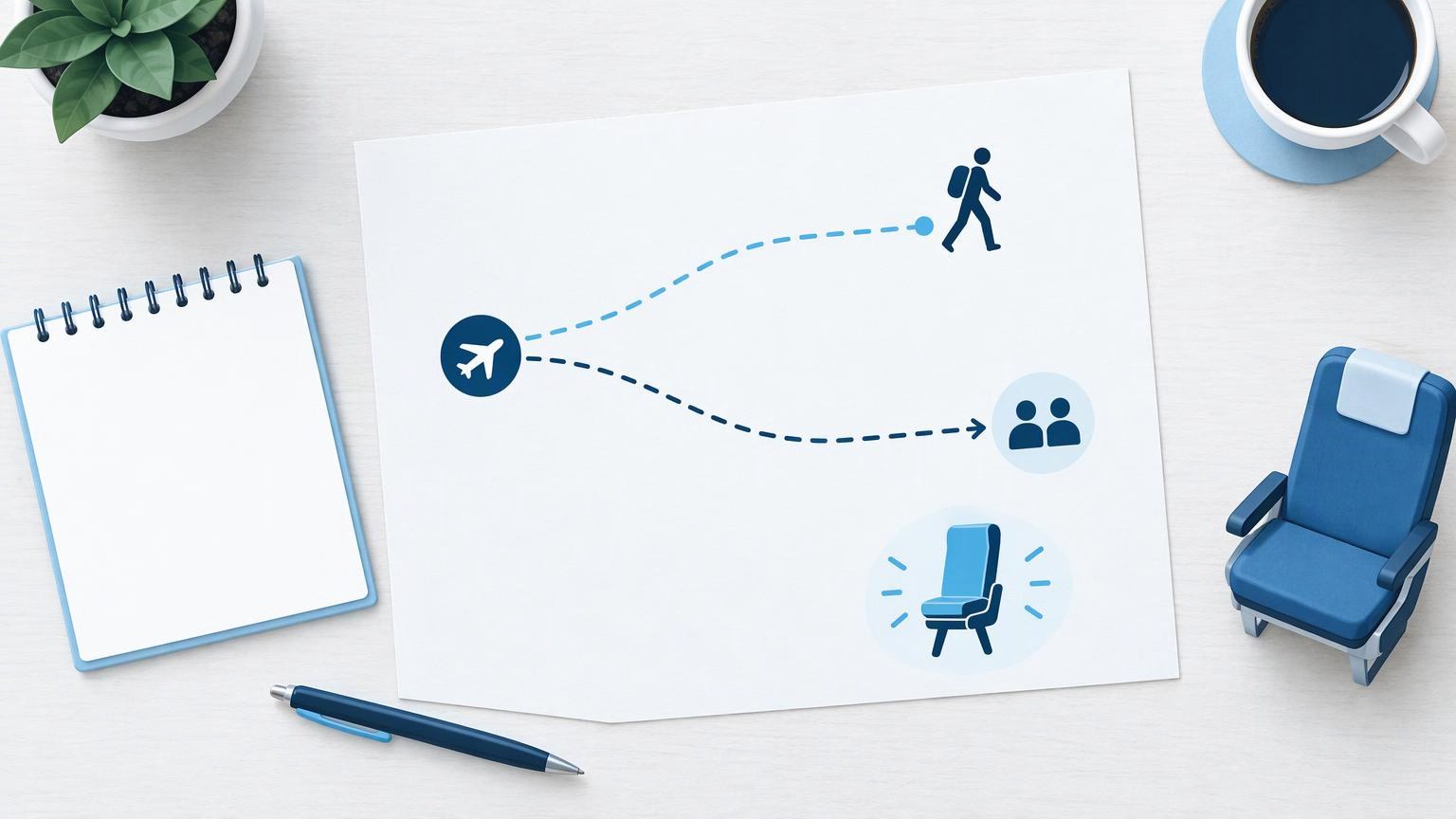
Before departure, agree one owner, one trigger, and one backup for every important non-clinical responsibility
The best pre-trip conversation is specific: which jobs are yours, which are mine, and what happens if either person cannot do them. Once those roles are clear, most companion friction drops.
Name the owner for logistics, communication, and money access
Decide who keeps reservations, handles airport choices, stores copies of confirmations, and updates family or work if plans shift. Also decide who can pay routine travel costs if the patient is resting. The U.S. Department of State notes that travelers are responsible for medical bills abroad and that payment or a deposit may be required before services are provided.
Set the trigger points before stress makes the decision for you
Agree in advance what would trigger a clinic call, longer stay, room change, new helper, or flight rebooking discussion. Also decide what happens if the companion becomes unavailable. Without named triggers and backups, you are relying on goodwill instead of a workable plan.
Frequently Asked Questions
Do I need a companion for a consultation trip to Mexico?
No. Some travelers manage a consultation trip alone. A companion matters most when you expect fatigue, unfamiliar logistics, language barriers, or help with routine tasks after the visit. The better test is how much support you may need, not the destination itself.
Can my companion be in every medical conversation?
Only if the treating provider allows it and you give the permission that provider requires. Traveling together does not automatically give a companion access to private medical information, discharge discussions, or decisions, so confirm the process before the trip if you want them included.
Should my companion carry copies of my records and medication list?
That can help on travel days. The CDC advises medical travelers to carry relevant records and a medication list. Share only what you want your companion to have, and follow the treating provider’s instructions for any clinical documents they specifically request.
Is booking separate rooms a bad sign?
No. Separate rooms can be the better choice when privacy, sleep, different flight times, or a planned handoff matter more than staying together. The question is whether the setup supports rest and routine help, not whether it looks traditional to anyone else.
How does insurance change companion planning?
Insurance does not replace a companion plan, but it changes the financial risk if the trip changes. Review what your health plan covers abroad, whether travel or medical evacuation insurance is worth considering, and who would manage logistics if plans shift.