
Dental Travel Planning
Build a record handoff that distinguishes what was planned, what was completed and what your next dentist needs to review.
A treatment proposal describes intended work. Your records should also explain what actually happened. When care crosses providers, keep those documents separate so the next dentist can identify unanswered questions without treating an estimate or invoice as a clinical summary. This guide covers the handoff, not implant suitability or recovery advice.
Choose the records that match your stage of care
For an initial consultation, start with your existing dental history, treatment notes and available imaging. If an implant is already present, expand the request to include its identification and placement records. For follow-up after restoration, include the record of completed work and the treating dentist’s instructions.
Request copies from the practices that performed the relevant care. Ask the receiving dentist to identify the records needed for their review before ordering additional tests. Gathering existing information is an administrative step; deciding whether it is sufficient for treatment belongs to that dentist.
Use the comparison below to prioritize your request. It is not a universal clinical requirement or a reason to collect every document indiscriminately. A focused packet can be easier to navigate than a large folder without dates or labels.
Keep a private list of the practices holding your records and which requests remain outstanding. That helps you follow up with the correct record holder rather than asking a travel contact to reconstruct the case.
Request identification linked to each existing implant
Ask the treating practice for any implant identification card or passport, manufacturer labels, and component details recorded in your chart. Request a record that links those details to the relevant tooth position or implant site, rather than an unmarked list of product names.
Where recorded, useful details to request include the manufacturer, system or model, dimensions, product reference and lot information. Ask for any available abutment and restoration details as well. Preserve the practice’s exact terminology and copies of labels instead of rewriting them from memory.
Pacific Prime Latin America’s dental-care guide notes that a home dentist may find an unfamiliar implant system difficult to maintain. That supports requesting identification early, but does not establish whether any particular dentist can service your implant.
If the chart provides only a brand name, label the remaining identification as unavailable. The receiving dentist should assess what can be established from the records and examination; you should not infer a component match yourself.
| Situation | Priority records | Reason | Limit |
|---|---|---|---|
| Initial implant consultation | Existing history, treatment notes, imaging and reports | Give the dentist background for assessment | Does not establish treatment suitability |
| Continuing work on an existing implant | Identification, placement notes and restoration records | Explain the existing work and recorded components | Missing identifiers need provider review |
| Follow-up after completed care | Final treatment summary and clinician’s instructions | Separate completed work from the original proposal | Does not establish another dentist’s acceptance |
Obtain imaging in a format the receiving dentist can use
Request copies of existing dental images and any associated reports, then ask the receiving practice which file formats it accepts. Do not assume a screenshot is equivalent to the available imaging files, or that new imaging is necessary simply because you are changing providers.
Begin by identifying what the record holder has: the image type, acquisition date and accompanying report, if one exists. Next, establish the receiving dentist’s requirements through their confirmed communication route. Ask the record holder for the corresponding export and any viewing instructions available with it.
Keep images and reports together, with their original dates. If you have several versions, name the folders so a reader can distinguish them without guessing which is latest. Preserve the originals rather than replacing them with edited or compressed copies.
Before the consultation, test that your own copy opens and ask the receiving practice to acknowledge whether the transfer is readable. Successful delivery means the files arrived; it does not mean the dentist has reviewed them or approved treatment.
Resolve missing records without guessing what was done
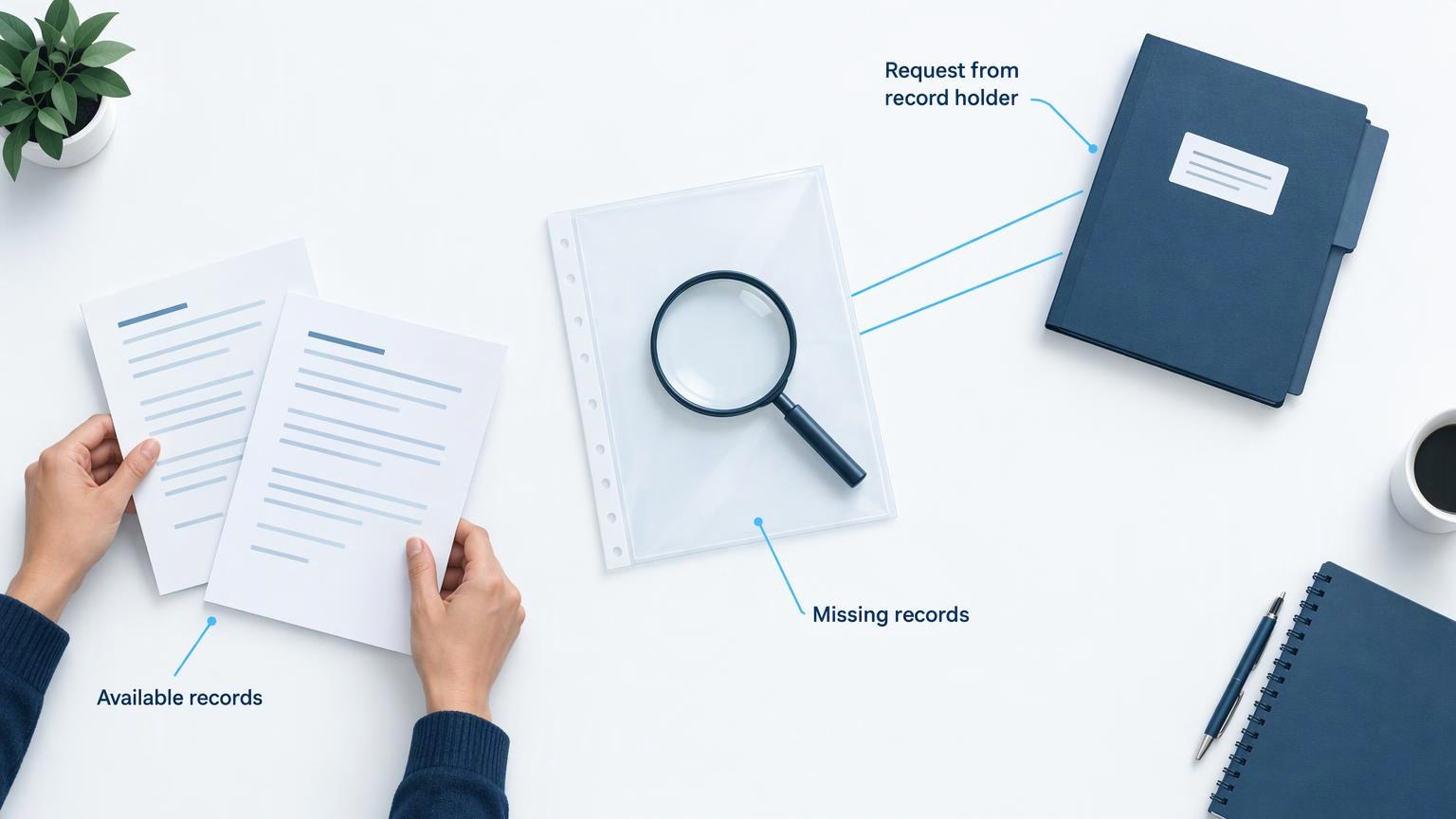
When the packet is incomplete, request the missing record from the practice that performed the work. If it cannot be retrieved, give the receiving dentist a clearly labeled account of what is available and what remains unknown.
Say you are arranging a consultation in Mexico after implant work at home. You have an image and an invoice describing a crown, but no implant identification or placement note. The invoice does not tell the next provider everything that was performed or which components were used.
You could forward those documents alone, or first seek the placement record and product labels. Targeted retrieval is the more useful administrative step because it addresses the specific uncertainty. Ask the original practice for those records, then have the receiving dentist review the resulting packet.
If the original practice cannot supply them, do not fill the gap with a remembered brand or an online product comparison. Preserve the available documents and mark the missing items. The next dentist decides how that uncertainty affects assessment; the records request itself does not determine treatment or travel timing.
Collect the completed-care record before you leave
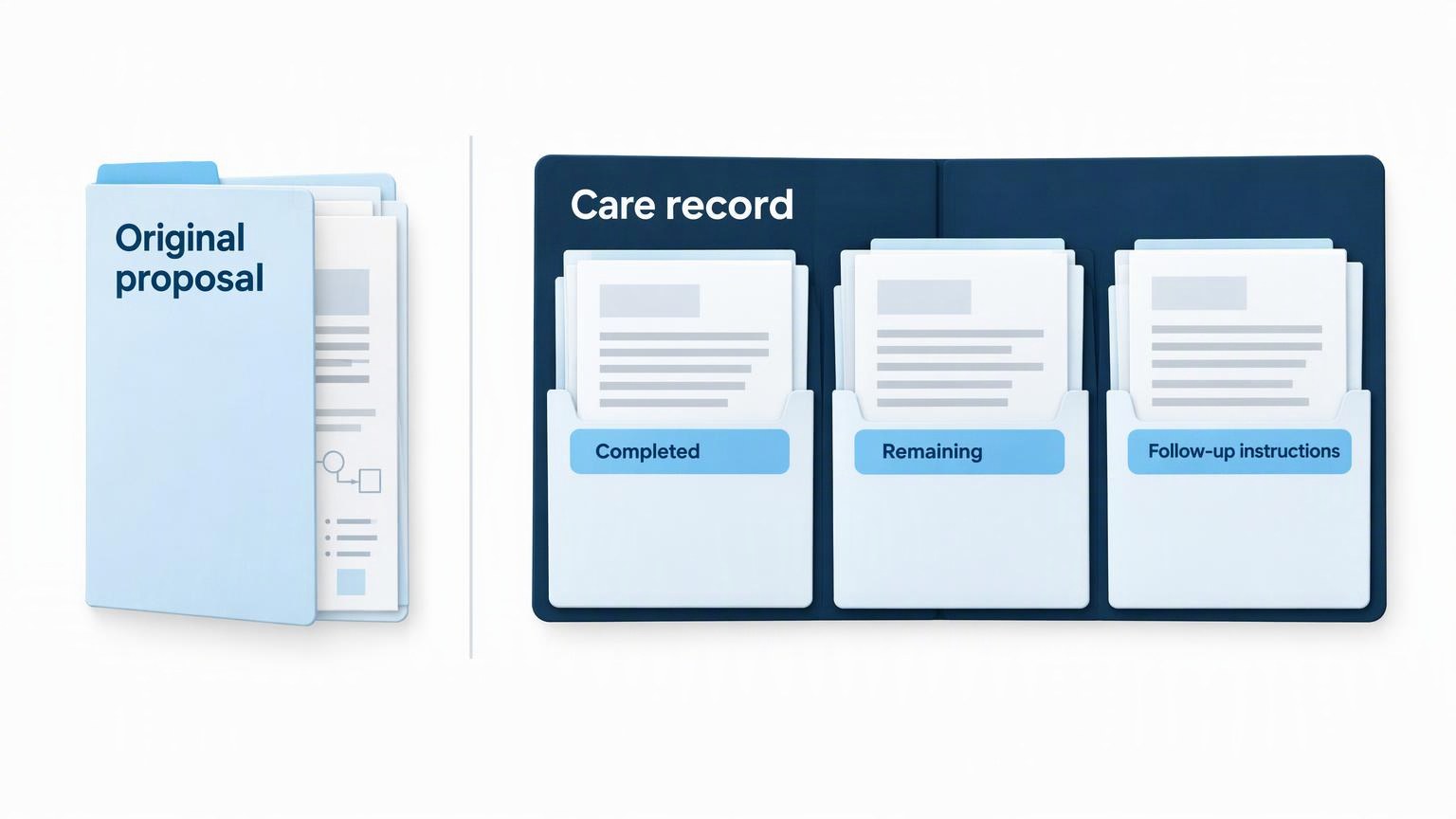
After care, request a dated summary of the work actually completed, copies of relevant procedure and restoration records, and the treating clinician’s written follow-up instructions. Keep the original proposal, but do not use it as a substitute for the final record.
The useful distinction is between planned, completed and remaining work. Ask the treating practice to make those categories clear, including any changes from the initial plan. Request updated implant or component identification when applicable, along with copies of imaging obtained during the visit.
The follow-up document should preserve the clinician’s instructions and identify whom to contact about clinical concerns. Separately, establish whether the dentist at home has agreed to provide the proposed follow-up. Possessing a packet does not establish that another provider has accepted responsibility for your care.
Flight timing and length of stay depend on the clinician and follow-up plan, not on whether the paperwork is finished. Once the clinical plan is clear, use it to organize travel logistics without interpreting it as individual clearance to fly.
Carry a personal copy and arrange a separate clinical transfer
Keep an organized personal copy, and send clinical records only through a secure channel confirmed by the named treating provider. A general travel inquiry is not the destination for diagnoses, scans, clinical records or attachments.
Use this compact packet index: treatment history; implant identification; procedure and restoration notes; imaging and reports; completed-care summary; follow-up instructions. Beside each category, note the source practice, document date and any missing item. Keep access to your own copy available for the consultation.
For Hospitality Cancun’s general contact section, clarify the recipient and purpose before submitting any information. The first submission allows only name, email and optional contact-method preference. Later travel details may be discussed with the confirmed travel contact once the recipient and purpose are clear.
Permission to reply to your requested inquiry, optional marketing permission, and permission for referral to a specifically named provider are separate choices. A requested reply is not marketing consent. Payment details and insurance identifiers also stay out of the general form; they are not part of the clinical-record packet.
Frequently Asked Questions
Do I need English translations of Spanish-language records?
Ask the receiving dentist whether they require a translation and what form they accept. Keep the original documents alongside any translation, with dates and product identifiers unchanged. Do not replace the clinical record with your own summary or assume that a translated document will be accepted by every practice.
Does an implant passport replace the procedure notes?
Request both rather than treating one as a substitute for the other. A passport or identification card may contain product information, while procedure notes document the care recorded by the practice. Let the receiving dentist decide whether the combined records answer their questions about your particular case.
What if the original dental practice has closed?
Look for any closure notice identifying a records custodian or successor practice. If you cannot locate the records, retain your existing copies and tell the receiving dentist which items are unavailable. Do not assume a laboratory, insurer or another practice holds the complete clinical chart.
Can a family member carry my records for me?
You can prepare a personal copy for your appointment, but decide deliberately who may access it. Ask the provider about its authorization requirements before another person requests or transfers records on your behalf. Carrying documents does not give that person permission to make treatment decisions for you.
Are receipts useful for dental follow-up?
Keep receipts separately for your own administrative needs. They may describe billed items, but they should not replace the treatment summary, procedure notes or implant identification. Ask the dental practice for the clinical record of completed work rather than expecting the next dentist to reconstruct care from charges.