

Dental Travel Planning
Compare the proposed dental work, the complete financial commitment and the care arrangements that must remain workable after you leave.
The useful comparison is not simply Mexico versus the United States. It is one complete treatment-and-travel plan versus another. Keep a private comparison sheet for each proposal so a missing restoration, return visit or payment condition does not disappear behind an attractive package description.
Compare treatment scope and the named dentist together
Two proposals are comparable only when they address the same dental problem and explain what treatment each includes. If the approaches differ, have the treating dentists explain their recommendations before ranking the prices. Treatment suitability belongs with a qualified clinician, not a travel planner.
Start your search with the named dentist and the actual treatment location, rather than a package label. Obtain the dentist’s full professional name, license details and the basis for any specialty claim. Validate credentials with the relevant issuing authority; a clinic’s advertising or association logo is not a substitute.
Next, identify the proposed restoration: a single replacement tooth, a bridge or a full-arch solution. Establish whether the proposal includes preparatory work, temporary teeth and the final restoration, and which decisions depend on an examination.
Equipment and implant brands can inform the consultation, but they do not answer whether the plan suits you. A proposal that clearly explains its clinical assumptions is more useful for comparison than a technology list without a case-specific rationale.
Read the quote as a completed-treatment breakdown
An implant-placement price should not be treated as the price of a finished replacement tooth unless the proposal says so. Separate the implant, abutment and restoration, then establish which components the quoted total covers.
For example, Envoy Health’s implant guide describes its single-implant price as including an abutment and crown, while noting that additional procedures can affect cost. That describes its published offer, not a rule for every Mexican clinic.
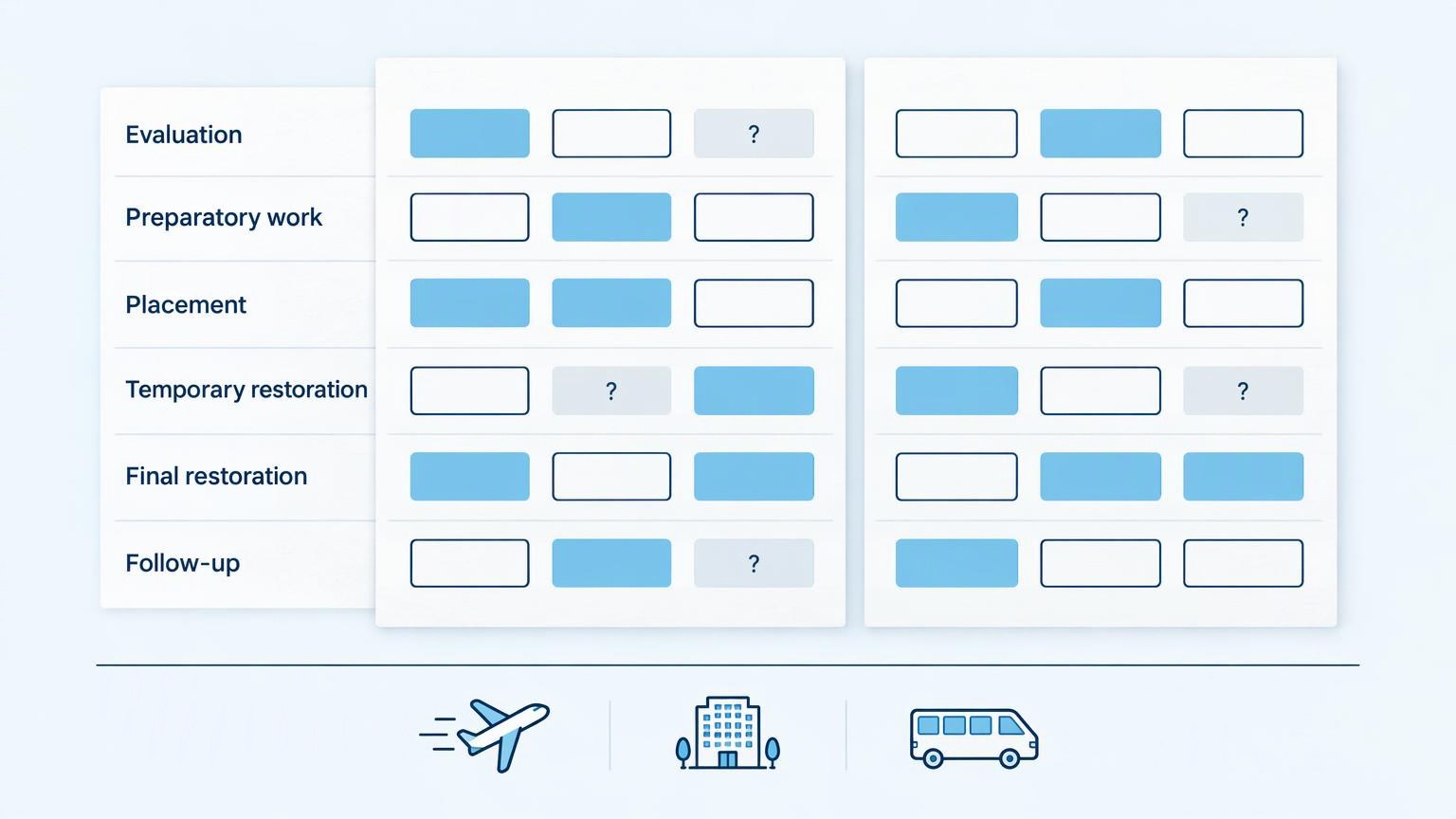
Use the same categories for every proposal: evaluation and imaging; preparatory procedures; implant placement; temporary restoration; final restoration; and follow-up appointments. Mark each item as included, separately priced, not proposed or awaiting clarification. Do not turn an unspecified item into a zero-cost assumption.
Keep flights, lodging and transport separate from dental charges. If a package mentions them, its written description should identify exactly what is included. A complete dental quote without travel inclusions can still be easier to budget than a package with undefined benefits.
| Situation | Suitable next step | Reason and trade-off |
|---|---|---|
| Same treatment scope and clear follow-up | Compare complete totals and contract terms | Price becomes meaningful, but travel remains a separate expense. |
| Placement-only quote versus completed restoration | Align included components before ranking | The smaller quote may purchase less work. |
| Different clinical recommendations | Seek a clinician’s explanation of each approach | Choosing by price first leaves you without a clinical explanation of which approach suits you. |
| Departure depends on a clinical review | Compare changeable travel terms | Flexibility may cost more and does not establish coverage for changes. |
Assign follow-up responsibilities before departure
A workable follow-up plan identifies who handles questions, who can examine you and what happens if further treatment is needed. “Contact us anytime” does not resolve all three responsibilities.
DentalSPA’s dental-travel guide recommends establishing follow-up arrangements before leaving Mexico. Apply that planning principle to the actual dentist’s proposal, rather than assuming another clinic offers the same support.
Distinguish scheduled reviews from unscheduled concerns. A remote conversation and an in-person examination are different services. Have the treating dentist explain which reviews can occur remotely and which require attendance. Separately establish any charges for reviews, adjustments or additional treatment.
If you expect a dentist at home to participate, discuss that arrangement with that dentist before relying on it. Acceptance, appointment access and fees cannot be assumed. The plan should also identify how the treating dentist will provide an appropriate clinical handoff.
A promise to repair dental work is not automatically a promise to pay for another trip. Any remedy, eligibility condition and associated travel responsibility need separate terms.
Build travel around clinical milestones, not a fixed stay
Use the clinician’s appointment and follow-up plan to decide when travel can become firm. A published stay length is not individual clearance to fly, and travel flexibility does not replace clinical advice.
Say you are comparing an implant-placement proposal with a proposal that also includes a later final restoration. You can take the initial trip, but another journey would be difficult. The apparent convenience of either offer does not settle the choice: the treating dentist must explain whether later attendance is required and what can actually be completed during your visit.
Now suppose your plan includes a review before departure. A fixed return flight exposes you to a change if that review alters the departure plan. A changeable itinerary may better fit that uncertainty, subject to its actual fare conditions. If the milestone and departure guidance are settled, straightforward independent reservations may be sufficient.
Sequence your search accordingly: establish the treatment location and appointment milestones, compare flights against that schedule, then compare lodging using the actual clinic address and transport arrangements. Assess access from the property itself, not merely whether it is marketed as being in Cancun. Assistance requirements must come from the care plan, not from the existence of multiple bookings.

Separate supplier terms, payment stages and insurance
Before paying, establish what the payment buys, when later balances become due and what happens if the proposed work changes. A deposit, a completed procedure and a hotel reservation can have different contract consequences.
Consider a clinician-directed extension of your stay. The extra hotel night remains a travel charge. The clinical reason does not establish who pays, whether the night is included or whether the hotel will refund an unused reservation. You cannot determine those answers unless the applicable proposal and supplier terms address them.
Read the dental provider’s cancellation and treatment-change terms separately from the airline’s and hotel’s rules. Identify refund conditions, change charges, deadlines and treatment already performed. A travel change does not itself determine the dental provider’s obligations.
Insurance is a separate assessment. Review the actual policy for planned overseas dental treatment, related complications, cancellation, medical expenses and evacuation where relevant. Coverage and claim conditions cannot be inferred from the product name. Potential reimbursement does not rewrite supplier terms or establish that you will have no upfront expense.
Make a focused dental and travel handoff
Keep clinical decisions with the treating dentist and ordinary travel arrangements with the confirmed travel contact. Hospitality Cancun publishes travel and consultation-planning guidance; this does not make it the treating dental provider.
Prepare a short private checklist: treatment stages that need clarification, appointment milestones, follow-up responsibilities, quote exclusions and change terms. Clinical records and scans belong only in a named provider-confirmed secure channel. Ordinary travel details may be discussed later with a confirmed travel contact.
Before submitting any information through the website contact section, clarify the recipient and purpose. The first submission is limited to name and email, with optional contact-method preference. Do not include the checklist, health information, attachments, payment details or insurance identifiers.
Permission to reply to your inquiry, optional marketing and referral to a specifically named provider are separate choices. A requested planning conversation is not marketing consent.
Frequently Asked Questions
Does an advertised implant brand prove the proposal is better?
No. A brand name identifies one part of the proposed work, not the suitability of the entire plan. Have the dentist explain why that system is proposed, how the restoration will be maintained and what component information will be available for future dental care.
Can I combine the visit with sightseeing?
Keep leisure plans optional until the treating clinician explains appointment obligations and activity guidance. A destination itinerary should not compete with necessary reviews. Select activities afterward rather than using a vacation schedule to decide how quickly treatment must finish or when you should depart.
What if an online estimate changes after examination?
Establish which assumptions supported the estimate and what the examination changed. Before agreeing to revised work, obtain the new scope, price and schedule from the provider. Then assess any separate effect on your travel reservations. The estimate’s contractual status depends on its actual terms.
Should English-language support influence my choice?
Yes, because you need to understand the proposed work, alternatives, consent documents and follow-up instructions. Establish who will explain clinical decisions in English and whether that support continues after departure. English-speaking travel assistance is not a substitute for understandable communication with the treating dental provider.
Is an advertised dental warranty enough reassurance?
No. Read what it covers, what it excludes, how eligibility is determined and where any remedy must occur. Establish whether examinations, replacement work and associated travel are addressed separately. A warranty description does not guarantee an outcome or make another dentist responsible for providing a remedy.