

Consultation and Travel Planning
Evaluate the provider, the proposed care, and the practical trip before committing to a destination-based offer.
A destination label can bring together several different businesses: a treating provider, a facility, a travel supplier, and an intermediary. Their responsibilities are not interchangeable. This guide helps you turn an appealing offer into a decision you can evaluate, without assuming that a listing, hotel arrangement, or planning website establishes clinical quality.
Choose consultation-first or treatment-trip planning
Choose consultation-first when you still need an assessment of whether the proposed care is appropriate for you. Treatment-trip planning becomes useful when a qualified treating clinician has assessed your case and explained the intended care, alternatives, and follow-up. Continuing your evaluation at home is also a reasonable choice when the travel commitment does not fit your circumstances.
A consultation is not a promise that treatment will follow. It can reveal that more information is needed, a different approach is preferable, or travel is unnecessary. Avoid treating a travel reservation as a reason to proceed with care.
The comparison below describes decision routes, not offers from particular suppliers. The important distinction is what you still need to establish. A straightforward consultation trip may be manageable independently, while a single treatment reservation can require more investigation if the care plan is unclear.
Before committing, be able to explain what decision the consultation or trip will help you make. If the answer is only that a package looks convenient, return to the clinical question first.
Search by clinical need, then verify the provider
Start with the specialty relevant to your clinical question, then narrow results to the actual Cancun location. For example, Health-Tourism's Mexico directory provides specialty filters and a medical-center search. Use that kind of listing for discovery, not as proof of credentials, current availability, or suitability.
Next, identify the full name of the treating clinician and the exact facility where the proposed care would occur. Search those names separately. Compare the identities across the proposal, the provider's own information, and the relevant credentialing or licensing authority. A credential claim should match the individual, specialty, and current status being represented.
Keep clinician credentials separate from facility accreditation. Neither automatically verifies the other, and neither establishes that a particular treatment is appropriate for you. Any claimed accreditation needs to apply to the exact facility, not merely a related brand.
If a result only identifies an intermediary, it is not yet enough to evaluate the treating provider. Resolve that identity before moving the candidate into your consultation shortlist.
| Situation | Suitable Next Step | Reason | Trade-Off |
|---|---|---|---|
| Suitability or the proposed approach remains unclear | Consultation-first | Clinical assessment comes before treatment commitment | The consultation may change or end the travel plan |
| Care, timing, terms, and follow-up are sufficiently clear | Treatment-trip planning | You can evaluate travel against an established care plan | Reservations still need to accommodate applicable changes |
| Travel timing cannot fit your obligations | Continue evaluation at home or postpone | Booking flexibility cannot solve an unavailable stay window | You may need to reconsider the destination or timing |

Build the itinerary around clinical timing
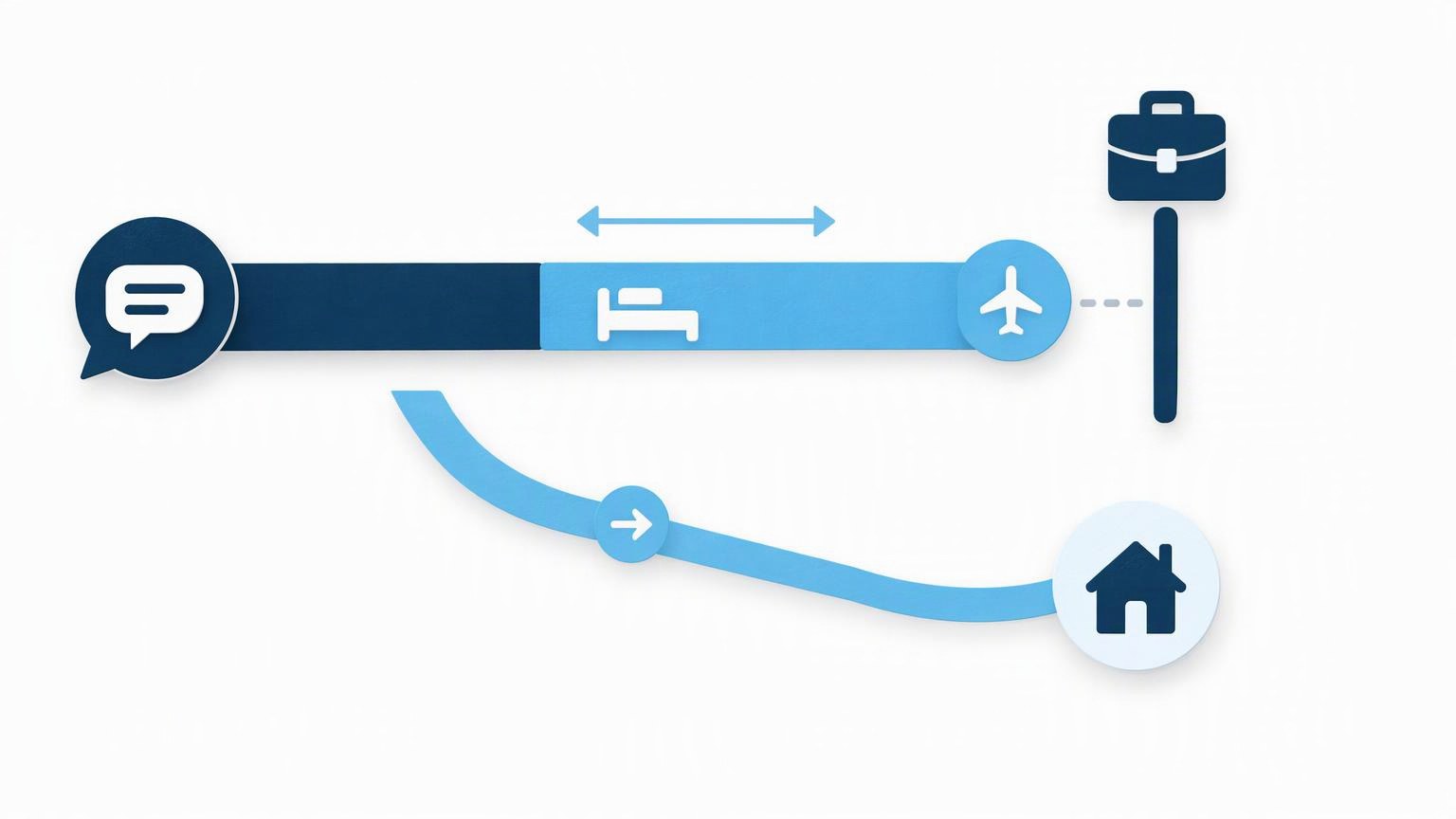
Use the treating clinician's assessment and follow-up plan to establish travel timing. A fixed number of recovery days advertised online is not individual clearance to fly. Separate the clinical decision about travel readiness from the logistics of changing a flight or hotel.
Say you have a firm return-to-work deadline, but the clinician has not yet established when you can fly home. A fixed-return booking creates a conflict if the required stay extends beyond your available time. Changeable reservations address some booking consequences, but they cannot create more leave from work. Postponing the trip may therefore be the better choice until the timeline fits.
Once timing is sufficiently clear, compare flight options by schedule and change conditions. Then compare lodging using the actual treatment address, access needs identified in the care plan, and reservation terms. Evaluate transportation for each necessary journey rather than assuming airport pickup also covers appointments.
A hotel or driver handles travel tasks. Any need for clinical assistance must come from the care plan and be addressed with the treating provider, not inferred from a room category or transport label.
Compare services, supplier terms, and insurance separately
Compare proposals by what each charge purchases, not by the headline total alone. Separate clinical services, facility charges, lodging, transportation, and any planning charge. Mark exclusions and items that need clarification before deciding that proposals are comparable.
For later proposal review, keep one compact checklist:
- The seller and scope of each service.
- Included services, exclusions, and payment milestones.
- Cancellation, refund, and change terms for each supplier.
- Responsibility for additional services or a longer stay.
- Any insurance coverage relied on, including exclusions and claim conditions.
If the clinician directs an extra lodging night, the hotel service remains a travel charge. That clinical reason does not establish who pays, whether the night is included, which hotel terms apply, or whether insurance covers it. You cannot determine those points unless the applicable written terms answer them.
Supplier obligations and insurance are separate. A supplier's contract determines its cancellation or refund consequences. An insurer's policy determines whether a qualifying loss is covered and how a claim is assessed. Do not use the existence of insurance to fill gaps in the proposal.
Arrange follow-up before you leave
Proceed only when you understand who is responsible for follow-up and how you can reach them. “Follow-up included” is incomplete without the type of visit, its scope, the responsible clinician, and any limits or separate charges.
Distinguish scheduled review from unexpected symptoms. A remote appointment may serve a defined follow-up purpose, but it should not be assumed to replace an examination or urgent local assessment. The treating clinician should explain the escalation plan and when local care is needed.
If care will continue at home, establish whether your home clinician has agreed to take that role. Do not assume that receiving a discharge summary means another practice has accepted responsibility. Clarify what information it needs and how the treating provider will supply it through an appropriate channel.
Before departure, obtain the clinical documentation relevant to the care received and the follow-up instructions from the treating provider. Keep the distinction clear: the travel plan gets you home; the clinical handoff establishes how care continues. A convenient return flight does not resolve an unfinished handoff.
Prepare privately, then use the appropriate handoff
Keep a private planning note containing the travel questions that remain after your provider evaluation. Hospitality Cancun publishes travel and consultation-planning guidance; clinical eligibility, treatment suitability, and recovery advice belong with the qualified treating clinician.
Before submitting any information through the Hospitality Cancun contact section, clarify who will receive it and for what purpose. If either is unclear, wait. The first submission is limited to name and email, with an optional contact-method preference. Do not include travel dates, destination, companion details, room needs, a narrative, or attachments.
Ordinary travel details can be discussed later with the confirmed travel contact after the recipient and purpose are clear. Diagnoses, scans, and clinical records belong only in a named provider-confirmed secure channel. Payment details and insurance identifiers do not belong in the general inquiry; they are not clinical records.
Keep permissions separate: responding to your requested inquiry, optional marketing, and referral to a specifically named provider are distinct choices. Agreeing to a reply does not mean agreeing to marketing or an unnamed referral.
Frequently Asked Questions
Can online reviews establish that a clinician is qualified?
No. Reviews may describe communication or an individual's experience, but they do not establish current credentials or suitability for your care. Treat them as supplementary information. A polished profile, positive testimonial, or destination ranking should not replace identity checks and a direct clinical assessment of your case.
What if I need English-language support?
Establish how clinical explanations, consent discussions, and written instructions will be communicated in English. Do not assume that an English-language booking page means the treating clinician or all staff can support those conversations. If interpretation is needed, clarify the arrangement with the provider before relying on it.
Should I buy a broad testing package because it is bundled?
Not solely because it is bundled. Ask a qualified clinician which tests address your clinical question and how the results would change care. A longer list of tests is not a substitute for an appropriate assessment. Also establish who will interpret findings and handle any recommended next steps.
Does a resort stay count as clinical recovery support?
Not by itself. Lodging provides accommodation; clinical support is a separate service with a defined provider and scope. Select accommodation around needs identified in the care plan, but do not assume that a resort description establishes nursing, monitoring, treatment, or suitability for your individual recovery.
Where should I check entry requirements and destination conditions?
Use current information from the relevant government authorities for your citizenship and travel purpose, including Mexican entry guidance and US official travel information where applicable. Recheck before departure. A medical-tourism listing or an older travel article is not sufficient evidence of current entry rules or destination conditions.