
Dental Travel Planning
Turn a dental-travel search into a provider comparison that separates clinical qualifications, treatment scope and the practical cost of returning for care.
A dental-travel offer can combine several decisions: who treats you, what work is proposed, where you stay and what happens afterward. Keep those decisions separate. Hospitality Cancun publishes travel and consultation-planning guidance; diagnosis, treatment suitability and recovery instructions belong with the qualified treating clinician.
Start your search with the treatment question and treating dentist
Search for providers who identify the dentist responsible for evaluating your concern. A destination or package search can uncover candidates, but it should not determine your treatment.
Begin with the dental concern or procedure you are researching and Mexico, or Cancun if that is your intended destination. Open the provider's own pages rather than relying on a result summary. Look for named clinicians, an explanation of consultation steps and information about follow-up.
Next, search the clinician's full name alongside the claimed qualification or specialty. Keep identifiable candidates for credential verification. Set aside listings that show only a coordinator, a package headline or an unnamed clinical team until the treating professional is identified.
Advertising is not a completed comparison. For example, Sani Dental Group's dental-travel article emphasizes affordability and travel appeal. Those themes may explain interest in a destination, but they do not establish your diagnosis, current quote or suitability for treatment.
Verify credentials against the person who would treat you
A useful credential check connects the claimed qualification to the proposed treating dentist and its issuing authority. A clinic logo or association badge is not a substitute for that connection.
Obtain the dentist's full professional name and the identifying details behind each relevant credential. Use the issuing authority's own verification route where available, matching the name, qualification and status rather than accepting a certificate image alone. A mismatch should pause the comparison until it is explained.
Keep claims separate. A professional qualification, specialist qualification, association membership and facility accreditation describe different things. Verify each with its respective issuer; do not interpret membership as specialist certification or a facility claim as proof of an individual dentist's qualifications.
Then connect the qualification to the proposed work. Identify who evaluates the case, who performs each stage and who handles clinical questions. Credentials help establish qualifications, but they do not guarantee outcomes or replace an individual assessment. If the treating dentist changes, repeat the identity and qualification check for that person.
| Information you have | Suitable next step | Reason and trade-off |
|---|---|---|
| Equivalent clinician-reviewed treatment proposals | Compare total costs, terms and follow-up | Price becomes meaningful, but travel requirements still matter. |
| Different clinical recommendations | Seek an explanation or second clinical opinion | Resolve suitability before price; this may delay selection. |
| Package advertisement without an individual assessment | Establish the treating dentist and consultation process | Useful for initial research, not enough for a treatment commitment. |

Compare equivalent treatment before comparing price
Compare prices directly only when the proposals describe equivalent work. If they recommend different procedures, resolve the clinical difference first rather than ranking them as expensive and cheap versions of the same treatment.
A useful proposal identifies the work, the responsible clinician, its stages and what remains subject to examination. For dental implants, have the clinician distinguish the implant fixture, connecting component and final restoration, along with any temporary restoration. Treat these as scope questions, not a reason to presume implants are appropriate for you.
Likewise, a crown proposal and a veneer proposal should not be treated as interchangeable cosmetic packages. Ask the evaluating dentist to explain the recommendation, alternatives and implications for your teeth. A second clinical opinion may be more useful than another price search.
Once the scope is comparable, separate included services from optional or conditional work. An advertised starting price is not your individual proposal. The table identifies which next step fits the information you actually have.
Test the quote against the whole travel commitment
A lower treatment quote is preferable only if its complete requirements fit your budget and ability to travel. Include the visits the clinician expects, not merely the first appointment.
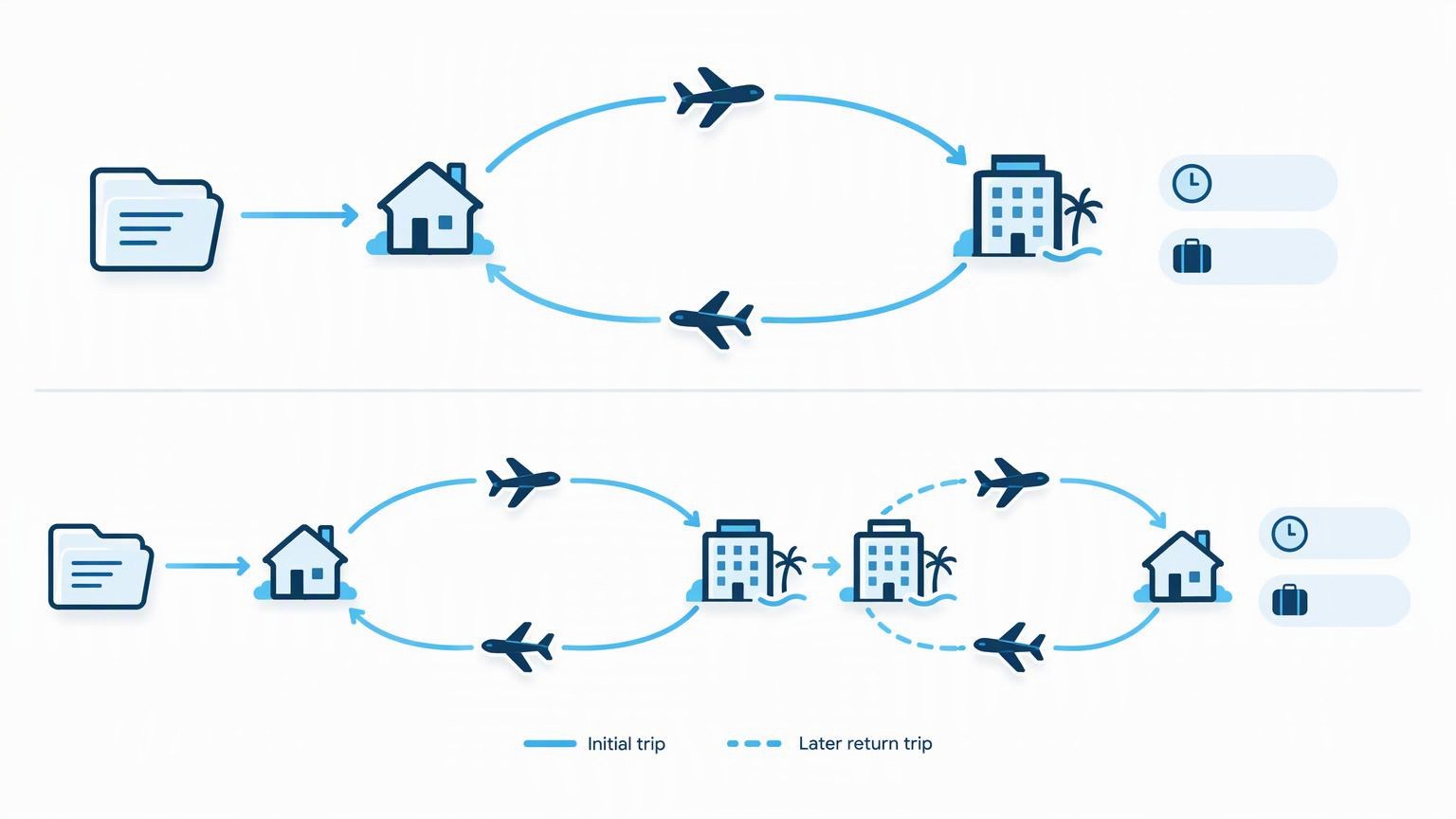
Say you have limited leave from work and are comparing clinically equivalent proposals. One has a lower treatment fee but requires a later return visit; the other has a higher fee with a different visit schedule. Add transport, lodging and time away for each required trip. If the lower-fee option becomes harder to afford or attend, its headline price is not the better fit. Neither schedule overrides the clinician's assessment or clearance to fly.
Before paying, read the dental provider's deposit and cancellation terms and the travel suppliers' change and refund terms separately. If a clinician recommends an extra night, the hotel service remains a travel charge. The clinical reason does not establish who pays, whether it is included or which hotel terms apply.
Insurance is another contract. Coverage, exclusions and claim conditions determine whether a policy responds; they do not replace a supplier's obligations. Without applicable terms, you cannot determine who pays for an extra night or whether insurance covers it.
Choose follow-up arrangements that work after you return
Favor a proposal with identifiable follow-up responsibilities, not simply a promise of “aftercare.” Establish who assesses concerns, which appointments are expected and what happens when an in-person examination is needed.
Separate contact access from clinical care. Being able to message a coordinator does not establish who will examine you. Ask the treating dentist to explain the clinical follow-up plan, including how to obtain help if concerns arise outside ordinary appointments. Follow that clinician's instructions rather than a generic recovery timetable.
If a dentist at home is expected to participate, obtain that dentist's agreement before relying on the arrangement. Discuss what they are willing to assess or maintain; do not assume responsibility transfers automatically when you return.
Also distinguish a treatment warranty from the cost of using it. A promise to repair specified work does not by itself establish reimbursement for flights, lodging or another dentist's fees. Those responsibilities need their own applicable terms. Choose based on an arrangement you can realistically use, including any required return travel.
Prepare the comparison, then use the appropriate handoff
Prepare your comparison privately before moving to a consultation. Keep clinical questions for the treating dentist and ordinary travel arrangements for a confirmed travel contact.
- Named treating dentist and credential-verification results.
- Proposed work, alternatives and clinical differences that still need explanation.
- Included services, required visits and supplier payment terms.
- Follow-up responsibilities at the destination and at home.
Before using Hospitality Cancun's contact section, clarify the recipient and purpose before submitting any information. The first submission allows only name and email, with an optional contact-method preference. It does not allow a planning narrative, dates, destination, companion details, records, attachments, payment details or insurance identifiers.
Keep permission to reply to your inquiry separate from optional marketing and referral to a specifically named provider. A requested reply is not marketing consent. Later, ordinary travel details may be discussed with the confirmed travel contact. Diagnoses, scans and clinical records belong only in a named treating-provider-confirmed secure channel.
Before proceeding with any provider, establish whether it can address your dental inquiry. Do not infer that a medical-tourism label means a particular dental treatment is offered.
Frequently Asked Questions
How much weight should I give patient reviews?
Use reviews to identify questions about communication or administration, not to verify professional qualifications or predict your result. A positive account may concern a different dentist or procedure. Follow up on the underlying issue with the proposed provider and evaluate the answer alongside attributable credentials and your clinical proposal.
Can before-and-after photos help me choose?
They can help you explain preferences during a consultation, but they do not establish that the same treatment suits you or that you will get a similar result. Ask the evaluating dentist to discuss your alternatives and limitations. Do not use a photo gallery as evidence of individual eligibility.
Should I arrange an independent opinion before traveling?
Consider one when recommendations conflict, the proposal is difficult to understand or you remain unsure about the implications of the work. An independent qualified dentist can help you interpret the clinical decision. That is different from a travel planner comparing hotels or a coordinator explaining a package price.
Does an English-speaking coordinator remove the need for direct clinical discussion?
No. Administrative communication and clinical explanation serve different purposes. Establish how you will discuss diagnosis, alternatives, risks and consent with the treating dentist in language you understand. A coordinator may explain scheduling, but that does not establish clinical qualifications or authority to advise on treatment suitability.
Should I pay a deposit just to hold an advertised deal?
Do not let an advertised deadline replace your comparison. First identify what the payment reserves, who receives it and the applicable cancellation or refund terms. A deposit is not proof of treatment suitability. If the proposal remains clinically unclear, resolve that uncertainty before making a financial commitment.