
Care-Focused Travel
Judge the care option on its own merits, then decide which travel commitments genuinely belong alongside it.
A pleasant setting can matter to your experience without becoming a reason to choose treatment. The useful distinction is not whether you enjoy the destination. It is whether the visit still works if you remove every vacation activity. That test helps you evaluate providers, lodging and spending without asking the care plan to justify a holiday.
Should care and vacation happen on the same trip?
They can share a trip, but they should not share decision-making authority. A care-focused visit with optional leisure is reasonable when the leisure plans can change without displacing appointments, follow-up or clinician-directed restrictions. A separate vacation is the clearer choice when enjoying specific activities is essential to making the trip feel worthwhile.
The distinction is about commitments, not reservation count. Several flexible arrangements may be manageable, while a single prepaid activity can create pressure if it conflicts with care. You can make either trip structure work independently; paying a coordinator does not remove that underlying conflict.
In its discussion of cross-border care, heva distinguishes intentional travel for health services from the leisure associations of “medical tourism.” Apply that lens to your own plans: if the vacation disappeared, would the care visit still be a decision you wanted to make? If not, reconsider the care option before committing.
Evaluate the care option without its vacation appeal
Compare the named clinician, proposed care and follow-up arrangements separately from the destination presentation. A hotel photograph, package name or appealing setting does not answer who will treat you or why the proposed care is suitable.
Start your search with the clinician's exact name and the facility's exact identity, rather than only a phrase such as “medical vacation package.” Examine credential documents for the person, specialty, issuing organization and current status they actually describe. Where a claim matters to your choice, seek confirmation from its issuer instead of relying only on a promotional badge.
Then obtain the clinical explanation directly from the qualified treating clinician: the purpose of the consultation, possible alternatives, relevant risks and follow-up responsibilities. Eligibility and treatment suitability belong in that conversation.
The result changes your next decision. If you cannot identify the treating clinician or understand the proposed care, keep the option at the research stage. If those foundations are clear, compare travel arrangements without treating their convenience as additional proof of clinical quality.
| Situation | Suitable Approach | Reason | Trade-Off |
|---|---|---|---|
| Care requirements are clear and leisure is removable | Care-focused visit with optional leisure | Enjoyment need not compete with appointments or follow-up | You may not use the destination's vacation amenities |
| Consultation outcome and treatment timing are undecided | Plan around the consultation; defer leisure commitments | The trip does not assume a treatment decision | Less certainty about optional activities |
| Specific outings or shared vacation dates are essential | Separate care and vacation trips | Neither purpose must deliver the other's expectations | Separate travel arrangements and budgets |

A consultation should not become an assumed treatment itinerary
Keep a consultation-only visit open to a consultation-only outcome. An appointment to discuss care does not establish that treatment will happen during the same visit or that leisure afterward will fit the eventual plan.
Say you are considering a consultation in Cancun and want to attach a prepaid leisure stay afterward. The clinician has not yet determined treatment suitability, timing or follow-up needs. Your alternatives are to lock in the leisure stay, leave leisure uncommitted or arrange a separate vacation.
Locking it in makes the calendar definite, but it also creates a financial and emotional reason to resist changes. Leaving leisure uncommitted preserves the possibility of enjoying it without assuming it will happen. A separate vacation is preferable if those leisure dates are important to you or your companion.
The reasoned choice is to plan the visit around its known purpose: the consultation. Any later treatment decision gets its own clinical and travel planning. If the consultation does not lead to treatment, that is still a valid outcome, not a failed vacation package.
Choose lodging and a companion by their role in the visit
Choose accommodation for what you will need to do there, and agree on your companion's role before treating the visit as shared leisure. Entertainment amenities are secondary when they do not contribute to the care-focused stay.
For lodging, translate the actual care plan into practical requirements. Room access, meal arrangements and transport to appointments may matter more than an activity schedule. Obtain location-specific distance and journey estimates before comparing accommodation; a description such as “convenient for appointments” is not enough to judge the journey. A hotel room should not be assumed to provide nursing or clinical monitoring.
A companion may offer company or help with ordinary travel tasks. Whether you need particular assistance comes from the clinician's care plan, not simply from having another person on the booking. Discuss privately whether your companion expects shared outings, can accommodate changes and understands any agreed responsibilities.
If their vacation depends on your participation, separate trips may suit you both better. If they are comfortable with independent leisure, shared travel can remain practical without making you responsible for delivering their holiday.
Separate package inclusions, change costs and insurance
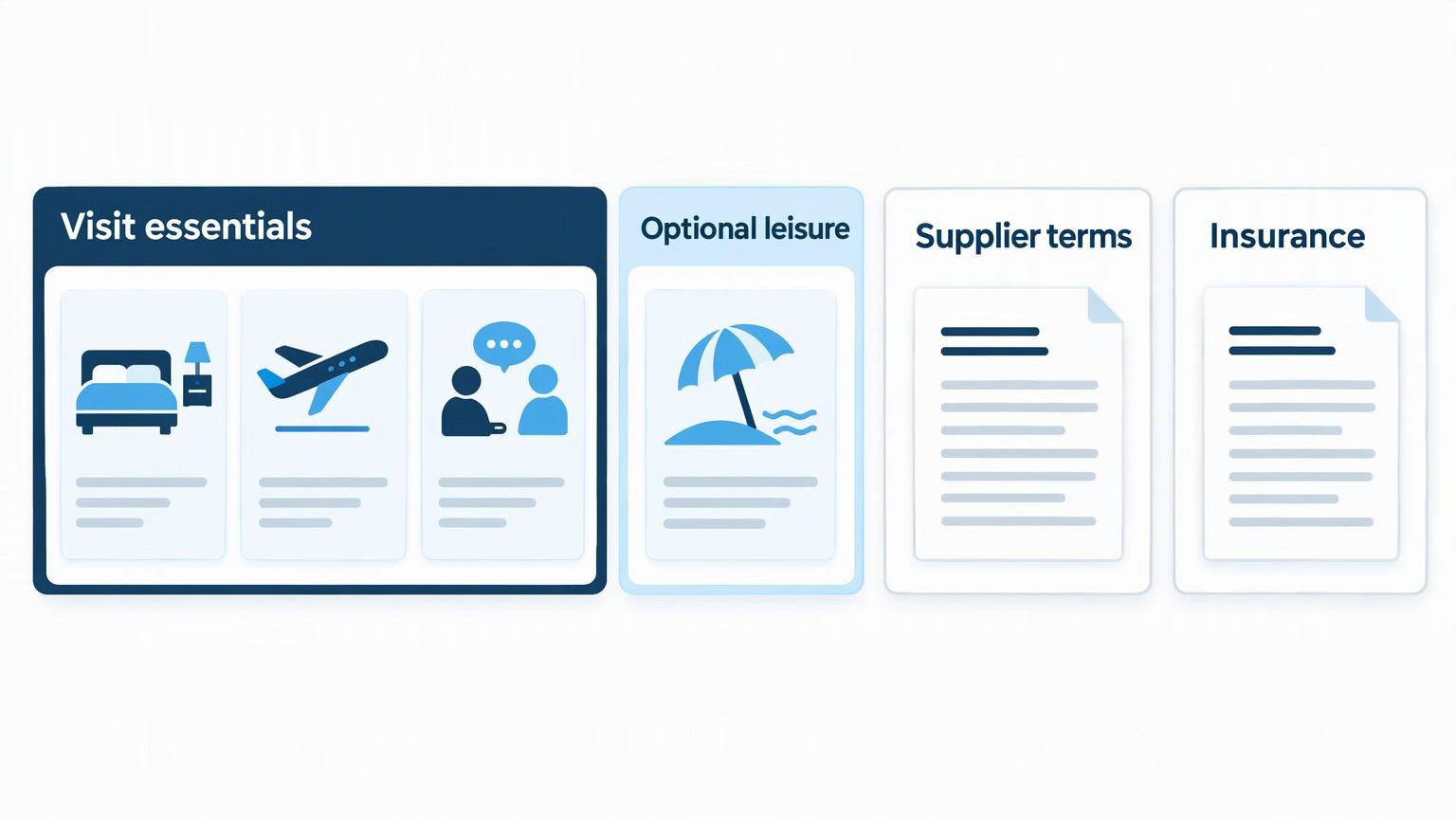
Assess each charged service and its terms separately, even when an offer uses “all-inclusive” language. The label alone does not establish which clinical services, lodging, transport or follow-up are included.
For any proposal you receive, identify who supplies each component and which written terms govern it. Keep optional leisure spending outside the amount you need for the care-focused visit. That makes it easier to see whether the plan remains affordable without relying on activities or claimed savings to justify it.
Suppose the clinician advises a longer stay. An additional hotel night is still a travel service. The clinical reason does not establish who pays, whether the night is included or which hotel change terms apply. You cannot determine those details unless the applicable agreements address them.
Supplier cancellation, refund and change terms determine contractual consequences. Insurance is a separate question: coverage for cancellation, medical expenses or evacuation depends on the policy and claim conditions. Do not treat insurance as a substitute for understanding supplier obligations, or assume a medically motivated change automatically qualifies for reimbursement.
Settle follow-up before turning the visit into a travel plan
Resolve the clinical follow-up plan first, then use it to define the travel arrangements. Length of stay and flight timing depend on the clinician and the follow-up plan; a published recovery interval is not your individual clearance to fly.
Clarify who handles questions after the visit, what follow-up is expected and how care will continue after you return home. Keep that clinical responsibility distinct from changing a flight or extending a room reservation. A travel change does not, by itself, establish a need for clinical support.
Prepare a short private planning outline:
- The confirmed purpose of the visit and any clinical decisions still to be made.
- The stay requirements and follow-up commitments supplied by the clinician.
- The leisure commitments you are willing to remove.
- The travel changes your budget can accommodate under the applicable terms.
At Hospitality Cancun, we publish travel and consultation-planning guidance for adults considering care in Cancun or the Mexican Caribbean. Use that destination focus to organize your planning questions, while keeping medical decisions with your qualified treating clinician. Ordinary travel details can be discussed later with a confirmed travel contact.
Frequently Asked Questions
Does keeping the purposes separate mean I cannot enjoy the destination?
No. You can value comfortable surroundings and enjoy permitted activities without making them the reason for treatment. Separation means that leisure does not determine the care decision. Leave room to decline an outing without feeling that you have wasted the visit or disappointed another traveler.
Can I add treatment to a vacation I have already booked?
Do not use an existing vacation window as evidence that treatment fits. Take the timing question to the qualified clinician before changing the purpose of the trip. If the care plan cannot fit without compromising appointments or follow-up, keep the existing holiday a holiday and consider care separately.
Does a lower advertised treatment price settle the decision?
No. A treatment price does not describe the complete visit or establish suitability. Compare the actual clinical proposal and the travel spending it requires, rather than assuming a destination-wide savings claim applies to you. Optional vacation spending should not obscure what the care-focused visit will require.
What belongs in a first Hospitality Cancun inquiry?
Clarify the recipient and purpose before submitting any information. The first submission allows only name, email and optional contact-method preference. Permission for a requested reply, optional marketing and referral to a specifically named provider are separate choices. Clinical records belong only in that provider's confirmed secure channel, never the general form.
What if I decide against treatment after the consultation?
A consultation can lead to a decision not to proceed. That does not make the visit unsuccessful. Keep that possibility available before traveling, including its implications for existing reservations. Money already committed to travel is not a clinical reason to accept treatment you do not want.