

Consultation and Travel Planning
Turn your consultation into a practical plan for daily support, clinical follow-up and travel decisions.
A surgical date alone does not tell you whether an itinerary will work. You also need to understand the care required between discharge and departure, and the follow-up expected afterward. Use the questions below during consultation to turn broad descriptions of recovery into decisions about lodging, support, bookings and continuity of care.
Who is responsible for my recovery plan?
The treating clinician should determine your recovery instructions and travel-related clinical restrictions. Establish who performs the operation, who reviews you afterward, and who can make decisions if your recovery needs reassessment. These may be different people; a general planning contact is not a substitute for a named clinical lead.
During consultation, ask: “Who will assess me before discharge and before departure, and how will I reach that team?” If another clinician provides postoperative reviews, clarify how they receive the operating clinician's instructions and communicate changes.
Obtain the clinician's full professional name, stated qualifications and the facility's identity. Verify claimed credentials with the relevant issuing body rather than treating a website badge, package description or testimonial as proof. This identifies who you are evaluating; it does not guarantee an outcome.
Also ask which parts of the plan cannot be decided until your examination. Eligibility, treatment suitability and any changes to the proposed procedure belong with the qualified treating clinician.

What instructions will I need outside the facility?
You need individualized instructions that explain both care tasks and the assistance required to carry them out. Do not choose a room or assume a companion can leave before understanding those requirements.
VIVE Plastic Surgery's recovery article discusses sleeping position, activity restrictions, nasal care and follow-up. Those are useful consultation topics, not instructions for your own recovery.
Keep this short checklist for your discussion with the treating team:
- What medications and nasal-care steps apply, and who explains their use?
- What limits apply to sleeping, lifting luggage, exercise and everyday activities?
- What help is required after discharge, and for how long?
- Which changes require a call, prompt assessment or emergency care?
- Can I receive instructions and review them with the team in English?
Then translate the answers into logistics. Assistance with personal care and transportation are different needs. A driver does not automatically meet a requirement for someone to remain with you. Have the team explain the required role before assigning it to a companion or purchasing support.
| Situation | Suitable approach | Reason | Trade-off |
|---|---|---|---|
| Review schedule is defined and changes are manageable | Book around the proposed schedule | The itinerary can accommodate required visits | Departure still depends on individual assessment |
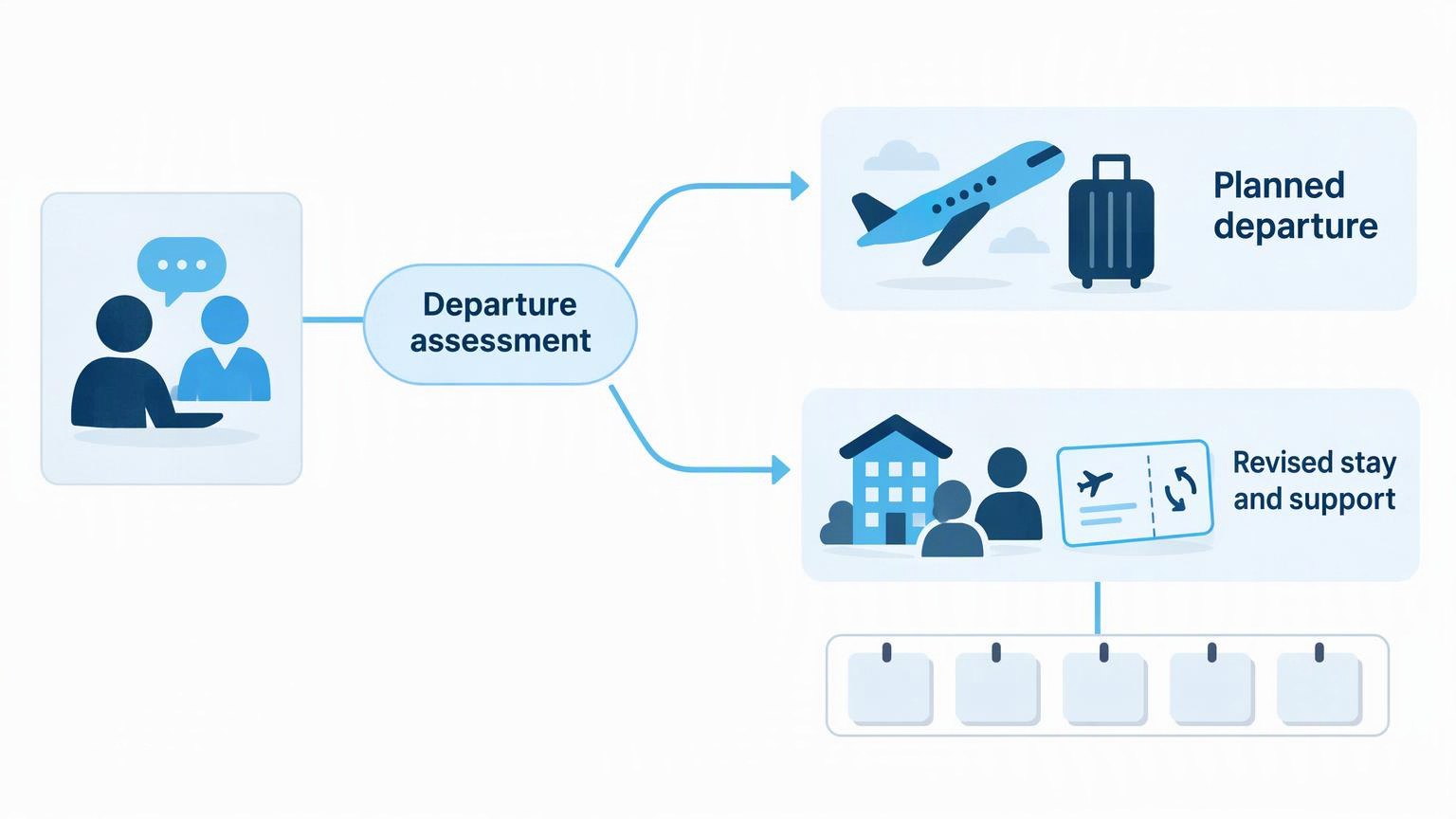
| Departure assessment may change timing | Compare changeable flights and extendable lodging | Allows a practical response to a revised plan | Availability, extra charges and payer remain subject to terms |
| An immovable return deadline conflicts with required care | Postpone or reconsider the trip | Avoids making the ticket dictate clinical timing | Requires different travel dates or care arrangements |
How should follow-up determine my stay and return flight?
Plan your stay around the treating clinician's review schedule and departure assessment. A general recovery estimate, removal of a splint or feeling ready to leave does not establish individual clearance to fly.
First obtain the proposed sequence: consultation and preparation, procedure, postoperative reviews, then assessment for travel. Identify which steps require you to be physically present. Only then compare lodging and flight options, including what changing them would actually involve.
Say you have limited time off, your companion must return earlier, and the treating team requires an examination before deciding whether you can depart. A fixed return flight may fit the proposed schedule, but it leaves a problem if that assessment changes the departure date. A changeable booking addresses the travel problem; it does not supply any personal or clinical support required during an extended stay.
If you can accommodate a later departure and the required support, flexibility may make the itinerary workable. If your deadline cannot move and conflicts with the care plan, postponing the trip is more appropriate than asking the clinician to fit recovery into the ticket.
What happens if I need help in Mexico or after returning home?
Establish separate arrangements for scheduled reviews and unexpected concerns. An appointment calendar answers when someone checks you; it does not answer where to obtain urgent assessment outside those appointments.
Ask the treating team to explain its after-hours contact process, what to do if that contact is unavailable, and where it directs patients who need in-person evaluation. Obtain clinician-specific instructions distinguishing expected changes from symptoms requiring prompt or emergency attention. Do not wait for a travel coordinator or routine remote appointment when urgent care is needed.
Before returning home, establish who continues follow-up and whether that clinician has agreed to receive you. A name on a suggested-provider list is not an accepted handoff. Clarify what remote reviews can address and when an examination may be necessary.
Ask how the operative summary, discharge instructions and relevant care information will reach the receiving clinician through an appropriate secure channel. The practical result should be clear responsibility: who reviews progress, who can change instructions, and who assesses a new concern.
Who pays if the recovery plan changes?
Payment responsibility comes from the applicable written agreements and policies, not from the reason a change occurred. Separate additional clinical services from lodging, transportation and airline charges when reviewing a proposal.
For example, if the clinician advises a later departure, an extra hotel night is still a travel service. That advice does not establish who pays, whether the night is included, whether a room is available, or which hotel terms apply. Any additional examination is a separate clinical service whose charge and inclusion also need to be established.
Review the supplier consequences before committing: what happens to an unused night, a changed flight or a canceled service? Look for the applicable cancellation, refund and change provisions, including deadlines and any required documentation. A description such as “recovery package” does not answer those questions.
Insurance is a separate agreement. Cancellation benefits, medical treatment coverage and evacuation coverage can have different exclusions and claim conditions. Ask the insurer about the planned procedure and relevant benefits; do not assume that a supplier refund or a clinician's recommendation establishes insurance coverage.
Which details belong with the travel contact, and which belong with the clinician?
Discuss ordinary travel arrangements with the confirmed travel contact and clinical decisions with the treating team. Hospitality Cancun publishes travel and consultation-planning guidance; eligibility, recovery instructions and departure assessment remain the clinician's responsibility.
Once the recipient and purpose are clear, later travel discussions can cover appointment timing, lodging, transportation and companion arrangements. Prepare those details privately while the clinical plan develops.
Before submitting any information through Hospitality Cancun's contact section, clarify who receives it and why. The first submission is limited to name and email, with an optional contact-method preference. It must not include trip details, a narrative, health information, attachments, payment details or insurance identifiers.
Permission to answer your requested inquiry, optional marketing permission and permission for referral to a specifically named provider are three separate choices. A requested reply is not marketing consent. Diagnoses, scans and clinical records belong only in a named provider-confirmed secure channel, not a general inquiry. These boundaries keep the planning conversation distinct from clinical evaluation.
Frequently Asked Questions
Can I use someone else's recovery video to plan my trip?
Use it to identify topics you want explained, not to set your own departure date or care routine. Another person's procedure, support and follow-up may differ from yours. Bring the underlying question to your clinician without adopting the video's techniques, medication choices or reported recovery milestone.
How should I discuss pain or discomfort during consultation?
Ask the clinician what discomfort may be expected in your case, how it will be managed, and what to do if the prescribed plan is not helping. Include how to obtain advice outside appointments. Avoid assuming that a painless account or a dramatic description predicts your experience.
Can I combine the trip with sightseeing?
Keep optional activities separate from the care itinerary until the clinician explains your restrictions. Discuss the actual demands of an activity rather than asking only whether sightseeing is allowed. Walking, transportation, sun exposure and carrying belongings may raise different questions. Do not use a vacation schedule to shorten required follow-up.
Does a virtual consultation settle every preoperative question?
Ask what the virtual consultation can establish and what remains subject to an in-person examination or other assessment. The proposed procedure and schedule may change after that assessment. Understand those remaining decisions before buying travel whose cancellation terms would make a changed clinical recommendation difficult to accommodate.
What should I tell my employer about returning to work?
Discuss your actual duties with the clinician, including physical demands, commuting and any protective equipment. Ask which restrictions affect those tasks and whether reassessment is needed before resuming them. Keep your work-return plan separate from flight timing; permission to travel does not automatically answer every work-related question.