

Consultation and Travel Planning
Learn how to compare individualized proposals without confusing a surgical plan, a care arrangement and a travel package.
A package name can make unlike proposals sound equivalent. Breast surgery may mean a lift, augmentation, reduction or a combination, while lodging and follow-up may be handled separately. Start by separating those elements so you can compare what is actually proposed, rather than assuming every advertised makeover contains the same care.
Compare the procedure scope and treatment sequence together
Discuss combined treatment when the clinician considers that combination appropriate; discuss staged or narrower treatment when the assessment supports a different approach. None is automatically the best choice because it includes more procedures or requires fewer trips.
Cancun Plastic Surgery Center's procedure page describes a customized plan and lists tummy tuck, breast lift or augmentation, and liposuction as common components. It also lists breast reduction among possible options. Those distinctions matter: a proposal for a lift is not equivalent to one for augmentation, and the label alone does not specify the areas proposed for liposuction.
Prepare your priorities privately in ordinary language, then let the clinician connect them to possible procedures. For each proposal, identify the exact operation, treatment areas, optional additions and the reason for combining or separating treatment. Eligibility, risks and expected limitations belong in the clinical assessment. The comparison below identifies discussion routes, not medical recommendations.
Search by the named surgeon, then verify the proposed facility
Use online listings to discover candidates, then investigate the named surgeon and operating facility separately. A listing's position is not proof that a particular procedure is suitable for you.
Start with the procedure you want to discuss and Cancun. Open the provider's own page to identify the surgeon and proposed facility. Next, search the surgeon's full name with plastic surgery credentials and the facility's full name with licensing or accreditation information. Match the exact person, facility and location, rather than relying on a logo or a similar name.
Request credential identifiers from the provider and compare them with the issuing body's current record. If an accreditation is claimed, establish which facility it covers and whether it is current. If you cannot establish the surgeon's identity or operating location, pause that candidate.
Bookimed's Cancun listing says its rankings consider demand, reviews, updates, response speed and certifications. That explains why a ranking can assist discovery without replacing direct verification or a clinical consultation.
| Alternative | Consider When | Trade-Off |
|---|---|---|
| Combined procedures | The clinician supports the proposed combination after assessment. | One treatment plan still needs its own support and follow-up arrangements. |
| Staged treatment | The clinician recommends separating procedures. | Compare each stage's care requirements and any additional travel commitments. |
| Narrower plan | A smaller scope addresses your priority and is clinically appropriate. | It does not address every goal in the broader proposal. |
| Defer treatment | Suitability, clinical responsibility or essential arrangements have not been established. | Postpone commitments while resolving the question that prevents a decision. |

Separate clinical follow-up from lodging and companion help
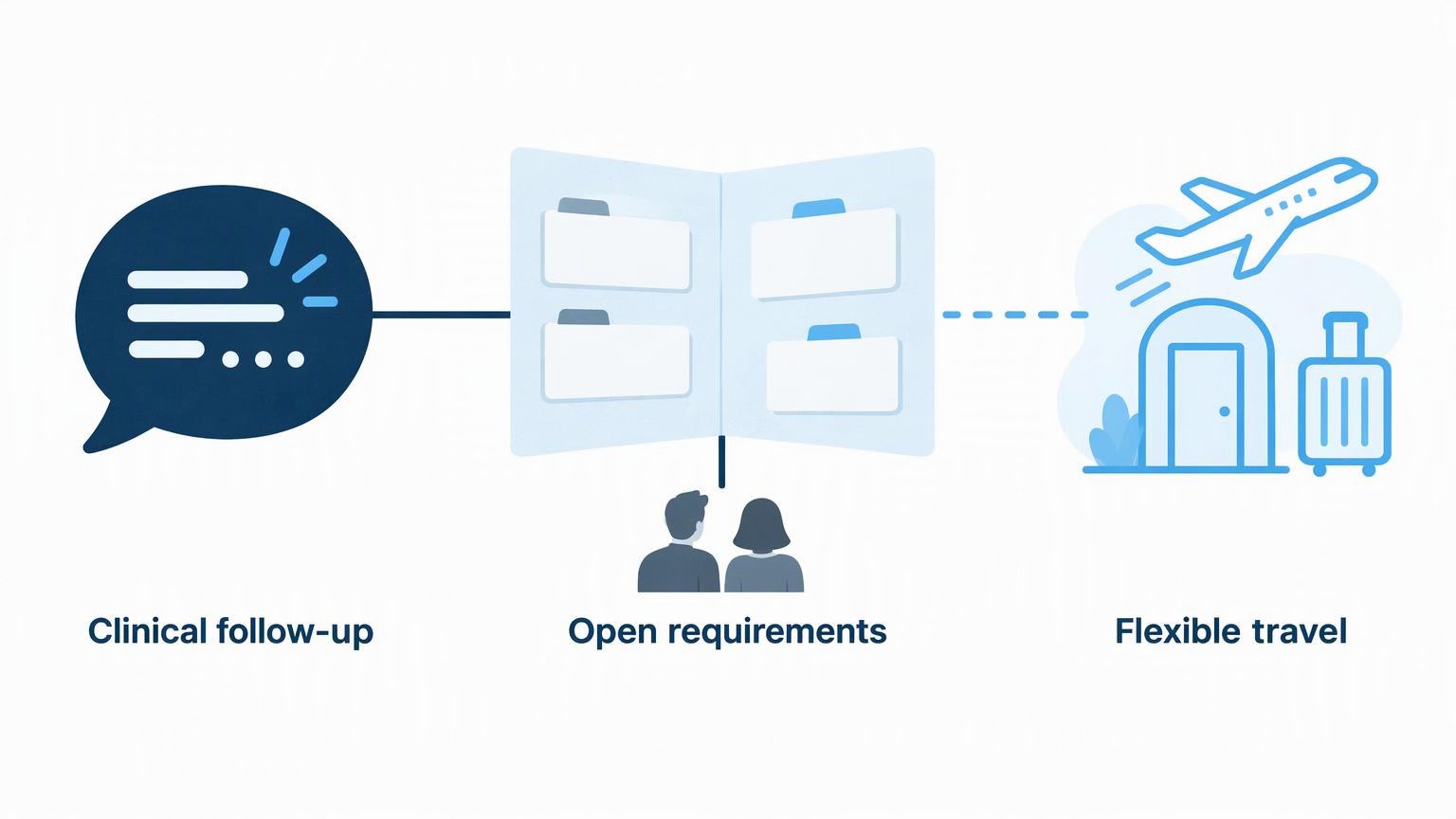
A usable care proposal identifies who is responsible for clinical reviews, how concerns are escalated and what happens after you return home. A hotel room, driver or companion does not establish those arrangements.
Compare the planned review schedule, the responsible clinician and the instructions for obtaining urgent assessment. Establish how the treating clinician will communicate the procedure record and follow-up instructions to you, and how any handoff to a clinician at home would work. Do not assume a local clinician has accepted that role simply because you intend to contact one.
Read support descriptions literally. Transport means movement between locations; lodging means accommodation. Companion help and professional clinical care are different services. If a proposal mentions nursing, clarify the tasks, provider and schedule rather than treating the word as continuous supervision.
The practical consequence is a division of responsibility: travel arrangements solve transport and accommodation needs, while the treating clinician defines clinical support requirements. A flexible hotel booking cannot fill a gap in clinical follow-up.
Test the itinerary against an open follow-up requirement
Set the travel sequence around the clinician's assessment and follow-up plan, then compare booking flexibility. An advertised stay length is not individual clearance to fly.
Say you are comparing a combined proposal with a narrower proposal. Your companion has a fixed departure, but the treating clinician has not yet established when your final in-person review should occur. The combined proposal sounds convenient because it groups treatment, yet neither proposal currently fits a reliable return itinerary.
Your alternatives are to retain changeable travel arrangements while the review plan is resolved, revise the companion arrangement if the clinician specifies assistance needs, or postpone committing to the trip. Choosing the narrower proposal solely to preserve the flight would skip the clinical decision. The reasoned next step is to establish the care requirement first.
Once that requirement is clear, search flights by the appropriate date window and compare their actual change terms. Search lodging for the required stay and room features. Compare transfer arrangements against appointment locations; a cheaper booking is not useful if it cannot serve the necessary itinerary.
Compare charges, change terms and insurance as separate layers
Compare itemized proposals with matching procedure scope before comparing totals. Then examine what happens financially if treatment or travel changes. A low headline amount cannot answer either question.
Use one private comparison sheet:
- Medical charges: surgeon, anesthesia, facility, tests, materials, medications and planned reviews, as applicable.
- Travel charges: lodging, transport, flights and companion accommodation.
- Contract terms: currency, deposit, balance deadline, exclusions and cancellation, refund or change provisions.
- Insurance: applicable cancellation, medical or evacuation coverage, exclusions and claim conditions.
For example, an extra hotel night remains a travel charge even if the clinician directs a longer stay. That reason does not establish whether the night is included, who pays or which hotel terms apply. You cannot determine those points unless the applicable proposal and supplier contract spell them out.
Supplier terms determine contractual cancellation and change consequences. Insurance determines whether a covered claim may reimburse an eligible expense under its own conditions. Neither substitutes for the other. Resolve unclear charges with the relevant supplier before accepting a proposal or paying; do not assume a medical reason creates a refund right.
Keep the planning conversation separate from clinical assessment
Hospitality Cancun publishes travel and consultation-planning guidance. Treatment suitability and recovery advice belong with the qualified treating clinician. Keep your comparison notes private until the appropriate recipient and purpose are clear.
Before submitting any information through a general inquiry, establish who receives it and why. The first submission allows only your name and email, with an optional contact-method preference. Do not add trip details, proposal text, a planning narrative or attachments.
Later, ordinary dates, companion arrangements and room needs may be discussed with the confirmed travel contact. Diagnoses, scans and clinical records belong only in a named provider-confirmed secure channel. Payment details and insurance identifiers do not belong in a general inquiry.
Permission to answer your requested inquiry, optional marketing and referral to a specifically named provider are separate choices. Agreeing to a reply is not marketing consent or permission for a provider referral.
Frequently Asked Questions
Does the name mean you must have had children?
No. Cancun Plastic Surgery Center's page also discusses these plans in relation to significant weight changes. The label does not establish eligibility, however. Your goals and individual clinical assessment determine what, if anything, is appropriate, rather than whether you fit the marketing name.
How much weight should I give before-and-after photographs?
Treat them as material for discussing preferences, not as a prediction of your result. Ask the clinician to explain how the proposed approach relates to your own assessment and what its limitations are. Photographs do not establish credentials, facility authorization, follow-up arrangements or your suitability for the same procedure.
Can a virtual consultation settle every part of the proposal?
Do not assume it does. Establish which decisions the clinician can make remotely and which require an examination or testing before confirmation. The practical issue is whether later findings could change procedure scope, timing or charges after travel has been booked. Compare those consequences before accepting the proposal.
What if the surgeon changes after I accept a proposal?
Pause and review the replacement surgeon's identity, qualifications and proposed approach before agreeing to proceed. Your earlier verification applied to a particular person, not automatically to a substitute. Separately, read the agreement to understand your options if the change affects your willingness to continue; do not assume a refund is guaranteed.
What if I cannot comfortably understand the consent discussion?
Arrange understandable communication with the treating provider before deciding. Ask how interpretation and written explanations will be provided, and allow time to understand alternatives, risks and follow-up instructions. A travel companion can help with logistics, but their presence does not establish that the clinical consent discussion will be clear.