

Consultation Planning
Plan how you will ask questions, understand explanations and use written instructions before making care-related travel commitments.
An English-language inquiry response can help you begin a conversation, but it does not tell you how a consultation or later instructions will be delivered. Treat those as separate arrangements. This guide focuses on communicating with your care provider, not selecting a surgical technique or deciding whether treatment is suitable. Those decisions belong with the qualified treating clinician.
Choose language support for the conversation you need
Direct communication can work when you and the treating clinician can discuss your questions clearly in a shared language. When important meaning remains uncertain, discuss provider-arranged interpretation rather than assuming conversational fluency is enough. Written translation has a different job: it gives you something understandable to refer to afterward.
Think beyond greetings, scheduling and hotel arrangements. Could you explain what you want assessed, understand an unfamiliar term and ask a follow-up question without guessing? You do not need medical vocabulary, but you do need a way to pause the discussion and clarify it.
Make the arrangement specific to the people involved. An English-speaking administrative contact does not establish how the surgeon or another clinician will communicate. Likewise, an English brochure does not establish that your individual instructions will be available in English.
If interpretation is proposed, discuss who arranges it, whether it covers the relevant appointments and how you can raise private questions. Confirm any charge with the party providing that service. Do not assume interpretation is included in a care or travel price. The comparison below describes possible methods, not language services promised by any Cancun provider.
Use the consultation to test understanding
You can test understanding by explaining the clinician's answer back in your own words and inviting correction. Recognizing individual words is not the same as understanding what a proposed plan means for you.
Begin with the concern you want assessed. Keep appearance questions and breathing questions distinct so the clinician can address each directly. For example, ask whether a proposed change is intended to address appearance, function or both. This is a request for explanation, not a way to determine the appropriate procedure yourself.
Then work through the clinician's explanation one topic at a time. Ask for plain language when a term is unfamiliar. A useful response is: I understand that this is the proposed plan, these are its limits, and these questions remain open. Have I understood correctly? Let the clinician correct your summary before moving on.
Apply the same approach to consent discussions. Ask the treating clinician to explain the proposed procedure, alternatives and risks in a form you understand before agreeing. If interpretation or another appointment is needed to finish that conversation, leave the decision open rather than treating a signature as proof that the discussion was clear.
| Method | Useful when | Trade-off |
|---|---|---|
| Direct clinician communication | You share a language and can clarify clinical explanations. | A shared language still requires checking understanding. |
| Provider-arranged live interpretation | You need help participating in spoken clinical discussions. | Availability, scope and any charge must be established with the provider. |
| Provider-confirmed written translation | You need readable instructions to consult later. | Written material does not replace a live opportunity to ask questions. |
Connect spoken explanations to readable instructions
Ask the treating provider for written instructions you can understand and for a way to clarify them. The goal is an agreed reference for your care, not a collection of translations that you must reconcile yourself.
Say you can discuss your questions in English, but the written instructions provided afterward are in Spanish. You recognize some words, yet one instruction seems different from what you remember hearing. You could guess from context, use an app or request an explanation from the provider. Because you are unsure what the instruction means, ask the provider to clarify it before acting on it.
If the provider can supply an understandable version, review it together. If translation must be arranged, establish how the provider will confirm that the translated instructions reflect the intended advice. An app may suggest wording for a question, but do not use its output to settle a clinical discrepancy or change an instruction.
Before leaving that discussion, explain the clarified instruction back and identify which version you should follow. Ask the provider to make any correction clear in the written reference. Keep your private notes separate from the provider's instructions so a reminder you wrote does not become mistaken for clinical advice.

Establish follow-up communication before arranging travel
Establish who will answer clinical questions, how language support will work and which route the provider directs you to use for urgent concerns. Separately, use the clinician's follow-up plan to inform travel arrangements. A travel contact cannot provide individual clearance to fly.
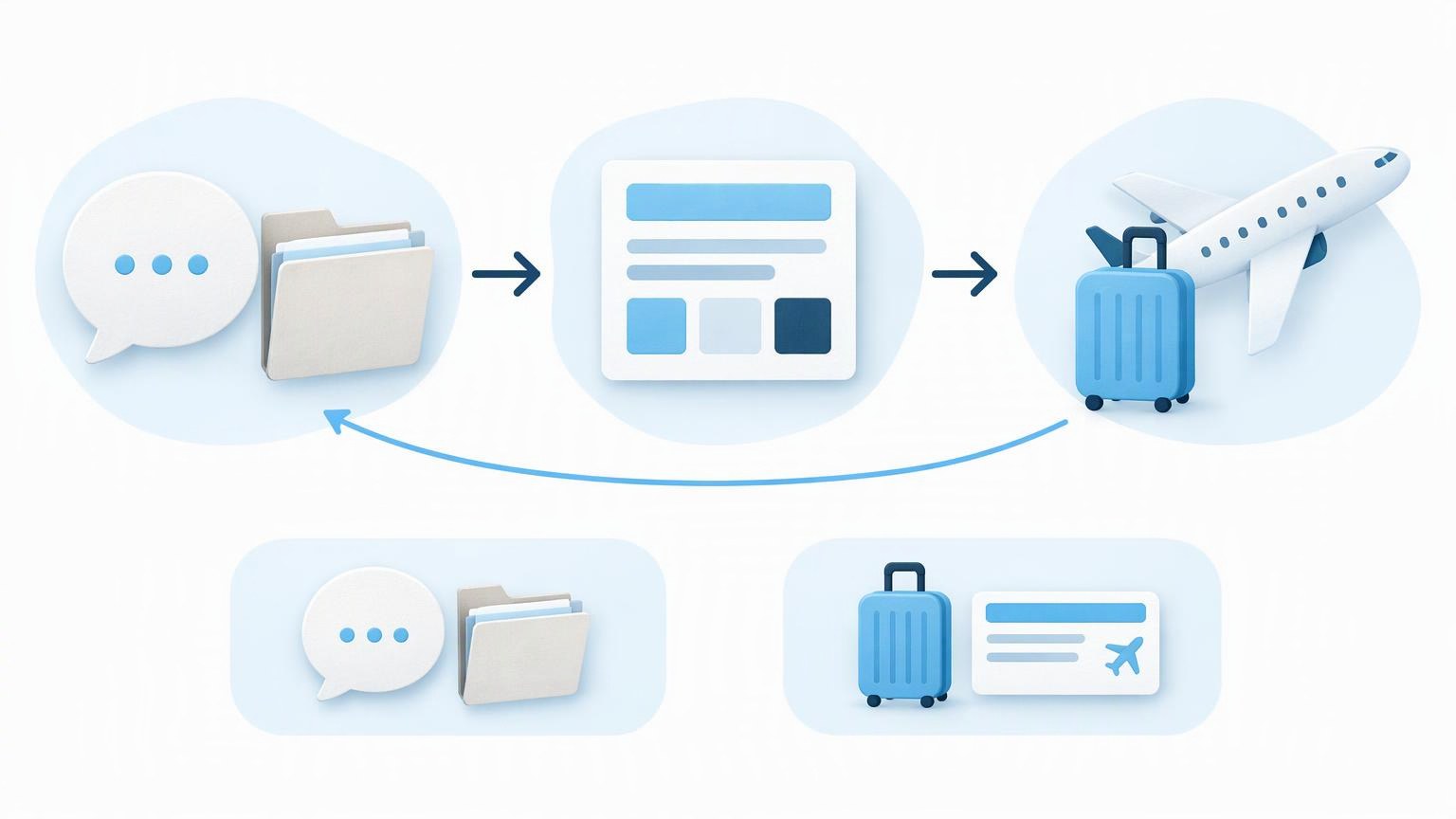
Map the sequence: receive the clinician's plan, understand the required follow-up, then use those instructions to organize lodging and flights. If a later clinical assessment changes the plan, ask the clinician to explain the change first. Discuss the resulting reservation changes with the relevant travel supplier or confirmed travel contact afterward.
For example, a follow-up appointment may no longer align with your intended departure. The clinician determines the care requirement; you then compare travel options that accommodate it. Moving a flight does not answer whether departure is clinically appropriate, and a fixed recovery-day estimate is not individual clearance.
Prepare for communication after returning home as well. Clarify whether the provider offers a follow-up channel, what language arrangements apply and how questions will reach a clinician. Follow the provider's specific urgent-care instructions rather than assuming an ordinary message inbox is monitored for urgent concerns. Keep clinical questions separate from transportation or reservation requests.
Prepare a provider agenda, not a first-form narrative
Prepare your communication questions privately for the care-provider discussion. Do not put that agenda into Hospitality Cancun's initial general inquiry. We publish travel and consultation-planning guidance; clinical explanations and individual instructions come from the treating provider.
Use one compact preparation checklist:
- Which language can you comfortably use for speaking and reading?
- How will clinical discussions be handled if direct communication is unclear?
- How will written instructions be explained or translated?
- Who will resolve conflicting wording or unanswered questions?
- How will follow-up communication work during the visit and afterward?
Before submitting any information through a general inquiry, clarify the recipient and purpose. Once those are clear, the first submission allows only your name, email and optional contact-method preference. It does not include this checklist, travel details or a health narrative. Ordinary travel details may be discussed later with the confirmed travel contact.
Permission to answer your inquiry, optional marketing and referral to a specifically named provider are separate choices. A requested reply is not marketing consent. Diagnoses, scans and clinical records belong only in a named provider-confirmed secure channel. Do not send clinical records, attachments, insurance numbers or payment details through a general form.
Frequently Asked Questions
Does an English-language website mean every care discussion will be in English?
No. Website language does not establish the language used by each clinician or in individual care documents. Treat it as a starting point for reading, not a promise about communication. Establish the arrangement with the provider for the specific consultation and follow-up you are considering.
Can my companion help during a consultation?
You can discuss a companion's involvement with the provider and decide what you want shared. A companion can help you remember questions, but do not assume that makes them suitable to interpret clinical explanations. Keep a way to ask private questions without depending on the companion.
What if I read English comfortably but have trouble following spoken explanations?
Describe speaking and reading needs separately in your provider discussion. Request a slower explanation, plain wording and a written reference you can review. If the conversation remains unclear, discuss interpretation. Being comfortable reading a document does not mean you must manage a spoken consultation without support.
Should I record the consultation to listen again later?
Ask the provider before recording and obtain permission from everyone involved. Do not assume recording is permitted. If it is not agreed, use written questions and ask for a provider-confirmed summary instead. A recording, where permitted, still does not resolve wording you never understood.
Does clear communication prove a provider is qualified?
No. Communication arrangements help you understand a discussion; they do not establish professional credentials, treatment suitability or facility accreditation. Evaluate qualifications separately using current documentation for the named clinician and facility. Do not treat an English-speaking coordinator, interpreter or polished website as evidence of clinical qualifications.