

Consultation and Travel Planning
Build a comparison that connects provider identity, the consultation, travel commitments and responsibility for follow-up.
A search result can introduce a provider, but it cannot establish whether a procedure fits your needs or your available travel window. Keep a private comparison sheet that separates provider statements, proposed services and details still needing clarification. Hospitality Cancun publishes travel and consultation-planning guidance; clinical decisions belong with the qualified treating clinician.
Choose the consultation route that answers your open question
Start with preliminary remote discussion if you need to understand the provider's assessment process before traveling. A consultation-only visit may suit you when an in-person assessment is needed and you are comfortable traveling without a commitment to surgery. Neither route establishes eligibility or guarantees that treatment will follow.
Compare the routes by their purpose, rather than assuming that a bundled trip is more complete. A remote conversation may clarify what an eventual examination must address. An in-person visit creates a travel expense but can keep the decision about surgery separate from the pressure of an already-booked surgical itinerary.
If a proposed option leaves the surgeon, facility or follow-up responsibility unnamed, obtain clarification before moving it forward. A polished presentation does not fill those gaps. The useful outcome at this stage is a clear next assessment step, with its cost and limits understood, not a premature choice of technique or travel dates.
Search for named providers, then verify their claims
Use search results to find names to investigate, not to create a ranking. Start with a natural search such as “rhinoplasty consultation in Cancun,” then look for the proposed treating clinician's full name and the facility where surgery would take place.
For each candidate, record the exact credential claimed, the organization said to issue it and any identifying details the provider supplies. Use that organization's own verification process where available. Match the identity and specialty rather than treating a logo, directory badge or marketing phrase as confirmation. If you cannot resolve a mismatch, keep that candidate outside your active shortlist.
Next, distinguish the surgeon's practice from a directory, hospital listing or travel intermediary. Establish who conducts the consultation, who provides clinical care and who would contract with you for each service. This changes your next step: a directory entry leads to identity checks; an identifiable provider leads to consultation-scope comparison. Neither establishes procedure-specific competence, availability or suitability by itself.
| Route | Choose when | Trade-off |
|---|---|---|
| Preliminary remote discussion | You need to understand assessment requirements before traveling. | May leave questions that require an in-person examination. |
| Consultation-only visit | An in-person assessment is needed before you decide about surgery. | Creates travel costs without a commitment to treatment. |
| Pause for clarification | The clinician, facility or follow-up responsibility is unclear. | Delays progress but avoids committing against missing information. |

Compare what the consultation will resolve
A useful consultation should clarify your goals, the clinician's assessment process and what must happen before any treatment decision. Compare whether the proposed conversation is introductory, a records review or an in-person examination, and who is responsible for interpreting its findings.
The Medical Tourism Mexico Cancun rhinoplasty listing directs readers to request a consultation for estimates. That makes the consultation a necessary next step for that listing, rather than making its promotional description a personalized offer.
Prepare your questions privately: what concerns you want assessed, whether previous nasal surgery affects the discussion, and what you need explained about alternatives, limitations and follow-up. The qualified clinician should decide which information and examination are needed. Do not select a surgical approach from a search label.
Before treating the consultation as complete, identify which decisions still need assessment or agreement. An explanation of a possible procedure is not the same as a final treatment plan, an agreed price or individual clearance to travel.
Compare equivalent costs and separate contract terms
Compare proposals only after separating the services they cover. A surgery-only amount and a combined travel-and-care amount are not equivalent totals. Record each included service, its supplier, exclusions and any item still awaiting assessment.
Use one compact checklist: surgeon charges; anesthesia and facility charges; required assessments; scheduled clinical follow-up; lodging and transport; deposits and balance deadlines; cancellation, refund and change terms. An item described as available is not necessarily included.
Then identify who receives payment and which contract governs each purchase. Supplier terms determine what happens to a deposit or reservation if you cancel, postpone or change the plan. Do not infer refund rights from the medical reason for a change.
Insurance is a separate comparison. Cancellation coverage, medical coverage and evacuation coverage have their own conditions and exclusions; a policy name does not establish coverage for planned surgery or a resulting travel change. Before paying, read the applicable supplier terms and policy wording rather than treating insurance as a replacement for either contract.
Test the itinerary against the clinician's follow-up plan
Your available time must fit the clinician's plan, not a published recovery timetable. The Cancun listing also describes face-to-face and virtual follow-up possibilities. That distinction matters when comparing options, but it does not establish that remote review can replace an examination in your case.
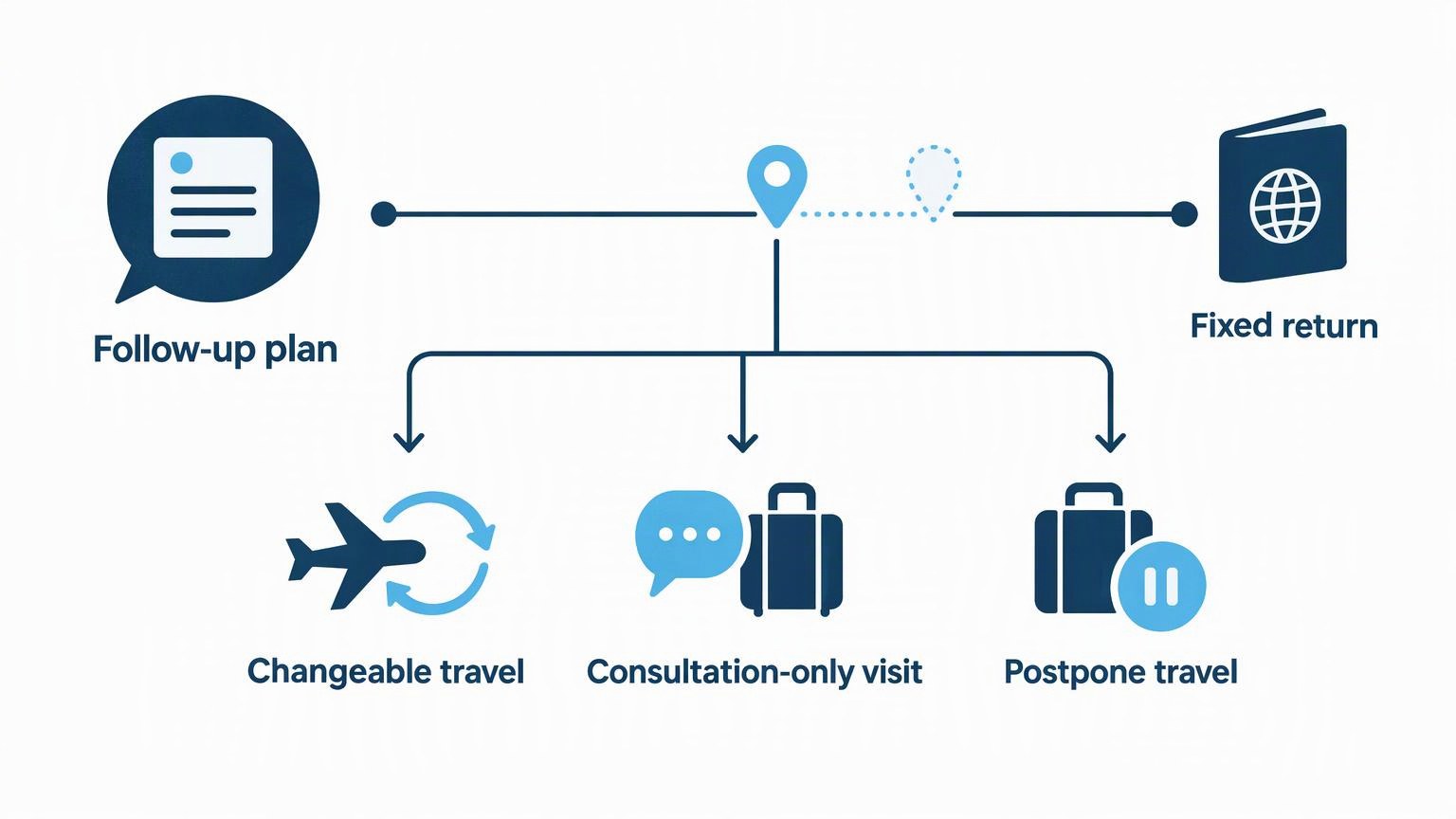
Say you must return home for a fixed obligation, while the clinician has not yet decided whether a later review must be in person. You could select changeable travel, make a consultation-only visit or postpone surgery-related travel. Whether you must attend that examination is the deciding issue. If your return cannot move, postponement or consultation-only travel is more defensible than assuming virtual follow-up will be sufficient.
Once the clinical schedule is clear, compare lodging extension terms and flight-change conditions against it. If the clinician directs an extra hotel night, that remains a lodging charge. The direction does not establish who pays, whether the night is included, which hotel terms apply or whether insurance covers it. Those questions depend on the relevant written agreements.
Arrange an accepted clinical handoff before departure
Before returning home, establish who will provide continuing clinical review and how to reach that provider. A general statement that follow-up is available does not identify who handles a concern, whether an examination is required or whether a local clinician has accepted the role.
First, obtain the treating clinician's follow-up instructions and contact pathway. Next, identify which reviews are planned remotely and which require attendance. If care at home is proposed, arrange acceptance with the named local clinician rather than assuming your existing doctor will undertake postoperative tasks. Follow the treating clinician's instructions for urgent concerns.
Keep responsibilities separate. Changing a flight or extending a room is a logistics task; deciding whether you need clinical assessment is a clinician's task. Ordinary booking flexibility does not establish a need for medical support.
Travel dates and room arrangements can be discussed later with a confirmed travel contact. Clinical records and scans belong only in a named treating-provider-confirmed secure channel. An accepted handoff connects people and responsibilities, not just documents.
Frequently Asked Questions
Can before-and-after photos tell me which provider to choose?
Use images to frame questions about the provider's work, not as proof of your likely result. Establish whose cases are shown and let the clinician explain whether they relate to your concerns. Photos do not replace identity verification, assessment, informed consent or a follow-up plan.
Should I choose an open or closed approach before contacting a clinician?
No. Treat those terms as subjects for the consultation rather than filters that determine your provider choice. The treating clinician should explain which approaches, if any, are relevant after assessment. Compare the reasoning and limitations offered, not whether a listing advertises the technique you initially searched for.
How can I compare English-language communication?
Establish who will explain the assessment, consent documents and follow-up instructions in language you understand. An English-language website does not identify who will communicate during care. Distinguish administrative assistance from the clinician's explanation, and resolve any interpretation arrangements before relying on that option for a consultation.
What belongs in my first Hospitality Cancun inquiry?
Clarify the recipient and purpose before submitting any information. The first submission permits only name and email, plus optional contact-method preference. Do not add travel details, narrative, records, scans, insurance numbers, payment details or attachments. Ordinary travel discussion may happen later after the recipient and purpose are clear.
Does requesting a reply also authorize marketing or a provider referral?
No. Permission to respond to your requested inquiry, optional marketing permission and permission for referral to a specifically named provider are separate choices. A planning conversation does not combine them. Before agreeing to an introduction, establish the provider's identity and the purpose of sharing your information.