

Consultation and Travel Planning
Separate what the occasion requires from what a qualified clinician needs to assess before you commit to a procedure trip.
A wedding, reunion or milestone birthday may explain why you are researching now. The useful distinction is between a reason to begin a consultation and a reason to commit to treatment. You can act on the first without accepting the second. Start by deciding what you want to protect: participation in the occasion, freedom to change your travel plans, or time to consider treatment without a deadline.
When should an event influence the timing discussion?
Let the event influence the discussion when it provides useful context and you can accept a recommendation that does not fit your preferred calendar. Keep it secondary when attending exactly as planned matters more than pursuing treatment beforehand.
Compare the available paths together. You could discuss treatment before the occasion, consider it afterward, or seek consultation now without selecting a treatment date. The last option is meaningful progress: it allows you to learn about suitability and alternatives without making the event a deadline.
Also distinguish participation from appearance. Wanting to attend a celebration is different from expecting a particular result in photographs. Neither a convenient appointment slot nor a travel reservation establishes how you will look or what you can do at the event.
The comparison below helps identify which path deserves discussion. It does not determine whether treatment is appropriate for you.
How do you make the occasion useful in a consultation?
Describe the demands of the occasion to the qualified treating clinician, rather than asking only whether a date is available. Attendance, activity, appearance expectations and travel are different matters and may need different answers.
Prepare a short private note covering:
- Whether attendance is essential or participation can change.
- What your role involves, such as standing, dancing, lifting luggage or hosting.
- Whether attending requires another journey.
- What you hope treatment will change, apart from the event.
Use that note during the clinical consultation. Ask the clinician to distinguish a preliminary estimate from decisions requiring assessment or later review. Flight timing and length of stay depend on the clinician and follow-up plan; a calendar calculation cannot establish clearance.
Identify the treating clinician and verify claimed registration and relevant specialty credentials with the issuing bodies. An administrative conversation about dates is not a clinical assessment. Our guide to comparing body-contouring care plans addresses the broader provider and proposal comparison.
| Your situation | Suitable next step | Reason | Trade-off |
|---|---|---|---|
| Participation can change | Discuss the event alongside treatment goals | You can accommodate clinical guidance | The preferred event plan may change |
| Attendance and responsibilities are essential | Consult now; consider treatment separately | The occasion does not depend on clinical timing that has yet to be assessed | Treatment may come after the event |
| A particular appearance is essential | Reconsider the deadline before committing | A date does not establish an individual result | You may attend without the hoped-for change |
What if the event is fixed but the care plan is not?
Protect the fixed commitment and postpone the treatment commitment when clinical timing has not yet been assessed. You do not have to postpone learning about your options.
Say you are attending a family wedding and have agreed to help host. You are considering body contouring beforehand because you want a change in how your clothes fit. Attendance and your hosting role are essential, but you have not yet had an individual clinical assessment.
Booking treatment first would commit you before you know whether the proposed care and follow-up fit those obligations. Consultation now, with treatment considered separately, preserves attendance while allowing you to evaluate your goals. Discussing treatment before the wedding remains an option, but only if you are genuinely willing to change your event plans based on clinical guidance.
Given these priorities, consultation without a treatment-date commitment is the better next step. The reason is not that a particular interval is too short. It is that an essential obligation would otherwise depend on unanswered clinical questions.

What order should you use to build the travel calendar?
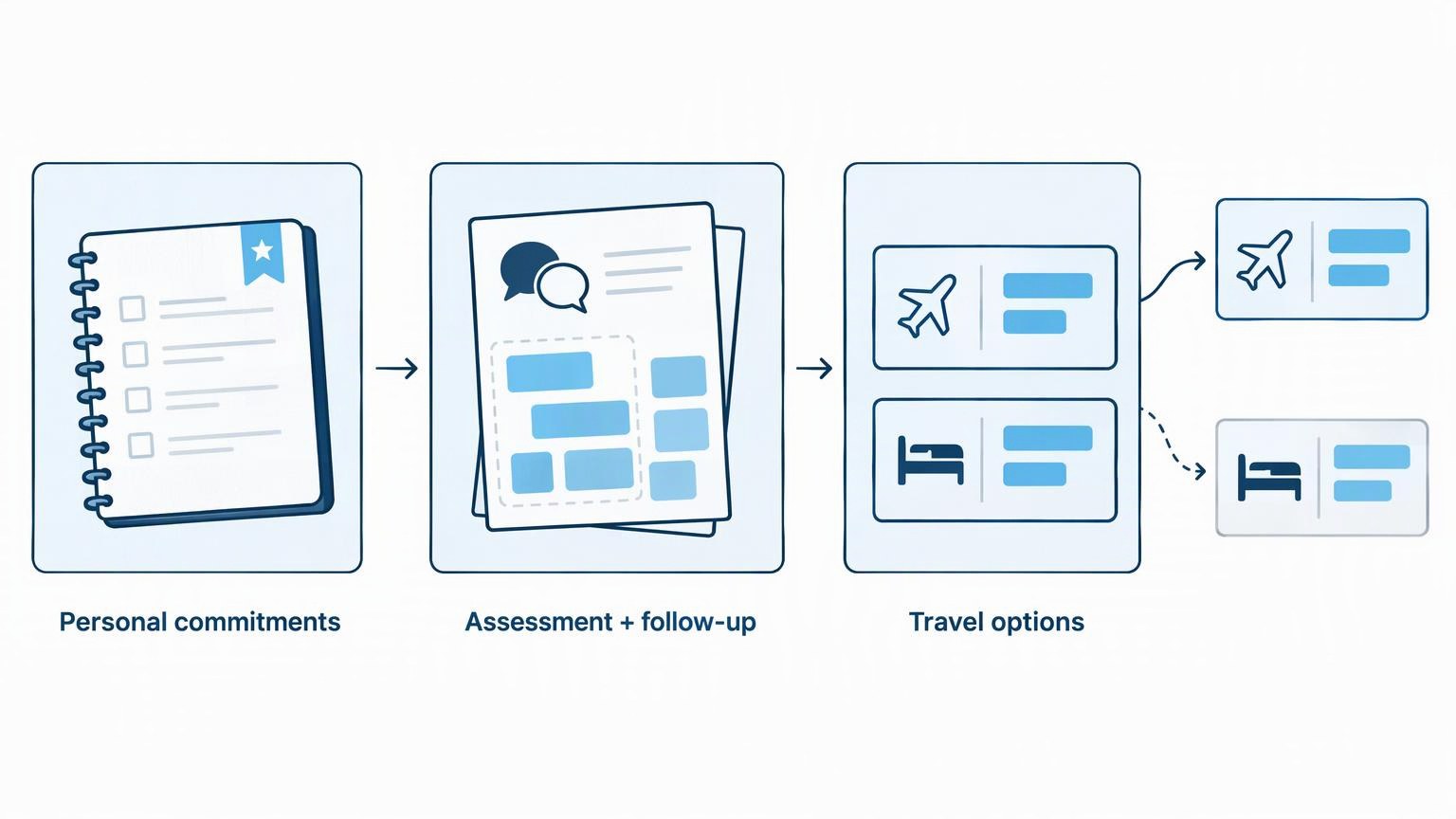
Build the calendar from the assessed care and follow-up requirements, then select travel options that fit. You can research transportation and lodging earlier, but keep those options open rather than using them as reasons to compress the plan.
First, mark your fixed personal commitments privately. Next, use the clinical consultation to establish what assessment remains and what the proposed trip needs to accommodate. Then search flights and lodging using that information, comparing schedule fit and change conditions rather than price alone.
If the proposed follow-up conflicts with your event departure, remove that itinerary from consideration instead of assuming the appointment can move. If the return date remains conditional, a reservation allowing changes may deserve consideration, subject to its actual terms and availability.
Keep companion availability separate from clinical support requirements. A companion's departure does not determine what care you need; the actual care plan does. For the broader travel sequence, see planning a body-contouring procedure trip.
What financial trade-off comes with an event-linked trip?
An event-linked trip deserves a closer look at change terms because you may be trying to preserve separate commitments. Compare what each reservation lets you change, not simply whether it is described as flexible.
Before paying, read the applicable cancellation, refund and change terms for treatment-related payments, flights and lodging separately. Identify which supplier holds each payment and what happens if you move a date or cannot use the reservation. A bundled description does not establish every supplier's obligations.
For example, if a clinician recommends a longer stay, an additional hotel night is still a travel service. The clinical reason does not establish whether that night is included or who pays. Those answers depend on the applicable written agreement.
Insurance is a separate question. Cancellation, medical and evacuation coverage depend on the policy and claim conditions; they do not replace supplier terms or guarantee reimbursement. Choose a financial commitment you can manage under the actual terms, not one that works only if every date stays unchanged.
Where does Hospitality Cancun fit in your next step?
Hospitality Cancun publishes travel and consultation-planning guidance for adults considering care in Cancun or the Mexican Caribbean. Use that information to organize your planning decisions, not to establish treatment suitability, recovery expectations or permission to fly.
Review whether the site's focus matches the travel questions you still need to resolve. An event may explain your interest, but reviewing information does not require committing to treatment or accepting a provider introduction.
Before submitting any information, clarify the recipient and purpose. The first submission allows only name, email and optional contact-method preference. Travel details may be discussed later with the confirmed travel contact. Permission to reply, optional marketing and referral to a specifically named provider are separate choices. Clinical records belong only in a named provider-confirmed secure channel; do not put records, payment details, insurance numbers or attachments in a general inquiry.
Frequently Asked Questions
Should I commit to an event outfit while researching treatment?
Keep the outfit decision separate from an expected treatment result. If the purchase or alterations require a fixed size, consider choosing something that works for you now rather than making the commitment depend on a hoped-for change. Discuss treatment-related clothing questions with the qualified treating clinician.
Can work leave count as time available for both treatment and the occasion?
It can define your availability, but it does not establish that both plans fit. Separate leave approval from the clinician's assessment of treatment, follow-up and travel. If the available leave cannot accommodate the proposed plan, revisit the treatment timing rather than treating your employer's calendar as clinical clearance.
What if someone else wants me to have treatment before the celebration?
Keep the treatment decision yours. Separate your own goals from someone else's preferred appearance or deadline, and discuss those goals privately with the qualified clinician. You can attend an occasion without pursuing treatment, or seek consultation without committing. Another person's expectations do not establish suitability or appropriate timing.
Can online before-and-after photographs tell me when I will be event-ready?
No. Another person's photographs do not establish your suitability, likely appearance at a particular date or ability to participate. Use them, if relevant, to explain a visual goal during consultation, not to calculate your schedule. Individual timing and activity questions belong with the qualified treating clinician.
Does an available procedure date mean I should reserve it?
No. Availability answers a scheduling question, not whether treatment fits your goals or obligations. Before committing, distinguish what has been clinically assessed from what remains conditional, and understand the applicable payment terms. You can continue a consultation process without accepting the first available date or tying it to an occasion.