
Cruise-Stop Consultation Planning
Build a port-day plan around the exact facility, the visit's requirements and your ship's return deadline, rather than an appointment start time alone.
This guide addresses planned visits. An urgent medical problem calls for prompt clinical help, not a timing calculation intended to preserve your shore itinerary.
Find information that actually applies to Costamed Cozumel
Search for the facility first, then the service. Start with “Costamed Cozumel official hospital,” open the result and identify its publisher. Read the location in the page body, not just the search preview.
Next, search the facility name with the department or service. A group-wide specialty description does not confirm Cozumel staffing, equipment access or opening hours. If the page omits the location, retain it as background and continue searching.
In a later discussion with the confirmed provider contact, establish the full address, entrance and department. Use a map for routing only after it matches those instructions. Our hospital information guide for holiday visitors distinguishes facility information from individual care arrangements. Then test whether those arrangements fit your shore window.
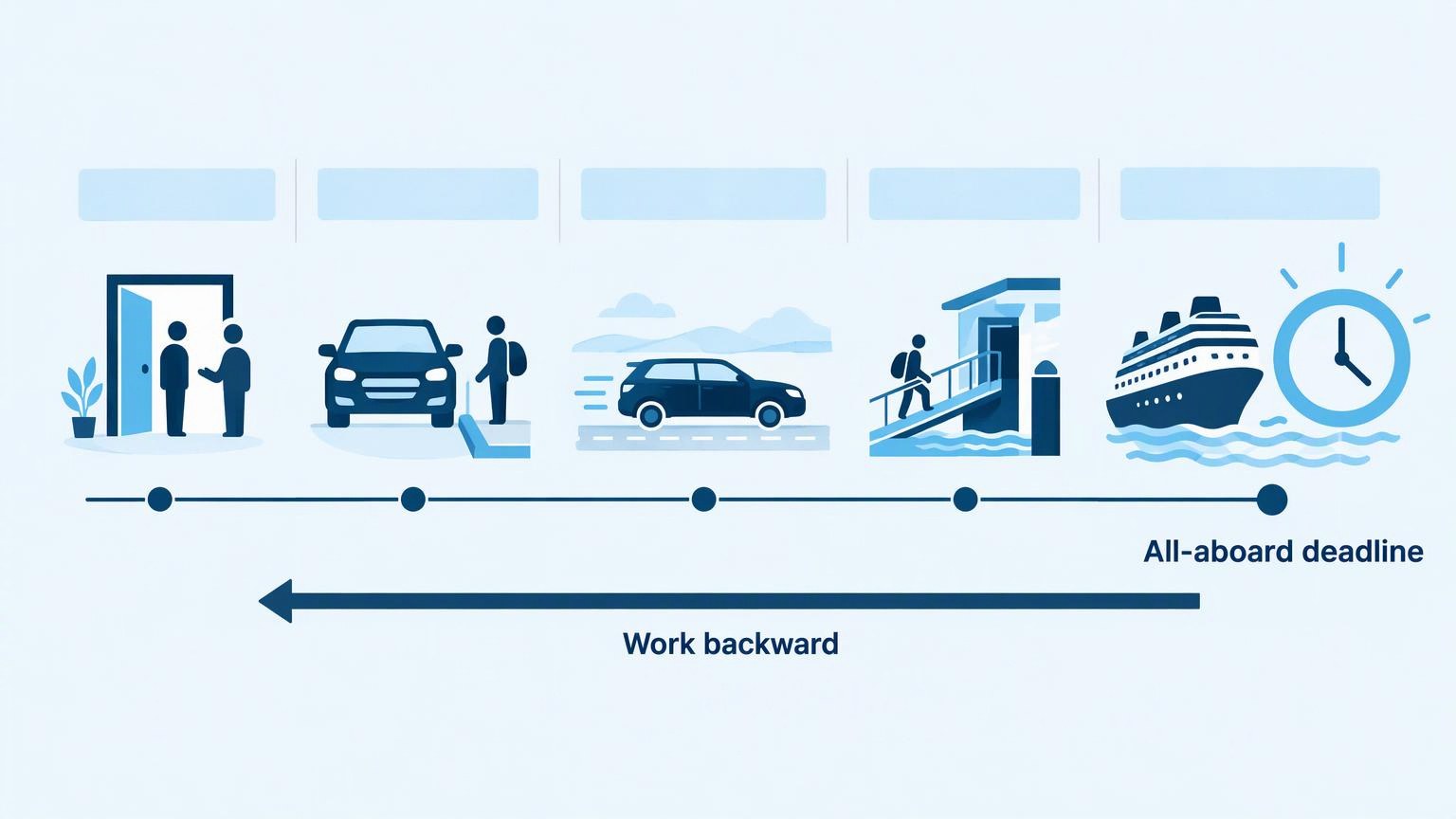
Work backward from all-aboard to test the visit window
Work backward from the ship's all-aboard deadline, not its sailing time. Establish that deadline and the onboard time reference directly with the cruise line or ship.
Allow for reaching the boarding point, return travel, pickup and hospital departure requirements. Compare your latest possible hospital departure with the provider's proposed visit sequence. Then account for check-in, outward travel and when you can leave the ship.
Keep a private note with the terminal, time reference, all-aboard deadline, check-in time, visit steps and transport estimates. Use it later with the relevant confirmed contacts, not in a first-form submission.
If testing or observation has no confirmed timing, you cannot complete the calculation. Choose a separate visit when the care plan needs more flexibility than the cruise allows. An estimated consultation duration is not a promised departure time.
| Situation | Suitable next step | Reason | Trade-off |
|---|---|---|---|
| Consultation scope and departure requirements are confirmed and fit the shore window | Continue planning the port-day visit | The visit can be evaluated against a defined return deadline | A workable schedule still depends on the agreed transport and care arrangements |
| Testing or observation may be needed, but timing is not confirmed | Resolve the sequence before committing, or plan a separate visit | The appointment start does not define the visit's end | A separate visit requires different travel planning |
| The clinician requires an in-person follow-up after the ship leaves | Consider a separate care-focused visit | The cruise stop does not accommodate the proposed care sequence | More travel flexibility may be needed |
Compare return arrangements, not just the outward ride
A ride to the hospital does not establish a ride back. Compare return arrangements against the visit's likely end time, and make the commitment explicit.
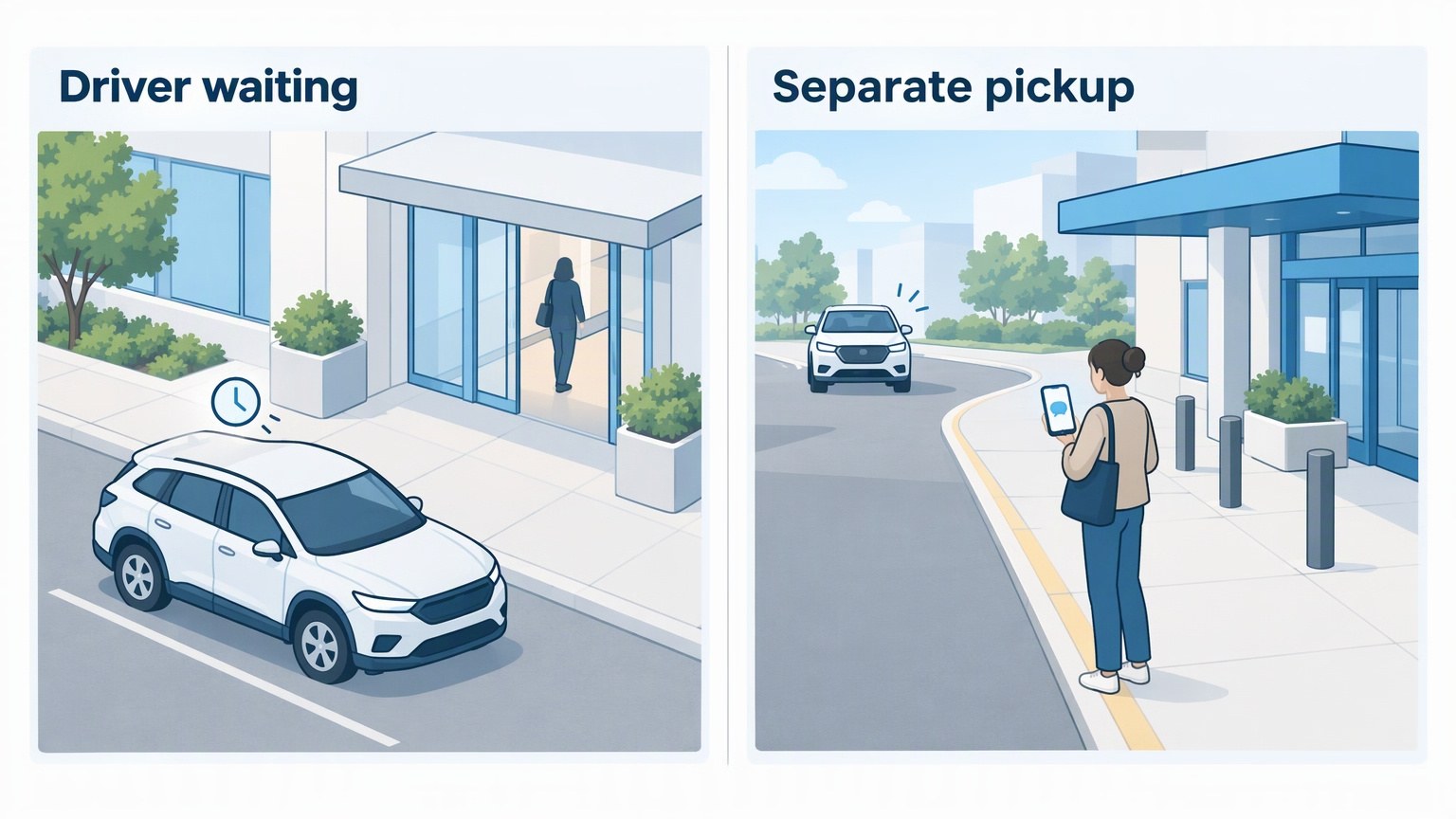
A driver-waiting arrangement may suit a defined visit if the agreement explains waiting and changes. A separate pickup avoids assuming the driver stays available, but requires a pickup point, communication method and plan for a changed end time. Neither determines when the clinician considers you ready to leave.
During later planning, give the transport supplier the provider's destination instructions. The provider identifies where to report; the supplier explains pickup and drop-off. Neither automatically handles the other's responsibilities.
Estimate the route between your actual boarding point and hospital entrance, allowing separately for pickup and reaching reception. Compare how each transport agreement handles delays, not just its fare.
Apply the timing test when another step is possible
Do not treat a possible additional step as scheduled. Keep the consultation and any later care decision separate.
For example, suppose the provider confirms consultation arrangements but says assessment might lead to a test. You have a return pickup plan, but no confirmed test slot or information about whether testing would affect departure.
You could keep the visit consultation-only if the provider considers that appropriate, arrange a separate visit with more flexibility, or postpone the consultation. Assuming the test will fit is not a workable alternative: the timing evidence is missing.
The provider determines the clinical sequence; you compare it with the ship's deadline and transport agreement. If consultation-only is inappropriate, change plans because the required care cannot yet be fitted into the port day, not simply because several reservations are involved.
Make a plan for results and care after the ship leaves
Establish who reviews later results, how you receive their interpretation and who decides whether another appointment is needed. Leaving the hospital may not end the care process.
The treating clinician must define the follow-up format. Review in Cozumel, remote review and care with a clinician at home are different arrangements. An emailed result alone is not a follow-up plan.
If results arrive after departure, agree on a communication route and next action with the reviewing clinician. A required in-person reassessment changes whether the port-day visit is suitable.
Clinical records belong in a named provider-confirmed secure channel. Travel changes remain separate logistics tasks; extra lodging or transportation does not establish clinical support, coverage or inclusion. If admission becomes relevant, read our guide to Costamed Cozumel admission terms.
Use Hospitality Cancun for context, not hospital confirmation
Our homepage provides Costamed and Cozumel medical-travel context. We publish travel and consultation-planning guidance, not confirmation of appointments, individual suitability or an authorized provider relationship.
Keep hospital arrangements with the confirmed provider contact and travel discussions with the confirmed travel contact. Clinical decisions remain with the qualified treating clinician.
Before submitting any information through the general inquiry, clarify the recipient and purpose. If either is unclear, do not submit. The first submission allows only name, email and optional contact-method preference. Exclude travel details, narratives, diagnoses, records, insurance identifiers, payment details and attachments. Ordinary travel details may be discussed later with the confirmed travel contact.
Permission to reply, optional marketing and referral to a specifically named provider are separate choices. A requested reply is not marketing consent. Reading the overview does not establish booking or referral acceptance.
Frequently Asked Questions
Should I take my passport ashore for a hospital visit?
Check your cruise line's instructions for your sailing and the provider's identification requirements before going ashore. Keep boarding and hospital requirements separate: satisfying one does not satisfy the other. A general travel article cannot establish which documents either party requires for your visit.
Does a hospital visit count as a ship-organized excursion?
Do not assume an independent hospital visit carries ship-organized excursion terms or assistance. Establish the applicable arrangement with your cruise line. A provider appointment and transport booking do not themselves create a cruise-line commitment to manage delays or arrange your return to the ship.
Can I assume English-language help will be available at arrival?
No. Establish English-language arrival instructions with the provider contact handling your visit, including where to report and how to communicate if you cannot find reception. Do not assume a driver or unrelated planning contact will interpret or explain clinical information.
Will travel insurance cover the visit or a missed departure?
Coverage depends on your policy and circumstances. Keep hospital billing and cancellation terms separate from insurance coverage and claim conditions. A clinically necessary change does not automatically determine who pays, establish insurance coverage or make a travel expense an included hospital service.
What if the cruise itinerary changes after I arrange a visit?
Review the provider's and transport supplier's cancellation or change terms. A changed port call does not automatically establish a refund or replacement appointment. Keep confirmations separate to identify the applicable agreement, then reassess whether the revised itinerary accommodates the visit's timing and care requirements.