
Wedding-Stay Consultation Planning
Use your wedding itinerary to separate useful facility research from a visit that needs its own time, transport and follow-up plan.
A wedding stay has commitments that an ordinary vacation may not: preparations, shared transport, photographs and gatherings where others expect you. An empty space on the itinerary is therefore only the beginning of the decision. The useful question is whether facility research or a confirmed consultation can fit without depending on assumptions about the rest of your visit.
Choose research, a consultation or a separate trip
Keep the stay research-only if your wedding responsibilities are fixed and the proposed visit is still undefined. A consultation becomes worth considering when the provider has explained what it involves and you can accommodate it. A separate trip is the stronger choice when care would require a schedule you cannot protect during the celebration.
These options serve different purposes. Reading facility information helps you identify unanswered questions without committing time at the destination. A consultation can support an informed discussion with a clinician, but it is not a promise of treatment or permission to fit treatment into the same stay.
If you are in the wedding party, distinguish essential duties from optional activities before comparing options. If you are attending as a guest, your calendar may offer more freedom, but that does not establish clinical suitability. The deciding factor is the visit's actual scope and consequences, not simply how many reservations you already have.
Research the facility before choosing a visit window
Establish that the information applies to the intended Costamed Playa del Carmen location and the service you want to discuss. A brand name alone does not settle the site, clinician or appointment requirements.
Begin with a search combining the facility name and your intended consultation topic. Separate facility-owned information from directories and general travel articles. Next, identify the individual clinician who would conduct the consultation and seek current credential information relevant to that person's role. Do not treat a facility's branding as evidence of an individual clinician's qualifications.
Then establish the consultation scope: whether it is an initial discussion, whether examination or tests might be proposed, and how follow-up would be handled. Those answers determine whether you should pursue a wedding-stay window at all.
Use our Costamed Playa del Carmen care questions to organize that discussion. For arrival planning, the companion guide to confirming location details addresses a different task: establishing where the visit would take place.
| Situation | Suitable approach | Reason | Trade-off |
|---|---|---|---|
| Wedding duties are fixed; visit scope is unclear | Research only | Build useful questions without committing an uncertain part of the itinerary | No in-person consultation during this stay |
| Provider-confirmed consultation fits protected free time | Consider the consultation | The known visit plan can be compared with event and transport commitments | Attendance still does not establish treatment suitability |
| Proposed care or follow-up conflicts with the celebration | Plan a separate care trip | Give the clinician's plan its own workable schedule | Requires separate travel planning |

Test the consultation against the whole wedding calendar
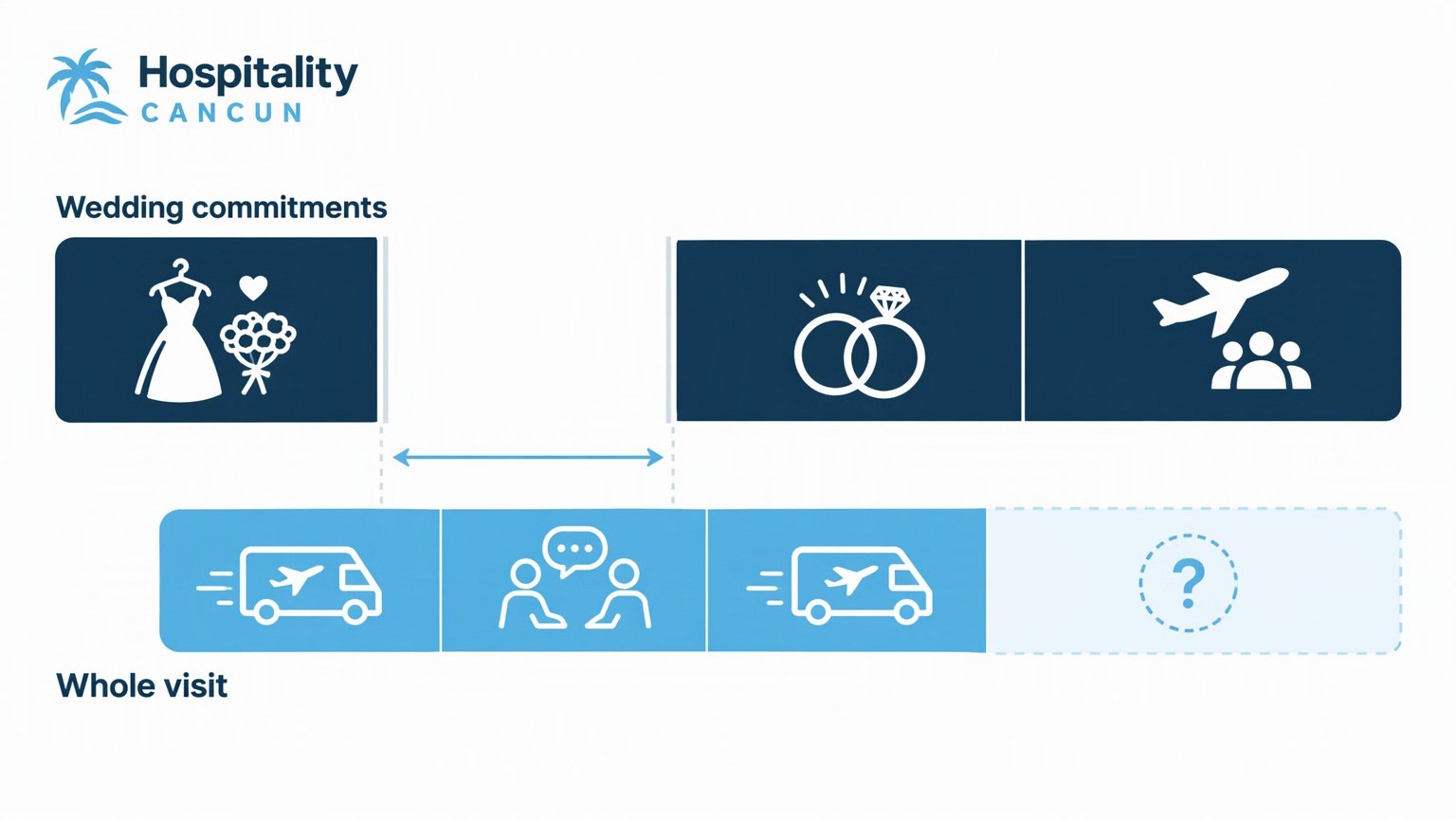
A consultation fits only when the complete visit can coexist with your essential wedding commitments. Compare arrival, the visit itself, any proposed next steps and the return journey, rather than reserving only the appointment slot.
Say you are in the wedding party, have preparations before the ceremony and plan to leave with the group afterward. You notice an opening before the celebration and consider using it for a consultation. The provider has not yet clarified whether tests or another visit might be needed.
You could leave that opening free while you seek details, use the trip only for research, or arrange a separate consultation trip. Research is the better choice until the visit scope is clear: the apparent opening does not resolve the possible conflict with preparations or departure. If the provider later confirms a visit plan that fits, you can reconsider.
Velas Weddings' planning guidance emphasizes sharing logistics with guests early. Apply that principle to your availability, while keeping clinical details private. A wedding schedule is not individual clearance for treatment, recovery or flying.
Compare transport using confirmed endpoints
Use shared wedding transport only if its actual pickup, destination and return arrangements serve the consultation. Otherwise, compare an independent journey rather than assuming an event vehicle can make an additional stop.
First establish the provider's arrival address and entrance, then your actual departure point. Search the route between those endpoints for the intended travel period. Record the displayed distance and estimated drive time for your own planning; do not substitute a general city-to-city estimate for the journey you will make.
Next, compare the result with the provider's requested arrival time and your next wedding commitment. If the return timing is not yet clear, a fixed shared pickup may not suit the visit. Evaluate an independent transport option by its pickup arrangement, waiting policy, return booking method and change terms.
For the handoff, use the same confirmed destination with the driver and provider. Keep the event coordinator informed only about any transport or attendance changes they need to manage. Neither a hotel nor a wedding coordinator should be presumed to supply medical transport or appointment confirmation.
Separate travel changes from clinical and insurance decisions
Evaluate flexibility through each supplier's cancellation, refund and change terms. A clinical reason for changing plans does not automatically create a refund right or establish insurance coverage.
Picture a clinician recommending that you remain longer for follow-up. The extra lodging night is still a travel service. That recommendation does not establish who pays, whether lodging is included, which hotel terms apply or whether an insurer covers the expense. Those answers depend on the relevant written agreements and policy conditions.
Read the hotel, flight and transport terms separately. A wedding room arrangement should not be assumed to govern an extension beyond the booked stay. Likewise, a consultation charge should not be assumed to include tests, another visit or travel services unless the provider's terms say so.
Insurance is a separate layer. Cancellation, medical and evacuation coverage answer different questions and have their own claim conditions. Before choosing a less flexible booking, decide whether you could manage its contractual consequences without relying on an unconfirmed claim.
Prepare the handoff without mixing responsibilities
The provider should answer facility and appointment questions; the qualified treating clinician should determine suitability, follow-up and clinical travel restrictions. Travel suppliers and the wedding coordinator handle their respective bookings and event arrangements. Hospitality Cancun publishes travel and consultation-planning guidance, not clinical clearance or Costamed appointment confirmation.
Keep a short private planning note:
- Your essential wedding commitments and optional activities.
- The intended facility, clinician and consultation scope.
- Confirmed arrival instructions and outward and return transport options.
- Booking change terms and payment responsibilities still to confirm.
Before submitting any information through the website contact section, clarify the recipient and purpose. The first submission allows only name, email and optional contact-method preference. Travel details may be discussed later with a confirmed travel contact. Clinical records belong only in a named provider-confirmed secure channel; never put records, insurance numbers, payment details or attachments in a general inquiry.
Permission to answer your inquiry, optional marketing and referral to a specifically named provider are separate choices. Agreeing to a requested reply does not mean agreeing to marketing or a referral.
Frequently Asked Questions
Does attending a wedding make me eligible for a consultation or treatment?
No. Being in the destination does not establish clinical eligibility or treatment suitability. Those decisions belong to the qualified treating clinician. Your wedding itinerary can help you assess practical availability, but it cannot replace the provider's consultation requirements or an individual assessment of any proposed care.
Can I use wedding photographs or social activities as a recovery deadline?
No. Event dates express your preferences, not a clinical recovery assessment. Tell the treating clinician about activities you hope to attend through the appropriate clinical discussion. Let that clinician explain relevant restrictions rather than working backward from photographs, clothing plans or a celebration to choose treatment timing.
What if my companion leaves with the wedding group?
A companion's departure is initially a logistics issue. It does not by itself establish a need for clinical support. If the actual care plan requires assistance, clarify that requirement with the treating clinician. Then assess whether the required support and your separate travel arrangements can realistically be organized.
Should the couple receive details about my consultation?
They generally need only the event information that affects them, such as whether you will miss a gathering or use different transport. You can keep the consultation's clinical content private. Separate an attendance update from medical disclosure so the wedding coordinator can manage the schedule without receiving unnecessary health information.
Does a Hospitality Cancun article establish a Costamed referral relationship?
No. Editorial information and a contact link do not establish an authorized referral relationship, appointment acceptance or clinical capability. Use the articles to organize your research. Any proposed introduction should identify the receiving provider and have your separate permission; appointment details must come from the provider responsible for the visit.