

Consultation and Travel Planning
Turn provider-issued paperwork into a clear communication plan for the transition from care abroad to life at home.
The useful test is not how many pages you receive. It is whether you can understand what applies to you, locate the current directions, and identify who handles a question after you leave. This guide helps you prepare that discussion without choosing a recovery routine or interpreting symptoms for you.
What written instructions should you request for home?
Request instructions that identify what applies to your care after departure, not just a general rhinoplasty leaflet. Ask the treating team how and when the final version will be supplied, and arrange an opportunity to review it before leaving.
Keep one compact checklist for that review:
- Care tasks and any assistance the clinician says you need.
- Medication directions, including how questions or changes will be handled.
- Activity restrictions and the conditions for reviewing them.
- Follow-up arrangements and who is responsible for each review.
- Clinician-defined warning signs, the action for each, and contact details.
- The date of the instructions and the person or team issuing them.
Request an English version you can understand and discuss. If a document uses unfamiliar terms, mark those passages for explanation rather than rewriting their meaning yourself. A visit summary can support continuity of care, but its description of what happened is not necessarily a complete set of directions for what you should do next.
How can you test whether the wording is clear?
Explain the instructions back to the treating team using an ordinary situation from your life. The purpose is to expose an unanswered detail, not to prove that you have memorized medical terminology.
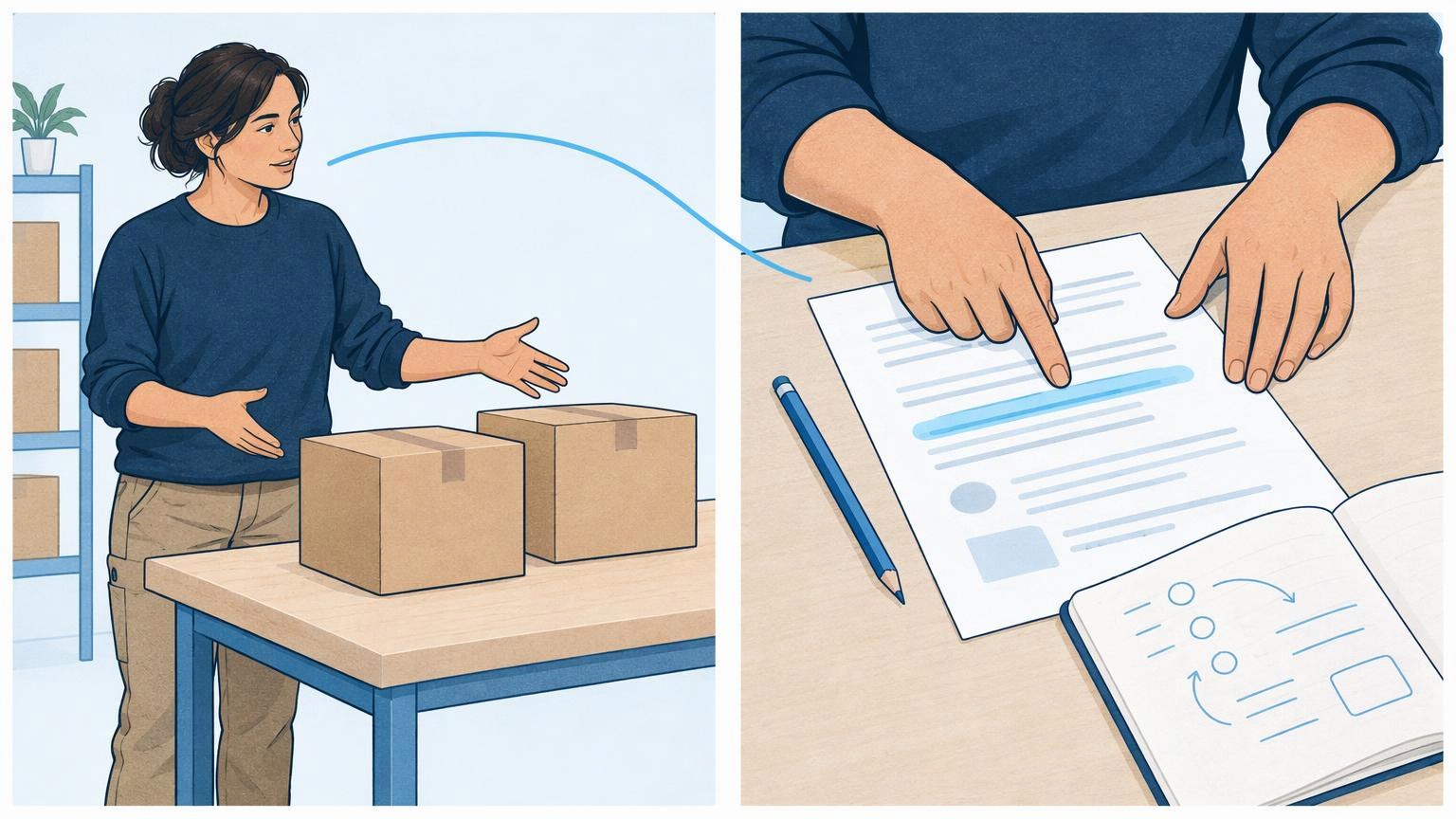
Say you plan to return to a job that involves lifting boxes, but the sheet says only “avoid strenuous activity.” You could assume that ordinary work is allowed, or ask the clinician to explain how the restriction applies to those duties. The second approach addresses the actual uncertainty: the phrase does not tell you whether your work falls within the restriction or who decides when it can resume.
Describe the task during your clinical discussion, repeat your understanding of the answer, and ask the team to make the written directions match. If the clinician has not yet decided when a restriction can change, have the document explain the review step instead of inserting your own date.
This method also works for an unclear care task: identify the ambiguous phrase, explain what you think it means, and let the treating team correct or confirm that understanding.
| Document | Useful for | What it does not establish |
|---|---|---|
| Individualized home instructions | Understanding your care tasks, restrictions, follow-up, and contact plan | Travel clearance unless the clinician specifically addresses it |
| General recovery leaflet | Identifying topics to discuss with the treating team | Which directions apply to your procedure and circumstances |
| Visit or discharge summary | Giving a receiving clinician context about your care | A complete home routine or acceptance of follow-up |
| Updated written directions | Identifying a clinician-issued change to the plan | That every earlier direction has changed; clarify what is replaced |
What must be clear about medication directions?
The written plan should let you identify each prescribed medication and understand the clinician’s directions without guessing. Do not use this guide to select a medication, change a dose, or decide whether to stop treatment.
During the review, compare the medication section with the prescription labels or other directions you have received. Look for differences in the name, strength, units, amount, timing, or duration. If the documents disagree, ask the treating team to resolve the difference and identify the current directions. Do not choose whichever version seems easier to follow.
A direction such as “take as instructed” is not useful at home if the separate instructions are missing. Likewise, a medication name alone does not explain its use. Ask for the missing explanation before you rely on the document.
If your instructions use “as needed,” have the clinician explain its meaning and any limits that apply to you. Keep medication questions tied to your own prescription rather than advice from another person’s recovery experience.
How should the plan explain getting help after your return?
Ask the treating team to distinguish routine follow-up, a new concern needing assessment, and an emergency. The instructions should explain the action for each rather than offer a single messaging address for every situation.
For routine reviews, establish who receives the update, what the review involves, and how the team communicates any revised instructions. If photographs or clinical information are requested, use only a named provider-confirmed secure channel.
For new concerns, have the clinician specify the warning signs relevant to your procedure and the response each requires. Do not fill those gaps with a generic list from an online article. Also clarify what to do when the usual contact is unavailable and when the plan directs you to seek local assessment rather than await a reply.
Write contact availability and time-zone information exactly as the provider gives it. This helps distinguish a scheduled communication arrangement from an assumption that someone will monitor messages continuously. A travel-planning contact is not a substitute for the clinician responsible for assessment.
What if a clinician at home will handle follow-up?
Arrange the handoff explicitly with both the treating team and the clinician expected to see you at home. Do not assume that having a discharge summary means another clinician has accepted responsibility for follow-up.
Separate two purposes. Your home instruction sheet explains what you have been told to do. A clinical summary gives the receiving clinician information about your care. Ask the clinicians which records are needed, how they will be transferred through an appropriate secure channel, and whether the planned appointment has been accepted.
Clarify the division of responsibility: who conducts the next review, who can revise instructions, and who assesses a new concern. If those responsibilities have not been agreed on, return to the treating team to establish the follow-up plan rather than leaving an unnamed “local doctor” in the paperwork.
For the wider transition beyond rhinoplasty instructions, our guide to returning home after medical care in Mexico provides related planning context. Keep the clinical handoff with the clinicians involved.
What should you settle before departure?
Settle the clinician’s travel decision separately from how you will access the home instructions. Receiving paperwork does not itself mean you are cleared to fly; flight timing and length of stay depend on your clinician and follow-up plan.
Once the team issues the current instructions, open the file and check that every page is readable. Keep an accessible copy that does not depend entirely on a live internet connection. Label it with its issue date and keep earlier versions clearly separate. If the team later changes a direction, ask for the update in writing so you can identify what it replaces.
If a companion will help carry out the plan, involve them in the explanation with your permission. Their role should follow the clinician’s stated assistance requirements, not assumptions based on the travel schedule.
For the broader distinction between clinical requirements and reservations, see comparing rhinoplasty travel and care plans. Hospitality Cancun publishes travel and consultation-planning guidance; your treating clinician supplies the medical directions.

Frequently Asked Questions
Can I use another patient’s instructions if mine are missing?
No. Another patient’s document can suggest a question to discuss, but it does not establish what applies to you. Ask your treating team for the missing instructions and an explanation of any care task you do not understand. Do not reconstruct your own plan from someone else’s medication list or recovery schedule.
Is an automatic translation enough?
Do not treat an automatic translation as confirmation of the clinical meaning. Request an understandable English version or an explanation arranged by the treating team. Have the team clarify unfamiliar terms and confirm your understanding, especially where wording concerns medication, restrictions, or the action to take for a new concern.
May I record the explanation to review later?
Ask the treating team for permission before recording and agree on what may be recorded. A recording can help you revisit an explanation, but still request the current written instructions. Spoken comments may refer to a particular question, while the written version should identify the directions intended for use at home.
What if I lose access to the provider’s portal?
Arrange a way to retrieve your instructions through the provider’s confirmed process before departure. Keep a readable copy you can access independently of the portal, and retain the provider’s instructions for account or access problems. Do not upload clinical documents to a general travel inquiry to recover or interpret them.
What belongs in a first Hospitality Cancun inquiry?
Clarify the recipient and purpose before submitting any information. The first submission allows only name, email, and optional contact-method preference. Trip details belong in later discussion with a confirmed travel contact. Clinical records require a named provider-confirmed secure channel; exclude payment and insurance identifiers from the general form. Permission to reply, optional marketing, and referral to a specifically named provider are separate choices.