

Consultation and Occasion Planning
Use the occasion to clarify your priorities and responsibilities, not to set a surgical deadline.
A reunion can bring several wishes together: seeing relatives, feeling confident in photographs and making good use of time away. Those wishes deserve separate consideration. Start by identifying what matters most about the occasion, then examine whether a procedure decision would compete with it. This guide helps you frame that conversation without counting backward to a surgery date.
Choose Which Commitment You Can Change
Protect the reunion if attendance is your fixed priority; leave attendance open to change if the care decision takes priority. You can also pursue consultation without linking any procedure to the event. None of these choices requires deciding that surgery is appropriate.
Start with a simple test: would you still want to consider the procedure if the reunion were canceled? If yes, your interest has a purpose beyond the occasion. If not, pause before making the event an organizing deadline for care.
Next, identify what you can actually move. Your own attendance may be flexible while a hosting obligation is not. A reservation may be changeable while your available time away is fixed. These differences matter more than the number of bookings involved.
The comparison below helps you choose an approach. It does not establish a procedure window. Your treating clinician must address suitability, follow-up, length of stay and flight timing for your individual plan.
Define What You Mean by Ready for the Reunion
Being able to attend, being able to take on family duties and feeling satisfied with your appearance are different expectations. Describe each separately in a consultation rather than asking for a single ready-by date.
Prepare a short private note with the activities you hope to join: traveling to the gathering, attending a meal, hosting relatives or participating in photographs. These are descriptions of your plans, not predictions of what you will be able to do.
- What does the proposed follow-up plan require before and after travel?
- How will decisions about flying and participating in my planned activities be made?
- What appearance expectations are reasonable to discuss, without promising a result by the reunion?
Bring those questions to a qualified treating clinician whose credentials you have independently verified. A planning contact cannot answer them on the clinician's behalf. Our tummy tuck aftercare questions guide provides a separate place to organize the follow-up discussion.
| Your Priority | Suitable Approach | Reason | Trade-Off |
|---|---|---|---|
| Attend and fulfill fixed family duties | Keep the possible procedure separate | Protects the occasion from competing care and travel commitments | The procedure decision remains independent of the reunion |
| Consider care while keeping attendance optional | Discuss the care plan before linking travel | Allows individual clinician guidance to shape planning | You must accept changing or missing reunion participation |
| Understand your options without committing | Pursue consultation only | Separates information gathering from a procedure deadline | Consultation does not promise treatment or event readiness |
Work Through a Companion's Competing Family Duties
A relative's willingness to accompany you is not the same as having an arrangement that can absorb changes. Compare their availability with any support requirements in the actual care plan, not with an assumed reunion schedule.
Say you want to attend the reunion and your sister offers to travel with you. She must return to prepare the gathering, and you also expect to help host. First, the treating clinician explains the proposed follow-up and support requirements. Next, you and your sister compare those requirements with her fixed departure and your hosting responsibilities.
You could transfer the hosting duties, identify another available companion if the care plan requires one, or keep the possible procedure separate from the reunion. If neither of you can change your obligations, separating the plans removes that conflict rather than relying on everything going exactly as expected.
A companion leaving does not automatically create a clinical support requirement. That comes from the care plan. Changing a room or flight is a separate logistics task, handled with the relevant supplier.

Separate Procedure Costs From the Cost of Changing Plans
Compare the financial consequences of a changed trip as well as the original estimate. Linking care with a reunion can expose both sets of reservations to changes, but the applicable contracts determine what those changes cost.
If the treating clinician directs a longer stay, an additional hotel night is still a travel charge. The clinical reason does not establish who pays, whether the night is included, what hotel terms apply or whether insurance covers it.
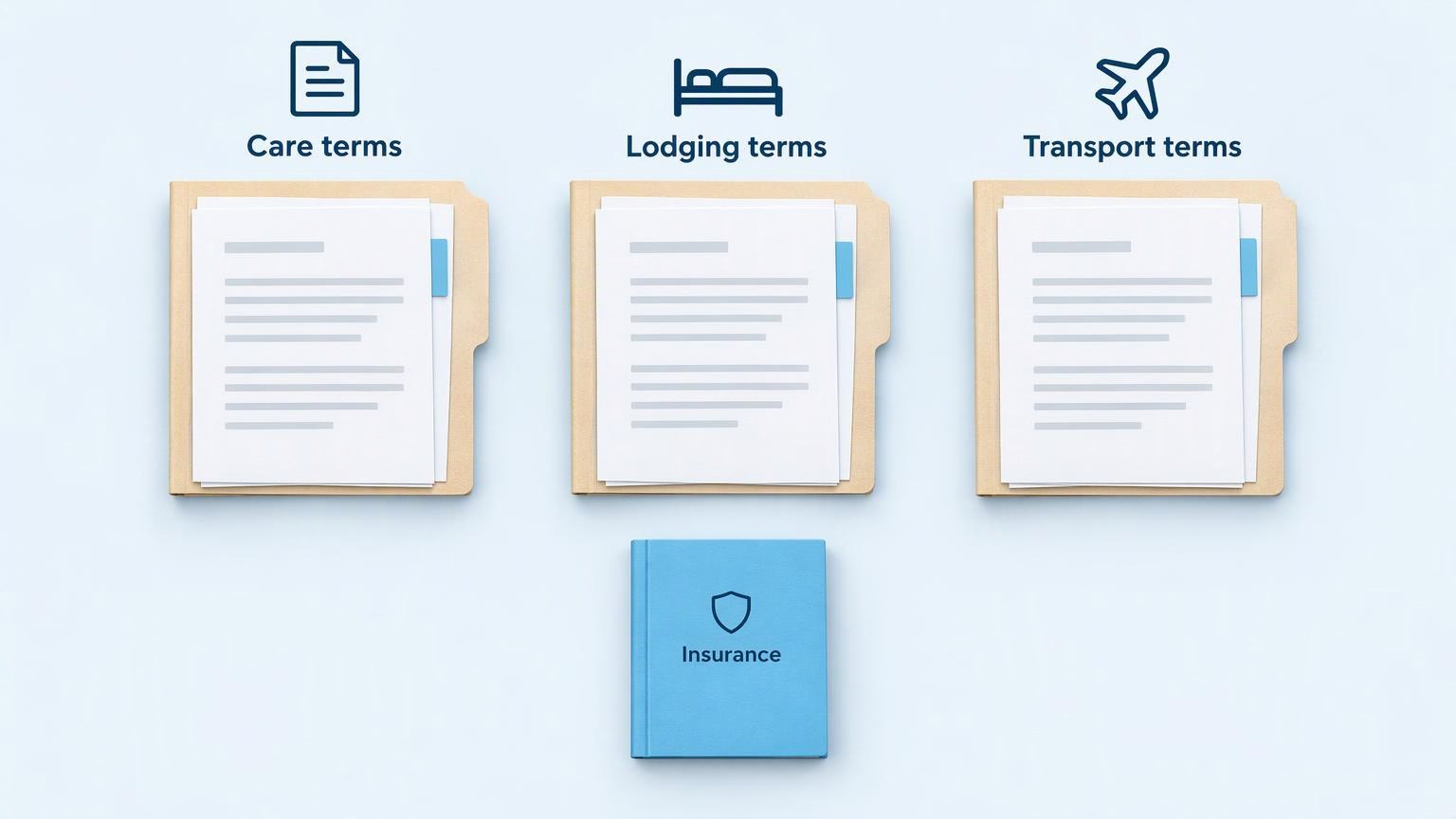
Before committing, organize the written terms by supplier: the care provider's cancellation and rescheduling terms, lodging terms and transport change rules. Identify the relevant deadlines and what happens to money already paid. If the terms do not answer a cost question, do not assume a package label tells you who pays or what is included.
Insurance is a separate comparison. Cancellation, medical and evacuation coverage depend on policy wording, exclusions and claim conditions; they do not replace a supplier's refund obligations. Use our full-trip cost comparison guide to keep the procedure estimate and travel budget distinct.
Set Family Expectations Without Promising a Result
Tell relatives what they need to know for the reunion, while keeping personal medical disclosure your choice. An attendance update does not require explaining a procedure or sharing clinical details.
If your participation is uncertain, give the organizer a practical boundary: do not assign you hosting duties, and have another person responsible for tasks that must happen regardless of your attendance. This is more useful than saying you expect to be fine and revisiting arrangements later.
Keep photographs out of the role of a result deadline. You can decide how you want to participate in family pictures without making a promise about your appearance. Discuss procedure expectations with the treating clinician, not through relatives' predictions or comparisons.
Also distinguish the person helping with travel from the person receiving care updates. A relative can coordinate reunion logistics without receiving medical information. If you want someone involved in clinical communication, discuss that permission directly with the named provider and define what may be shared.
Review the Destination Focus Before Taking the Next Step
Hospitality Cancun publishes travel and consultation-planning guidance for adults considering care in Cancun or the Mexican Caribbean. Review that destination focus to decide whether our information fits the visit you are considering. It does not determine whether a tummy tuck is suitable for you.
Use the website contact section to review the inquiry route, not as evidence of a provider relationship, clinical assessment or confirmed appointment. Before submitting any information, clarify who receives it and for what purpose. If either is unclear, do not submit.
Once those details are clear, the first submission allows only name, email and an optional contact-method preference. Do not include dates, destination, companion details, narratives or attachments. Ordinary travel details may be discussed later with the confirmed travel contact.
Permission to reply to your inquiry, optional marketing and referral to a specifically named provider are separate choices. Clinical records belong only in a named provider-confirmed secure channel. Do not send payment details or insurance identifiers through a general inquiry.
Frequently Asked Questions
Does considering a consultation mean I have committed to surgery?
No. Treat consultation as an opportunity to understand the proposed care, alternatives and questions relevant to your goals. Keep the decision open, including the option not to proceed. Before paying for a consultation, establish the provider's terms without assuming they are the same as surgery-booking terms.
Should a relative's experience influence my expectations?
A relative's experience can help you identify questions, but it cannot establish your suitability, travel timing or expected result. Ask what specifically concerns you about their account, then address that concern with the treating clinician. Avoid converting someone else's reunion attendance into a timetable for your own plans.
What if my reunion travel is already booked?
Treat the existing booking as a financial commitment to examine, not a reason to accelerate a procedure decision. Read its actual change and cancellation terms, then consider the reunion on its own. Money already spent does not answer whether proposed care or its travel arrangements fit your circumstances.
Should I decide now whether to add another procedure?
Do not use the reunion or the opportunity to travel as a reason to add treatment. Discuss each proposed procedure's purpose, alternatives and implications with the qualified treating clinician. A broader proposal needs its own assessment; convenience alone does not establish that additional care is appropriate for you.
What if I feel pressure to look different for family photographs?
Separate that pressure from your own reasons for considering care. Ask whether the same goal would matter without the photographs or relatives' comments. You can set boundaries around pictures and appearance discussions now, without making a procedure decision or promising a visible change for the gathering.