

Consultation and Travel Planning
Read the proposal for its actual sequence, decision points and responsibilities, not just its package name.
You may receive an attractive total without knowing whether it describes a settled treatment plan or an initial estimate. The useful task is to identify what has been recommended, what remains conditional and what you would be committing to. This guide helps you interpret those distinctions before organizing travel or accepting payment terms.
Does the proposal define operations, trips or both?
It should define both. A bundled price does not tell you whether the procedures would occur in one operative session, in separate sessions during one visit or across separate visits. Ask the treating clinician to state the intended sequence in plain language.
These arrangements create different planning questions, as the comparison below shows. Separate operations during one visit still need their own clinical explanation; they should not be interpreted as interchangeable with either a single session or separate trips.
Put combined and staged approaches into the same consultation. The useful question is: “Why do you recommend this sequence for me, and what alternatives did you consider?” That asks for individualized reasoning rather than a universal verdict. A single-procedure plan or deferral can also be discussed if the clinician has not yet settled on a recommendation.
For a broader starting point, our guide to comparing BBL and breast augmentation plans covers the overall proposal comparison.
Are you comparing the same treatment scope?
Only if the proposals name the same procedures and explain any differences. A timing comparison becomes misleading when one proposal includes additional surgery or a different breast-augmentation method.
Use this short checklist during the clinical consultation, not in a general travel inquiry:
- Breast procedure: the proposed augmentation method and whether a lift is separately recommended.
- BBL scope: the planned fat-harvesting areas, transfer approach and any additional procedures.
- Clinical reasoning: why the proposed extent and sequence are recommended, including risks and alternatives.
- Responsible parties: who assesses you, who operates, who provides anesthesia and the exact surgical facility.
- Open decisions: what an examination or further assessment could change.
Identify the surgeon and facility separately so their credentials and authorization can be checked independently. A package name cannot substitute for either identity.
Your comparison should distinguish “the same procedures at different times” from “different procedures under similar headings.” Resolve that distinction before treating a lower total as better value.
| Arrangement | Meaning to establish | Planning consequence |
|---|---|---|
| One operative session | Both procedures are proposed together, subject to clinical assessment. | Travel must accommodate the complete follow-up plan. |
| Separate operations in one visit | Distinct sessions are proposed during the same trip. | Clarify the clinical decision between sessions and the overall stay. |
| Separate visits | The later operation involves another trip and assessment. | Distinguish dates that still depend on assessment from commitments already accepted. |
What has to happen before the later stage?
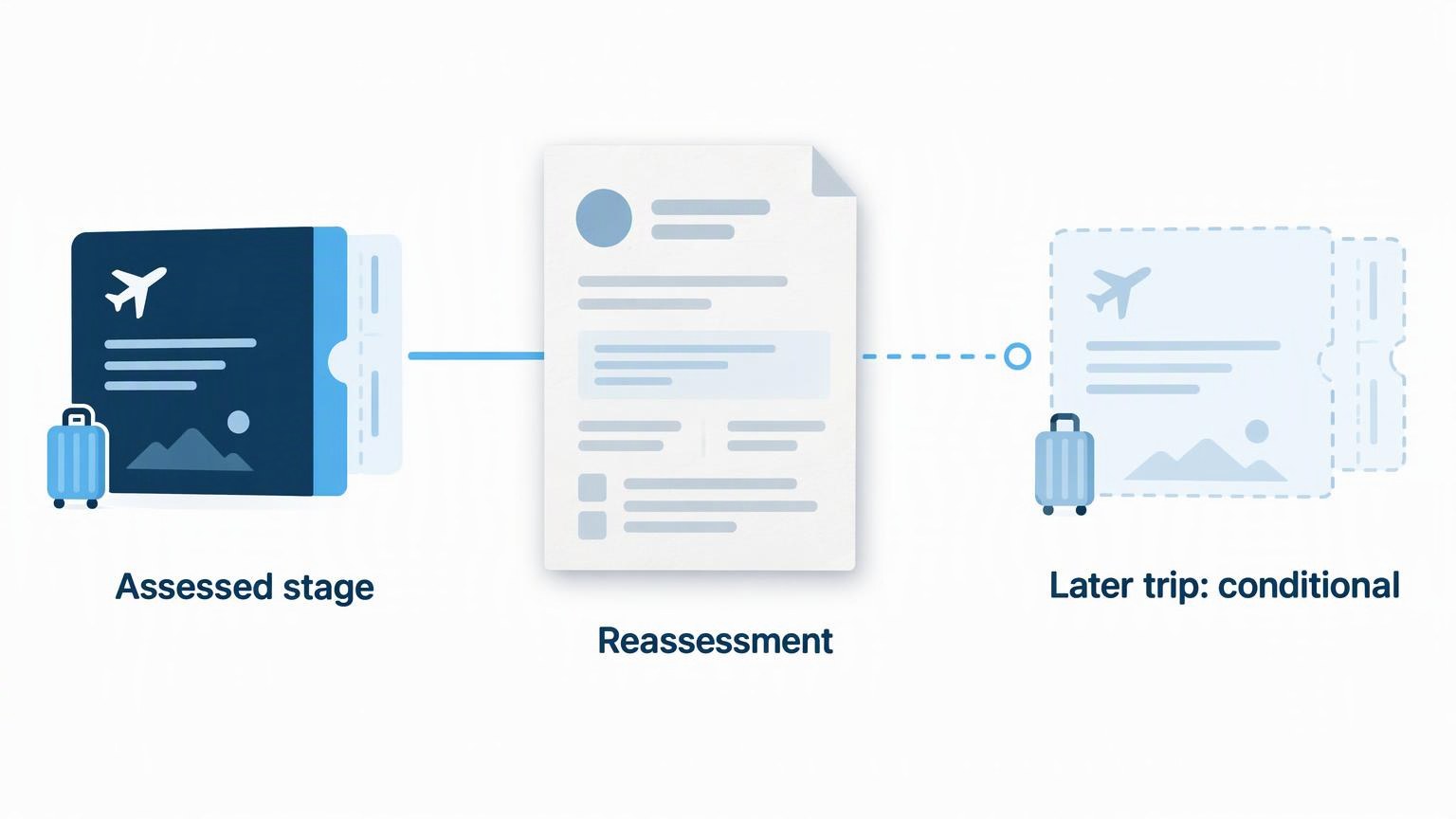
A staged proposal should identify the reassessment that precedes the next operation, who makes that decision and whether any proposed date still depends on that assessment. The later stage should not read as automatic when clinical decisions remain open.
Say your proposal describes an initial BBL and breast augmentation at a later visit, but says the later recommendation will be reviewed after the first stage. You want to reserve both trips now to settle your work calendar.
You could commit to both trips, or organize only the assessed stage while waiting to book the later visit. The second route better matches the proposal as written: the later decision has not yet been made. Committing now would create a travel commitment before the clinician has decided whether and when the later operation should proceed.
This does not decide which procedure should come first or how long the interval should be. Those are questions for the treating clinician. It tells you which parts of the schedule are ready for logistics and which remain estimates.
How does follow-up become a workable travel plan?
Start with the clinician's follow-up plan, then select travel arrangements that accommodate it. An advertised stay or scheduled return flight is not individual clearance to travel.
First, identify the local reviews and who will conduct them. Next, establish how departure readiness will be assessed and what remains uncertain about the stay. Then clarify the return-home handoff: who receives concerns, how the treating clinician remains involved and what follow-up needs arranging at home.
Use those answers to compare lodging, transport and flight commitments. If a later clinical review could change departure timing, the relevant travel comparison is between the suppliers' actual extension and change terms, not simply their initial prices.
A ride to an appointment and clinical assistance are different services. Arrange the support specified by the care plan rather than assuming that a companion, driver or accommodation booking provides it. Our BBL and breast augmentation trip-planning guide provides related logistics reading.
What does the price cover when plans change?
The price should identify services and commitments, not merely give a combined total. For staged care, establish whether the figure covers the assessed stage, estimates later care or creates a payment commitment for both.
Separate clinical charges from lodging, transport and flights. Then read the terms governing each payment: who receives it, when it becomes due, and what cancellation, refund or change conditions apply. A changed clinical recommendation does not, by itself, establish a right to a supplier refund.
For example, if the clinician recommends staying longer and another hotel night is needed, that remains a lodging charge. The reason for extending the stay does not establish whether the night is included or who pays. Those questions depend on the applicable written agreement; do not assume an answer if it does not supply one.
Insurance is a separate layer. Supplier terms determine contractual consequences, while policy wording and claim conditions determine potential coverage. Cancellation, medical or evacuation coverage should not be treated as an automatic substitute for understanding the supplier's obligations.

Where does Hospitality Cancun fit?
We publish travel and consultation-planning guidance. Use it to prepare for proposal discussions; the clinical recommendation belongs with the qualified treating clinician. After reviewing the comparison guide, a later planning conversation can establish whether your inquiry fits Hospitality Cancun's current scope.
Before submitting any information, clarify who receives the inquiry and its purpose. Once those are clear, the first submission is limited to name and email, with an optional contact-method preference. It does not include a proposal, trip details or a planning narrative.
Ordinary travel details may be discussed later with the confirmed travel contact. Diagnoses, scans and clinical records belong only in a named provider-confirmed secure channel. Do not put payment details, financial records, insurance identifiers or attachments into a general inquiry.
Permission to reply to your requested inquiry, optional marketing and referral to a specifically named provider are separate choices. Agreeing to a reply does not mean agreeing to marketing or a referral.
Frequently Asked Questions
Does an English-language brochure mean consent discussions will be in English?
No. A brochure does not establish how the actual consultation and consent discussion will be conducted. Clarify the language arrangements with the treating provider so you can understand the proposed procedures, alternatives and decisions still to be made. Translation of promotional material is not a substitute for understanding your individual recommendation.
What if the proposed surgeon changes after the consultation?
Revisit who is responsible for the recommendation and operation rather than assuming the proposal transfers unchanged. Identify the replacement clinician, independently check their credentials and establish whether they have assessed and accepted the plan. Separately review any contractual consequences of accepting or declining the change; no automatic refund should be assumed.
Can I reconsider my breast-augmentation goal after the first stage?
You can raise changed goals with the treating clinician before committing to later care. The question is whether a revised recommendation is appropriate, not whether the original package can accommodate an informal substitution. Any effect on previously accepted payments or reservations must be addressed separately under the relevant terms.
Do testimonials establish that the same sequence is suitable for me?
No. Another person's account does not establish your eligibility, the reasoning for your proposed sequence or the responsibilities in your agreement. Use your consultation to obtain an individualized explanation. Testimonials also do not replace independent checks of the named clinician and the exact facility where your care is proposed.
Should my companion expect to provide clinical care?
Do not assume that accompanying you makes someone a clinical caregiver. Have the treating provider explain the assistance required and which tasks need qualified support. Your companion can then assess what ordinary practical help they can provide. A travel arrangement alone does not establish training or a clinical role.