

Implant Research and Consultation Planning
Build a useful implant comparison by separating device details, personal preferences and the clinical reasoning behind a surgeon's recommendation.
Research can help you prepare for consultation, but advertising, photographs and someone else's experience cannot make your clinical decision for you.
Compare Saline and Silicone Without Picking a Universal Winner
Compare filling by connecting your priorities to the surgeon's assessment, rather than choosing a material first and looking for someone to provide it. The useful question is which option the surgeon considers appropriate for you, and what trade-offs support that recommendation.
In his breast implant comparison, Dr. Victor Sanchez describes saline implants as containing sterile saltwater and silicone implants as containing silicone gel. Both have a silicone shell. This distinction explains the filling, but it does not identify the complete device or establish your suitability.
If feel and appearance are your main priorities, have the surgeon relate those goals to your assessment rather than promise that a material will produce a particular result. If monitoring concerns you more, discuss the implications of the proposed device before accepting it.
The comparison below identifies starting points for that conversation. It is not a ranking of safety or outcomes, and it does not establish which options a particular Mexican provider offers.
Identify the Device Before Comparing Its Features
A comparable proposal names the device and separates its specifications from the planned operation. “Silicone implants” is a category, not enough information to compare specific recommendations.
Keep a private worksheet for each consultation, using the same headings:
- Identity: manufacturer, product line and exact model proposed.
- Specifications: filling, surface, shape, dimensions, volume and profile as described in the device information.
- Surgical approach: the proposed placement and incision, recorded separately from device characteristics.
- Rationale: why the surgeon recommends that combination for your goals and assessment.
These headings organize information; they do not tell you which specification is preferable. Have the surgeon explain unfamiliar terms using the actual proposed device. Avoid treating a profile label or a volume figure as a complete description of the expected appearance.
Separating device and technique also makes disagreement easier to interpret. Surgeons may be discussing different products, different approaches or different understandings of your goals. The relevant next step is to identify the difference before judging it. Related reading: implant-choice questions for breast augmentation in Mexico.
| Option | Useful Discussion Priority | Trade-Off to Resolve |
|---|---|---|
| Saline-filled implant | Explore it when you want the surgeon to explain saline filling in relation to your goals. | Understand the proposed device's appearance, feel, risks and follow-up implications. |
| Silicone-gel implant | Explore it when gel filling is part of the surgeon's recommendation. | Understand why the specific model is proposed and what monitoring it requires. |
| Neither option selected yet | Pause when device identity or the clinical rationale is unclear. | Further consultation takes time but avoids treating incomplete information as a decision. |
Work Through Different Recommendations Before Choosing
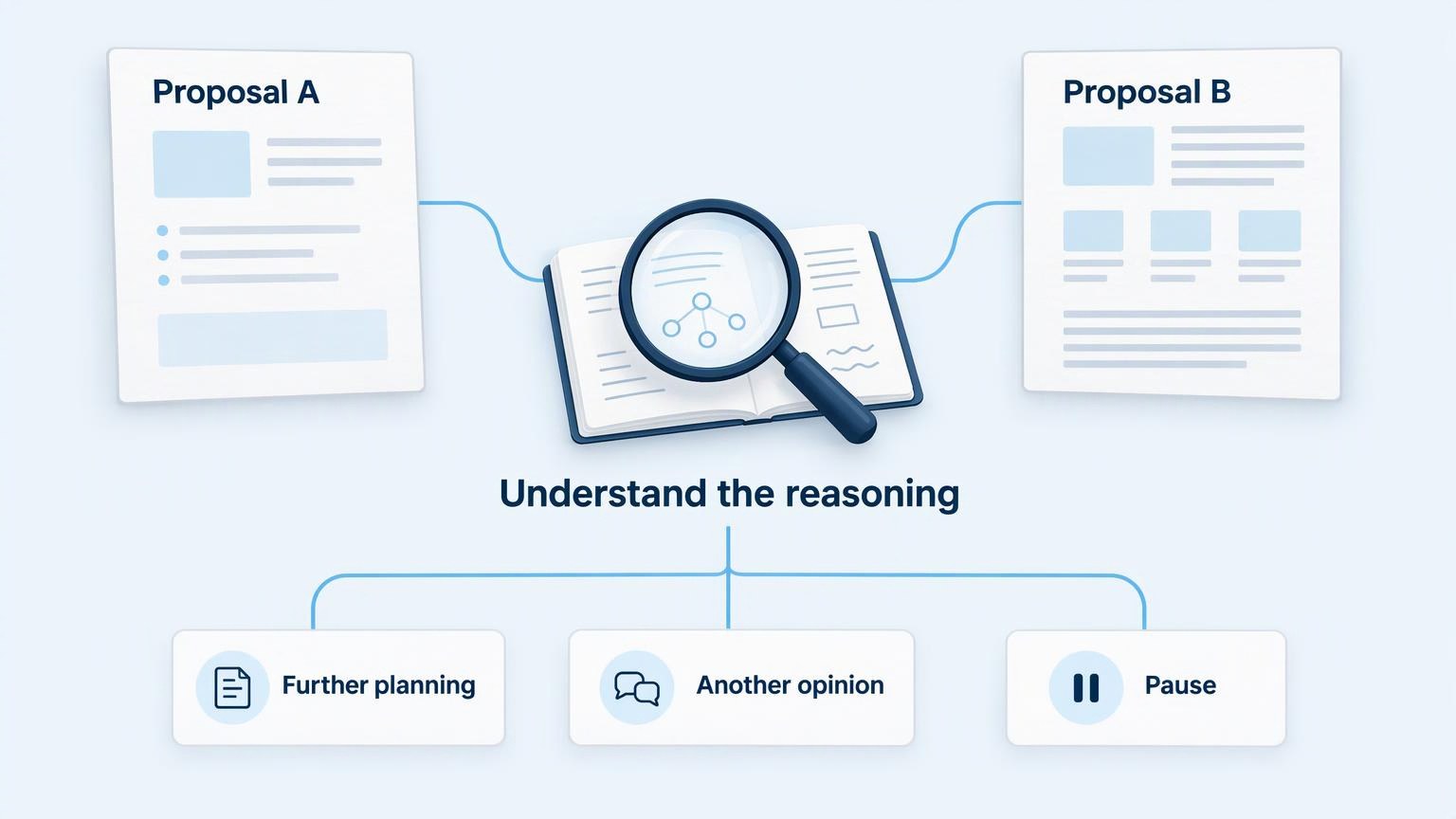
Different recommendations call for comparing the reasoning behind them, not automatically accepting the more detailed proposal or the more familiar brand. Detail makes an option easier to examine; it does not prove clinical suitability.
Say you want a subtle change and receive two recommendations. One describes only “silicone implants.” The other names a model and specifications but gives little explanation of why they were selected. Neither yet answers your central question: how does the recommendation relate to your goal and assessment?
First, obtain the missing device identity from the first surgeon during consultation. Next, have both surgeons explain their reasoning against the same description of your goals. Then separate a difference in terminology from a genuine difference in the proposed approach.
If both recommendations become clear but involve different trade-offs, you can discuss which trade-offs you are prepared to accept. If a recommendation remains unexplained, pause that option or seek another qualified opinion. The reasoned outcome is not “choose the named model.” It is “choose only after understanding the recommendation,” with postponement remaining a valid choice.
Include Long-Term Care in the Implant Decision
Your implant comparison should include responsibilities after surgery, not just the initial appearance goal. An option is harder to evaluate when its monitoring and future-care expectations remain vague.
Dr. Victor Sanchez's comparison also states that implants are not lifetime devices. That is a reason to discuss long-term care, not a basis for assigning yourself a replacement deadline or assuming a particular device will last a stated period.
Have the treating surgeon explain the risks relevant to the proposed implant, how its condition should be assessed, and what findings would lead to further evaluation. Obtain individualized instructions rather than borrowing a monitoring schedule from general online advice.
For someone returning to the United States, the practical consequence is continuity: understand who will provide routine follow-up, who will evaluate later concerns, and which device and operative records you should retain. A named device without a workable follow-up arrangement leaves part of the decision unfinished. Our breast augmentation aftercare questions offer a separate place to continue that planning.

Use the Consultation to Decide, Not Just Confirm a Preference
The consultation should connect your goals to an assessed recommendation and explain the alternatives. You can arrive with preferences, but implant selection, eligibility and treatment suitability belong with the qualified surgeon.
Start by describing the change you want in ordinary language, including what you do not want. Let the surgeon assess your circumstances before treating any device specification as settled. Then review the proposed implant and approach together, including relevant risks, limitations and alternatives.
Verify the surgeon's credentials through the applicable issuing organizations rather than relying on a website badge or title alone. Establish who will assess you and who would perform the operation.
Before deciding, explain the recommendation back in your own words: what is proposed, why, which trade-offs you understand and how follow-up would work. If you cannot explain a central part, bring that point back to the surgeon for clarification. You may proceed with further planning, seek an additional opinion or pause. A consultation is useful even when its outcome is not selecting an implant.
Review the Website for Relevance, Not an Implant Verdict
Use Hospitality Cancun's website to assess whether its current information relates to your consultation and travel-planning questions. Keep that review separate from deciding which implant a surgeon should recommend.
Read general procedure information as an introduction to the subject. A mention of breast augmentation would not, by itself, identify available manufacturers, models or specifications. Likewise, a contact link is not evidence that a specific implant is offered or suitable for you.
Maintain two separate research lists: clinical points for the qualified surgeon and practical planning points for later discussion with an identified travel contact. This keeps website research useful without assigning a clinical role to a general planning conversation.
Frequently Asked Questions
Can I choose an implant from someone else's before-and-after photos?
Use photographs to communicate what you like or dislike, not to prescribe a device. A photograph alone does not explain the person's assessment, implant specifications or surgical approach. Bring your preferences into the consultation and have the surgeon explain what is realistic for your circumstances.
Does a familiar implant brand settle the decision?
No. Brand recognition does not explain why a particular model is recommended for you. Compare the exact device information and the surgeon's rationale. If authorization or warranty claims influence your choice, examine the applicable regulator's information and manufacturer terms rather than assuming a brand name answers those questions.
Is fat transfer another type of implant?
No. Dr. Victor Sanchez's comparison describes fat transfer as a separate augmentation method using fat taken from another body area, rather than an implant. If you want to discuss an implant-free approach, make that goal clear to the surgeon. Suitability and its trade-offs require a separate clinical assessment.
What if the proposed implant changes after further assessment?
Have the surgeon explain what changed and how it affects the recommendation. Update your comparison rather than treating the earlier proposal as final. Review the revised device, rationale, risks and follow-up before consenting. A changed recommendation is a reason for clarification, not an automatic reason to accept or reject it.
Can I put implant questions or records in the general contact form?
No. Clarify the recipient and purpose before submitting anything. First contact allows only name, email and optional contact-method preference. Requested replies, optional marketing and referral to a specifically named provider are separate permissions. Implant questions belong in a later appropriate conversation; clinical records belong only in a named provider-confirmed secure channel.