

Consultation Planning
Prepare a focused conversation that connects your goals with the clinician's reasoning, the proposal's terms, and the trip you can realistically arrange.
A first consult is not a test of how much surgical terminology you know. Its value is whether you can explain the recommendation afterward and identify what remains undecided. Use these questions as private preparation for a provider discussion, not as text to paste into a general inquiry form.
Start with your goal and the decision you need to make
Open by describing what you want to change and asking what the clinician needs to assess before recommending an approach. This gives the conversation a purpose beyond choosing an implant or hearing a price.
In your private notes, separate your desired appearance from your priorities, such as how you feel about scars, future procedures, or ongoing follow-up. These are subjects for discussion, not evidence that a particular operation is suitable.
Useful opening questions are:
- What can you assess during this consultation, and what requires an examination or further information?
- Which parts of my goal might the proposed procedure address, and which might it not address?
- What alternatives, including not proceeding, should we discuss?
Ask the clinician to distinguish a preliminary suggestion from a recommendation based on completed assessment. The appropriate next step depends on that distinction: an exploratory answer can help you learn, but it should not be treated as a settled surgical plan.
Establish who would provide care and where
Identify the proposed surgeon and surgical facility separately from any coordinator or package name. You need to know whose clinical judgment you are hearing and where the proposed operation would take place.
Request the surgeon's full professional name, specialist credential details, and the issuing organizations needed for independent verification. Ask how their experience relates to your proposed breast procedure, rather than relying only on a general claim about cosmetic surgery.
For the facility, request its exact name and relevant licensing information. Ask who would provide anesthesia, what postoperative monitoring is proposed, and what arrangements apply if care beyond that facility's capabilities is needed. These questions identify responsibilities; they do not establish accreditation or guarantee an outcome.
If a coordinator attends the conversation, distinguish logistical answers from clinical recommendations. A clear response should identify which professional will answer a medical question rather than substitute a package description. Keep any credential claims pending until you can verify them with the relevant issuing authority.
| Consultation outcome | Suitable next step | Reason and trade-off |
|---|---|---|
| The recommendation still depends on an examination | Continue assessment before comparing final proposals | You can learn about options now, but the examination may change the treatment scope. |
| The recommendation is explained, but quote exclusions are unclear | Clarify the proposal before payment | Clinical understanding does not establish the total financial commitment. |
| The plan is explained, but required follow-up conflicts with your return date | Change the travel window or postpone | Your itinerary must accommodate the care plan, not replace it. |

Ask why each proposed option fits, not just what is available
A useful implant discussion explains the clinician's reasoning and the alternatives, not merely a menu of products. Ask how the proposed approach relates to your assessment and goals.
For any implant proposed, request its manufacturer, model, and product information. Ask why that option is recommended over alternatives the clinician considers appropriate. Do not assume an implant mentioned in advertising is available, authorized for the proposed use, or suitable for you.
Bring the discussion back to trade-offs: Why this size or profile? Why this placement and incision? What limitations, risks, and possible future procedures should I understand? If another breast procedure is suggested, ask what separate concern it addresses and how it changes the proposed plan.
Also ask what ongoing monitoring or follow-up the specific recommendation would require. The goal is to leave able to describe both the expected benefit and the limits in your own words. Our guide to discussing implant choices offers focused preparation for this part of the conversation.
Clarify the quote before comparing totals or paying
Compare breast augmentation quotes only after identifying the proposed procedure and the services each total covers. A lower total for a different scope is not a like-for-like comparison.
Use one compact checklist for the written proposal:
- Procedure, proposed implants, surgeon, anesthesia, and facility charges.
- Tests, medications, garments, scheduled follow-up, and exclusions.
- Any lodging or transport, with the supplier and exact scope identified.
- Currency, payment stages, quote validity, and which items may change after assessment.
- Cancellation, refund, rescheduling, and changed-treatment terms.
PlacidWay's package guide likewise emphasizes itemized comparisons across clinical services and travel components. Its descriptions are not inclusions promised by your provider.
Before a deposit, establish what that payment reserves and what happens if an examination changes the recommendation or surgery does not proceed. Keep each supplier's obligations separate from insurance: a refund depends on applicable contract terms, while coverage and claims depend on the policy's conditions and exclusions. Neither answers the other.
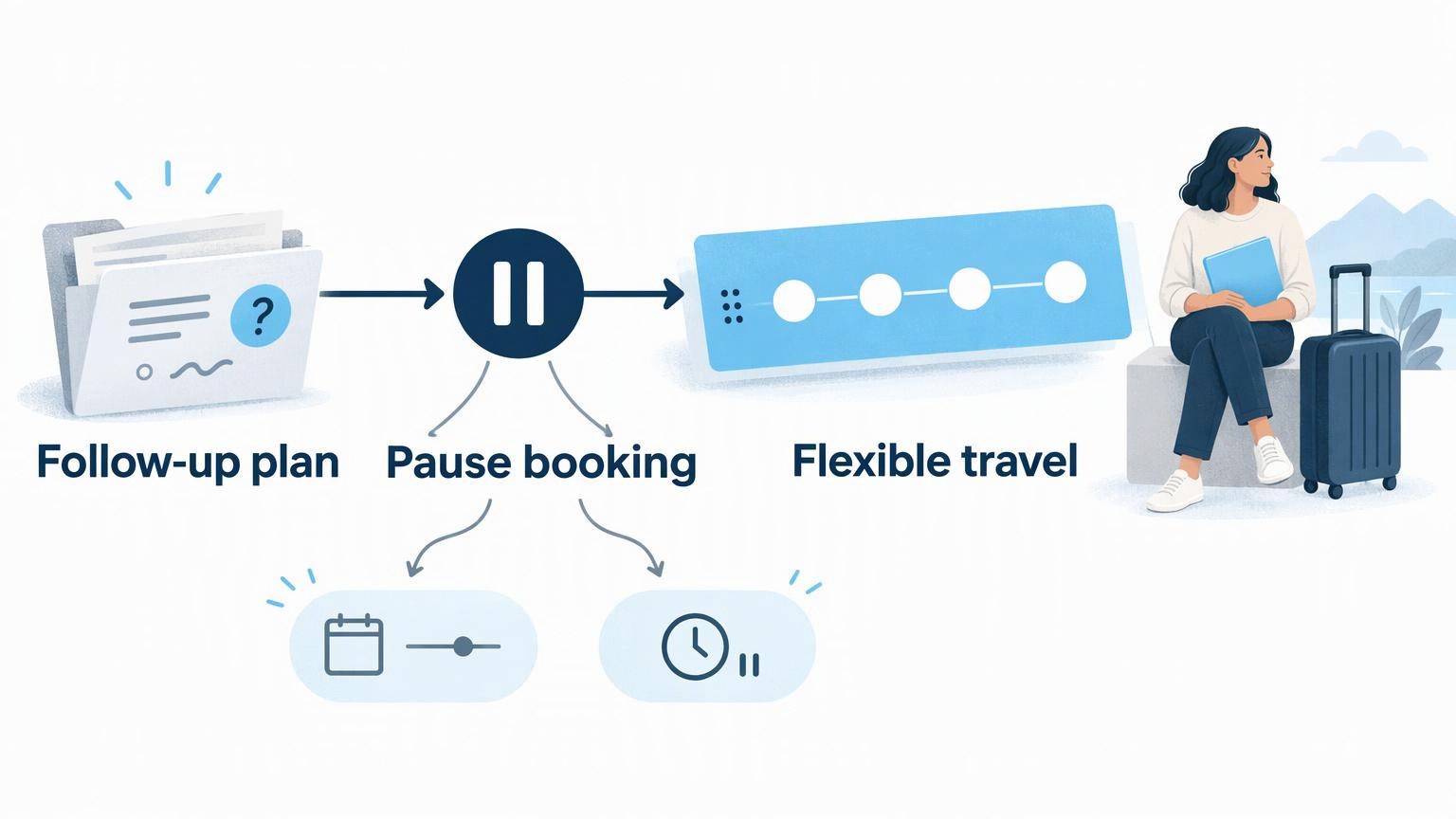
Use the follow-up plan to test whether the trip works
Let the treating clinician's follow-up plan guide the travel discussion. A package's lodging allowance does not establish how long you personally should stay or when you can fly.
Ask which assessments must happen locally, who evaluates readiness to leave, and how clinical questions will be handled after you return home. Discuss any companion or assistance requirements with the clinician; hotel and flight changes are separate logistics tasks.
Say you have an inflexible return date, but the clinician has not yet established whether required follow-up fits before departure. You could purchase travel around that date, or wait and compare a later treatment window with a longer visit. Waiting is the reasoned choice while the clinical schedule is still being determined. If the completed plan conflicts with your available time, change the travel window or postpone rather than treating the ticket as clearance.
If the clinician directs an additional hotel night, it remains a lodging charge. That reason does not establish who pays, whether it is included, or which hotel change terms apply. Whether insurance covers it depends on the relevant policy. Our aftercare question guide develops the follow-up discussion.
Turn the answers into the next appropriate conversation
After the consult, separate what is settled from what still needs a decision. Take remaining clinical questions to the treating clinician, contract questions to the relevant supplier, and ordinary travel arrangements to a confirmed planning contact.
Hospitality Cancun publishes travel and consultation-planning guidance. Read our breast augmentation in Mexico buyer guide for the broader preparation framework. In a later conversation, ask whether your planning inquiry falls within our current scope; do not assume treatment, appointment booking, or a provider introduction is offered.
Before submitting any information, establish who receives it and for what purpose. If those details are unclear, wait. The first submission is limited to name and email, with an optional contact-method preference. It does not include your question list, travel details, health narrative, or attachments.
Permission to reply, optional marketing, and referral to a specifically named provider are separate choices. Ordinary travel details may be discussed later with the confirmed travel contact. Diagnoses, scans, and clinical records belong only in a named provider-confirmed secure channel. Payment details and insurance identifiers do not belong in the general inquiry.
Frequently Asked Questions
What should I wear to the consultation?
Ask the provider whether the visit involves an examination or sizing discussion and whether any clothing is requested. You do not need to choose an implant or buy a postoperative garment beforehand. For a remote consultation, establish the format and privacy arrangements before agreeing to any visual assessment.
Can reference photos help explain what I want?
They can serve as discussion prompts if the clinician welcomes them, but should not be treated as a result you can order. Explain which features interest you and ask what is realistic for your assessment. Do not upload personal photographs or attachments through Hospitality Cancun's general inquiry form.
Should I discuss future pregnancy or breastfeeding?
Raise future plans with the treating clinician and ask whether they affect the recommendation, timing, or longer-term expectations. These are individualized clinical questions, not matters for a travel coordinator to resolve. Keep this discussion in the provider consultation rather than adding a health narrative to an initial planning submission.
Can I bring someone to help me remember the answers?
Ask the provider whether a support person may attend and how your privacy will be handled. You can prepare a shared note-taking plan privately while retaining control over what is discussed. Having someone at the consult does not establish whether companion assistance is sufficient for the eventual care plan.
What if I do not understand the explanation in English?
Ask the provider how language support will work for the clinical discussion and consent documents. Request plain-language clarification and explain the recommendation back to identify misunderstandings. Do not treat a translated promotional summary as a substitute for understanding the procedure, alternatives, risks, and instructions discussed with the clinician.