

Consultation Preparation
Build a clear account of what you take, identify unanswered questions, and arrange the clinical handoff before your visit.
A useful medication list describes what you actually take, not simply what appears in an old record. Preparing it is an information task, not a decision to stop or add a medicine for travel. You can organize the details privately before choosing a provider or finalizing a visit.
Hospitality Cancun publishes travel and consultation-planning guidance. For the broader provider-selection task, see our medical-tourism buyer guide. Here, the practical goal is a document your treating clinician can review and clarify.
Build an inventory of everything you currently take
Start with prescriptions, nonprescription products, vitamins, and supplements you currently use. Include occasional products rather than limiting the list to a daily routine. Keep this document private while assembling it.
Use a separate entry for each product and the same fields throughout:
- Identity: product name exactly as shown, plus the generic name if available.
- Strength and form: copy the label wording and identify whether it is a tablet, liquid, injection, cream, or another form.
- Actual use: amount you take or apply, how you use it, and your usual schedule.
- Occasional use: note that it is taken as needed and describe your actual pattern.
- Supporting details: prescribing clinician or pharmacy, where applicable, and anything needing clarification.
Keep strength and amount taken in separate fields. Also create a clearly labeled section for known allergies and previous medication reactions, describing what you remember without assigning a new medical diagnosis. Write “unknown” when a detail is unavailable.
Resolve conflicting details without guessing
When a label, portal entry, and your actual use differ, preserve the difference and ask the pharmacist or prescribing clinician to clarify it. Do not select whichever version looks newest and treat that as an instruction.
Say your portal lists an older schedule, your bottle has different directions, and you remember a clinician discussing a change. You could copy the portal because it is convenient, or record your actual use while marking the conflict. Choose the second approach: it makes the unanswered question visible instead of presenting an uncertain schedule as settled.
Work through the entry in order. First copy the product identity from the available label. Next describe what you currently do. Then note which instruction you cannot reconcile and contact the relevant pharmacist or prescribing clinician. Record the clarification when you receive it.
Apply the same method to an unclear supplement label or an unidentified product. Preserve available packaging information rather than inventing a name from appearance. The immediate outcome is an accurate account of what is known and what still needs professional clarification.
| Format | Best use | Trade-off |
|---|---|---|
| Editable written list | Combining actual use, schedules, and questions for your clinician in one document | Requires deliberate updates and accurate transcription |
| Label photos | Preserving product names, strengths, and printed directions | May not explain actual use or later clinician instructions |
| Portal export | Starting from an existing medication inventory | Needs review for old entries, omissions, and conflicting schedules |
Choose a working format that you can update
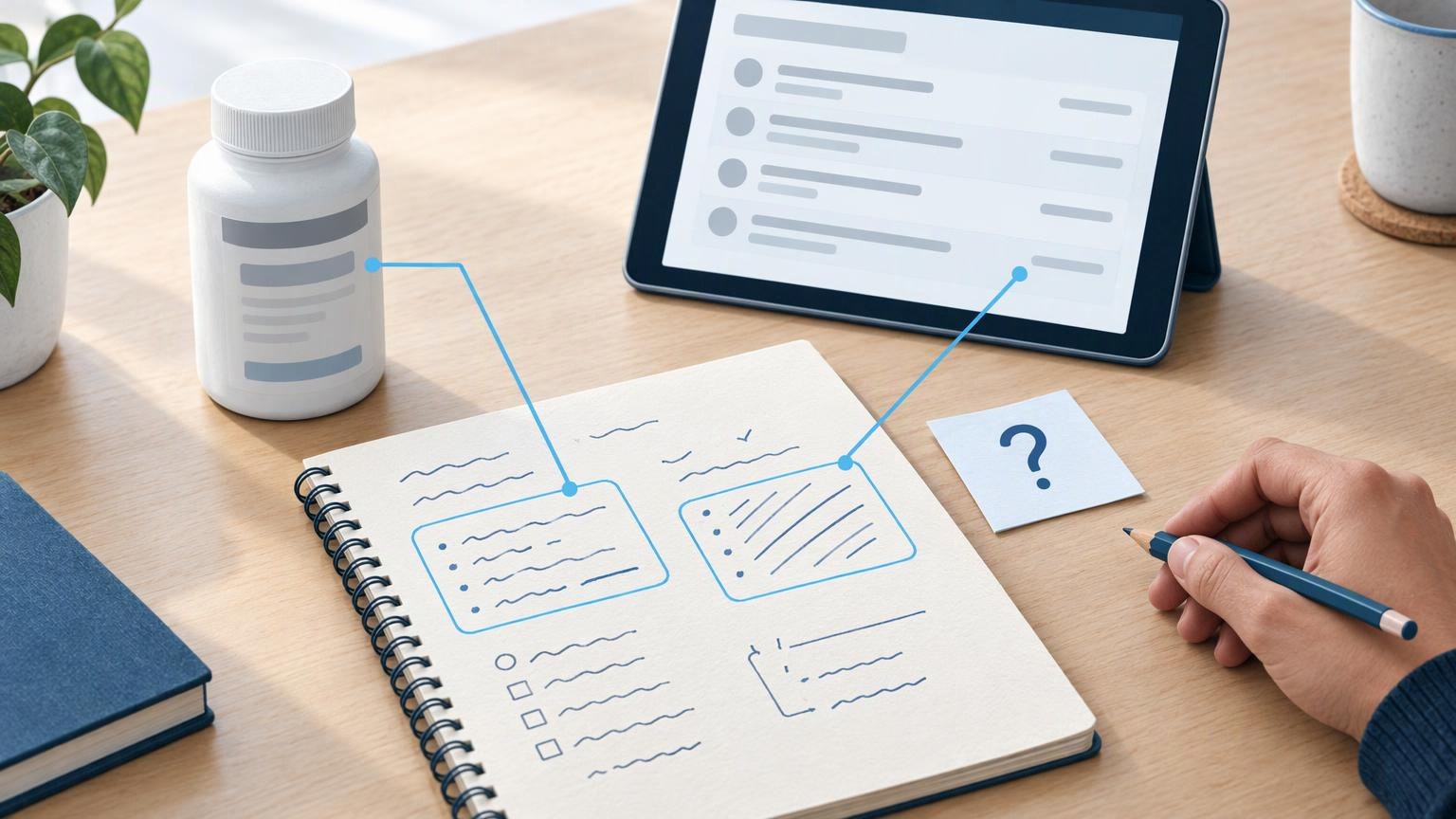
Use an editable written list as your working document when you need to combine several information sources. Label photos and portal exports can support it, but review them rather than assuming they describe your current routine.
A paper document, spreadsheet, or note can work. Choose the format you can read, maintain, and use during a consultation. Put your name and the date reviewed at the top, and keep the fields consistent so missing details stand out.
Photos are useful for preserving exact label wording. A portal export is useful as a starting inventory. Neither replaces your account of actual use when the two differ. Keep supporting materials associated with the relevant entry instead of creating an unlabeled collection of images.
The comparison below helps you assign each format a job. If the provider later supplies its own medication form, use your master list to complete it. Follow the provider's confirmed submission instructions rather than assuming your preferred file type will be accepted.
Keep your inventory separate from clinical instructions
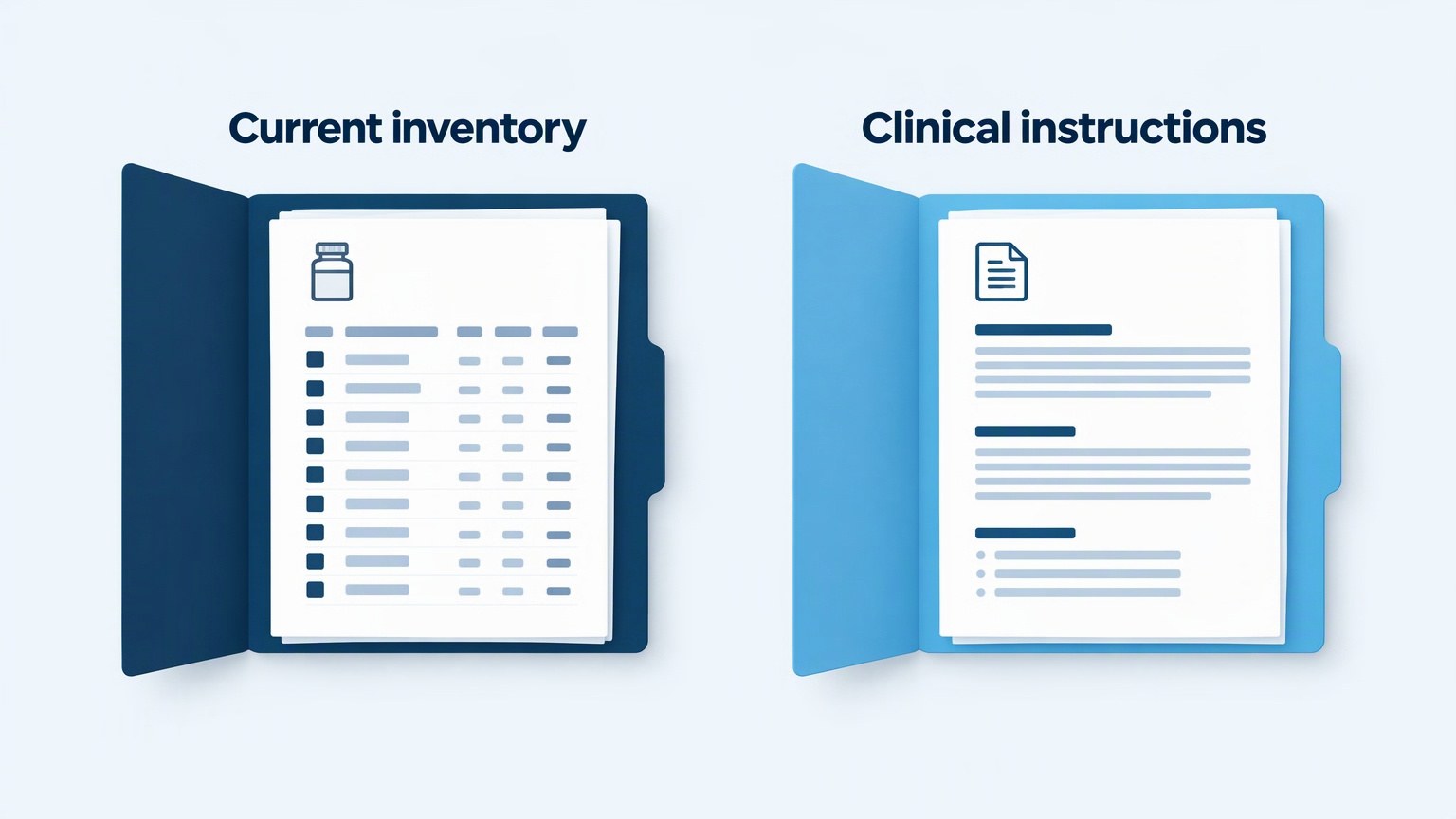
Your medication list explains what you take. It does not determine what you should take before a consultation, procedure, or journey. Individualized medication and supplement instructions belong with the treating clinician and, where appropriate, the prescribing clinician.
Keep two separate documents: the current inventory and the preparation instructions you receive. This prevents a question such as “Should this schedule change?” from being mistaken for an approved change.
During the clinical discussion, identify the entries you could not resolve and any directions that appear to conflict. If clinicians give different instructions, ask them to clarify the plan rather than choosing one yourself. Keep the resulting directions in their original wording, with the issuing clinician and date.
For dental care, the medication list may sit alongside other requested documentation. Our guide to records to request for dental implant care addresses that separate records task. Let the treating provider identify what it needs for your assessment; a travel checklist does not establish treatment suitability.
Maintain a current copy through the visit
Keep a dated master copy and update it when your actual medication information changes. If you have already shared an earlier version, use the established clinical channel to tell the provider that a newer copy replaces it.
Review the master against your available labels and confirmed instructions before the consultation. Clearly separate current products from recently stopped products you need to discuss, so a historical entry does not look like something you still take. Keep questions that still need an answer in the document, even if that makes it look incomplete.
During the visit, record which questions were answered and retain any new clinician-issued instructions separately. If care results in a new prescription or revised directions, request the relevant documentation rather than relying on memory to reconstruct the conversation.
For the return handoff, ask which information should go to your clinician at home and how that transfer should happen. Your list can organize the discussion, but it does not replace prescribing documentation, follow-up instructions, or individualized advice about travel.
Frequently Asked Questions
What if I do not know a product's generic name?
Copy the name exactly as it appears on the packaging and mark the generic name as unknown. Keep the label available for clarification with your pharmacist or clinician. Do not translate the brand name into a guessed equivalent or substitute a product that looks similar.
Should I translate my medication list into Spanish?
Ask the treating provider which language and format it needs. Preserve original product names, strengths, and directions even if a translation is requested. Have unclear wording resolved through the provider's clinical process. This guide does not establish a translation requirement for entering Mexico or attending a particular facility.
Is the list enough to establish whether I can bring a medicine into Mexico?
No. A consultation list organizes information for clinical review; it does not establish import permission, customs requirements, or airline rules. Check current official requirements for the particular medicine before departure. Do not treat this document, an older travel article, or another traveler's experience as authorization.
What if I cannot remember the details of a previous reaction?
Record what you remember and clearly identify what is uncertain, including the product name if known and the reaction you experienced. Seek existing documentation from the relevant clinician or record holder. Let the treating clinician interpret that history rather than assigning an allergy classification yourself.
Can a companion help prepare the document?
Yes, you can choose to have a companion help transcribe labels or organize your private document. Review the entries yourself wherever possible. That help does not make the companion the clinical decision-maker or automatically authorize disclosure to others. Keep any provider handoff within the confirmed clinical process.