

Decision Guide
Build your own decision criteria before a destination, provider advertisement, or package description sets them for you.
A useful starting point is not a provider ranking. It is a clear account of what would make the trip workable for you. For US English-speaking adults considering Cancun, that includes understandable clinical discussions, a feasible return plan, and room in the budget for uncertainty. Your criteria should remain useful even when advertisements look very different.
Separate requirements from preferences before choosing a path
Make requirements the conditions an option must meet, and preferences the features you can trade off. A requirement might be an understandable consultation or a follow-up plan compatible with your responsibilities at home. A preference might be a particular hotel style. An attractive preference should not compensate for a failed requirement.
Write each requirement as a decision rule. Instead of “I want convenience,” use “I need to understand which visits require my presence before committing to travel.” Instead of “I want a low price,” use “I need a plan whose total spending and possible changes fit my budget.” These rules produce more useful comparisons than broad labels such as luxury or affordable.
Keep alternatives open. You might continue consultation research, begin travel comparisons after the care schedule is clear, or postpone the trip. Postponement is a reasonable outcome when your limits cannot accommodate the proposed plan. The comparison below helps select the next step, not a provider.
Use your criteria to filter search results
Search for evidence that answers your highest-priority requirement before browsing packages. Start with the relevant consultation or specialty in Cancun, then identify the actual clinician and facility behind a result. A destination page can introduce possibilities, but it cannot establish an individual provider's suitability.
Next, investigate the named clinician's qualifications and the facility's identity. Credential claims should be checked against the relevant issuing authority or professional register, with the exact person and claimed qualification matched. A general statement about a network should not substitute for evidence about the person who would treat you.
Then examine whether the consultation process allows you to understand alternatives, risks, and follow-up directly with the clinician. If English-language communication is essential, make that a criterion for the clinical discussion itself, not merely the website.
Mark each requirement as supported, needs more evidence, or not met. Supported results can move forward to closer comparison; those needing more evidence call for targeted research; failed requirements remove an option. Photos, testimonials, and savings claims should not fill an evidence gap in your decision.
| Your Situation | Suitable Next Step | Reason | Trade-Off |
|---|---|---|---|
| Clinical suitability or follow-up still needs clarification | Continue consultation research | Clinical answers determine whether travel is workable | Travel commitment waits |
| Care schedule is clear and fits your limits | Compare travel arrangements | You can evaluate logistics against an established plan | Comfort preferences may need compromise |
| A required visit conflicts with an immovable return date | Change the window or postpone | The proposed plan fails a hard requirement | You give up the preferred timing |
| Sightseeing is essential but you do not yet know which activities fit the care plan | Keep vacation commitments separate | Leisure plans should not dictate care decisions | The visit may not serve both purposes |

Test your priorities against a fixed return date
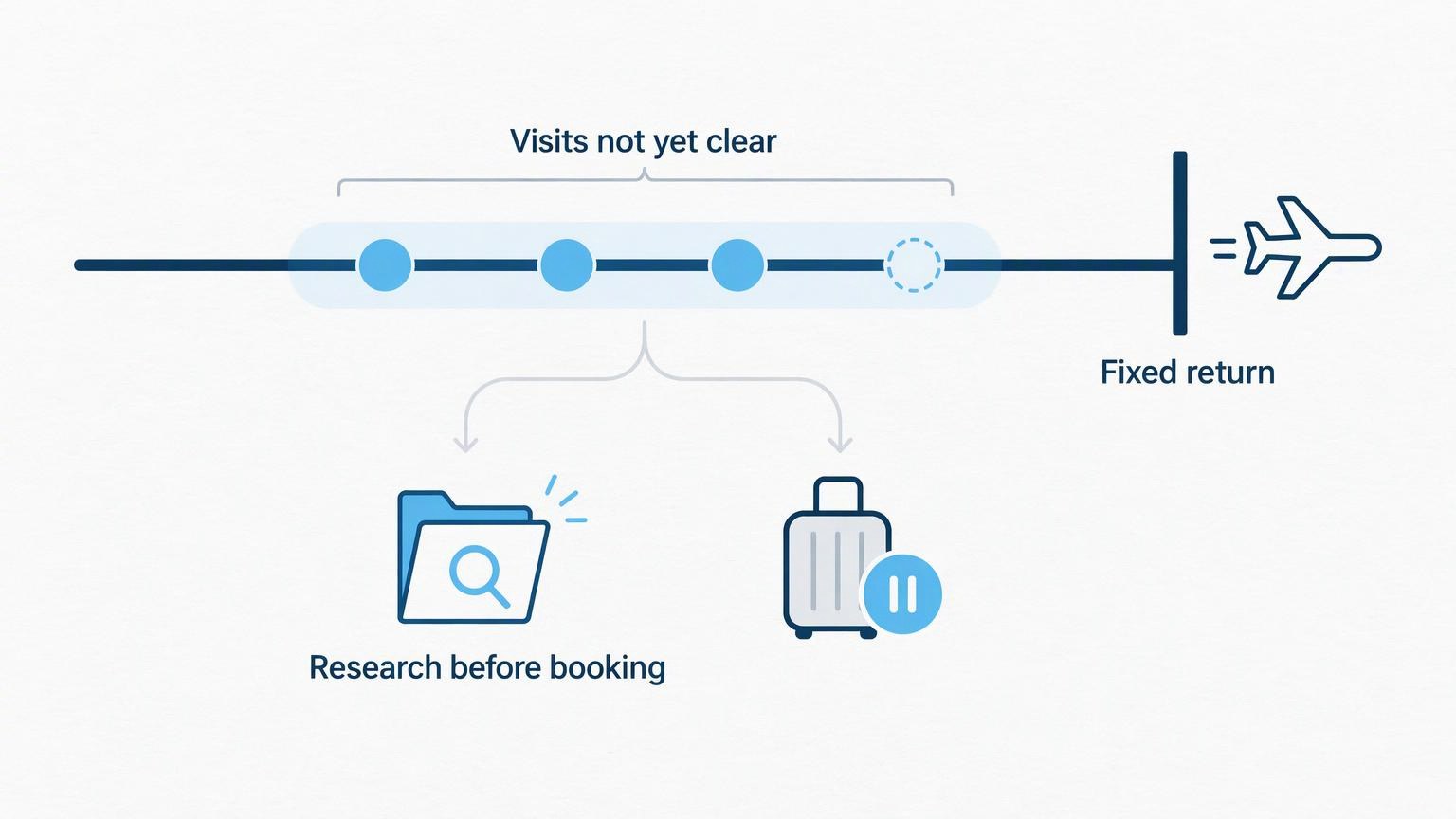
If your return date cannot move and the care schedule is not yet clear, pause travel commitment. This is not proof that Cancun is unsuitable, but you cannot yet decide whether the trip fits your calendar.
Say you have approved leave from work and must return as scheduled. You are interested in a consultation in Cancun, but the treating clinician has not yet explained whether additional visits would be needed. A travel offer appears to fit your available window.
You have meaningful alternatives: continue consultation research without committing to travel, investigate whether your leave can genuinely become flexible, or postpone. Choosing the offer now would treat an advertised itinerary as evidence of a clinical schedule. Continuing the consultation process is the better next step because it addresses the missing information without assuming an outcome.
Once the clinician explains the proposed visits, follow-up, and individual flight considerations, compare that plan with your actual availability. If they conflict, change the travel window or reconsider the trip. For the next planning stage, see our guide to when to plan a Cancun visit.
Define affordability as total spending and change exposure
Your budget criterion should cover the whole proposed trip and the consequences of changes, not just a treatment headline. Separate care charges, lodging, transportation, and other proposed services so you can compare equivalent scope. A bundle is not automatically better or worse than separate purchases.
Also decide privately how much uncertainty you can absorb. If your budget works only when every reservation stays unchanged, flexibility becomes a selection criterion rather than a minor convenience.
For example, if a clinician advises a longer stay, an additional hotel night remains a lodging service. The clinical reason does not establish who pays, whether the night is included, or which hotel terms apply. Those answers depend on the applicable proposal and supplier contract.
Supplier cancellation, refund, and change terms determine the contractual consequences of altering a booking. Insurance is separate: coverage, exclusions, and claim conditions determine whether a policy pays for a particular event. Do not assume either a medical reason or the word “package” resolves these questions. When the terms do not say who pays a cost, you cannot yet assess its effect on your budget.
Match Hospitality Cancun's guidance to your actual planning needs
Use Hospitality Cancun's published guidance as a starting point for travel and consultation-planning research, not as a clinical recommendation. Our medical tourism in Cancun buyer guide is the relevant overview to review alongside your priorities.
Identify the kind of help you would need before considering a planning conversation. Organizing travel around an established consultation is different from deciding whether a treatment is suitable. Eligibility, diagnosis, treatment selection, recovery advice, and clinical follow-up belong with the qualified treating clinician.
A later conversation about current scope can establish whether there is a match between your planning needs and what is actually offered. It should not be taken as confirmation of appointment booking, a provider relationship, or included travel services. If your main unanswered issue is clinical, direct it to the clinician rather than expecting travel guidance to resolve it.
This keeps the business comparison specific: what planning task needs doing, who would handle it, and what remains your responsibility?
Prepare your priorities privately, then use the appropriate handoff
Prepare a short private decision note so a later conversation can address your priorities without starting over. Keep it focused on:
- The requirements that would rule an option in or out.
- The preferences you are willing to trade off.
- The missing answer preventing your next decision.
- The task you want a clinician or travel contact to address.
Before submitting any information, clarify who will receive it and for what purpose. Once those are clear, the first contact submission is limited to name and email, with an optional contact-method preference. Do not include your decision note, dates, trip details, health narrative, attachments, payment details, or insurance identifiers.
Ordinary travel details may be discussed later with the confirmed travel contact. Diagnoses, scans, and clinical records belong only in a named provider-confirmed secure channel. Permission to reply to your requested inquiry, optional marketing permission, and permission for referral to a specifically named provider are separate choices. Agreeing to a reply is not agreeing to marketing.
Frequently Asked Questions
Do I need to choose a procedure before starting research?
No. You can begin with the question you want a clinician to address and your personal limits. Researching a destination does not establish diagnosis or treatment suitability. Avoid converting a general goal into a procedure choice simply because that procedure is prominently advertised or presented in an appealing travel offer.
How should I handle conflicting advice from different providers?
Ask each clinician to explain the basis for the recommendation, the alternatives considered, and the proposed follow-up. Differences may involve assumptions that need clarification. Do not settle a clinical disagreement by choosing the more convenient itinerary. An independent clinical opinion can help you understand the disagreement before making travel decisions.
Can a companion's needs change my decision criteria?
Yes. Consider their availability and practical needs privately while assessing feasibility. A companion's limited stay may affect travel arrangements, but it does not establish what clinical assistance you require. Any support required by the care plan should come from the clinician's instructions, not assumptions about what a companion can do.
What if a promotional deadline arrives before I have answers?
Keep your requirements unchanged. A deadline does not provide missing evidence about a clinician, treatment plan, or contractual obligation. If you still lack essential answers, let the promotion pass rather than treating urgency as a reason to commit. You can evaluate later options using the same criteria without assuming another offer will appear.
Should I give every priority equal importance?
No. Hard requirements should be assessed before preferences. Among options that meet those requirements, you can weigh comfort, administrative effort, and other trade-offs according to your values. An option with many appealing features should not outrank one that meets an essential requirement merely because it collects more favorable impressions.