

Work-Break Planning
Start with your employment commitments, then determine whether a clinician-led schedule leaves room for travel and follow-up.
A break on your calendar is a starting point, not proof that a medical trip fits. The useful question is whether your workplace commitments and proposed care schedule can coexist without depending on an exact, unconfirmed return. Resolve those separately before choosing flights, lodging, or holiday activities.
Establish What Your Approved Leave Covers
Start by determining what absence your employer has actually approved and which workplace process applies to your proposed time away. Do not treat a calendar entry, unused leave balance, or informal conversation as an answer to every leave question.
Read the relevant employee handbook or leave policy first. Then take any questions it does not answer to the person responsible for leave administration, such as your employer's designated HR contact. Keep approval, pay status, documentation, and extending the absence separate: an answer about one does not settle the others.
Use this compact list for that employment discussion:
- Which leave category applies, and who approves it?
- What dates and return expectations are approved?
- How is the absence paid or unpaid?
- What documentation is required, through which employer-designated process?
- Who handles an extension, and when must you notify them?
The result should tell you whether you have a usable planning window or still need an employment decision. This guide does not establish your legal eligibility for leave or your employer's obligations.
Define Availability Before Promising to Work Away
Separate being reachable from being expected to work. A brief administrative update, a scheduled client presentation, and a full remote shift place very different demands on your time.
List the commitments that would remain during your absence: meetings, deadlines, approvals, on-call duties, or an on-site return. Decide which can be reassigned and which genuinely require you. Agree on the handoff before departure rather than assuming a colleague will cover an unexpected gap.
If remote work is part of the proposal, establish whether your employer permits working from the intended location and what its access, confidentiality, and availability rules require. Internet access alone does not resolve those questions, and permission to work remotely does not establish medical readiness to work.
Describe your actual duties to the treating clinician later through the appropriate clinical process. Desk work, driving, lifting, and public-facing duties are different tasks for individual advice. The employer sets workplace expectations; the qualified clinician addresses whether and when you can perform those tasks.
| Your Situation | Suitable Next Step | Reason | Trade-Off |
|---|---|---|---|
| Leave approved; clinical schedule unknown | Research or consultation planning | Establish care requirements before committing to treatment travel | Treatment timing remains open |
| Clinical schedule conflicts with a fixed work return | Seek different leave or defer travel | The current window does not accommodate both commitments | The trip may need to move |
| Employment and clinical schedules align | Compare travel arrangements and change terms | You have a basis for evaluating an itinerary | Alignment is not a guarantee against later changes |
Build the Schedule From the Clinician's Plan
Obtain a schedule for your proposed care from the qualified treating clinician before judging whether the break is long enough. Appointment availability is only one part of that schedule, and a consultation does not establish that treatment will proceed.
Keep the stages distinct: assessment, any further evaluation the clinician requires, possible treatment, follow-up before departure, and care after you return. Ask the clinician to distinguish what is planned from what depends on your evaluation or progress. Do not replace that distinction with a generic recovery-day estimate.
Flight timing, length of stay, and resuming work depend on the individual care and follow-up plan. A proposed departure date should therefore be compared with clinical guidance, not used as a deadline the clinician must accommodate. Likewise, being able to travel and being ready for your particular job are separate questions.
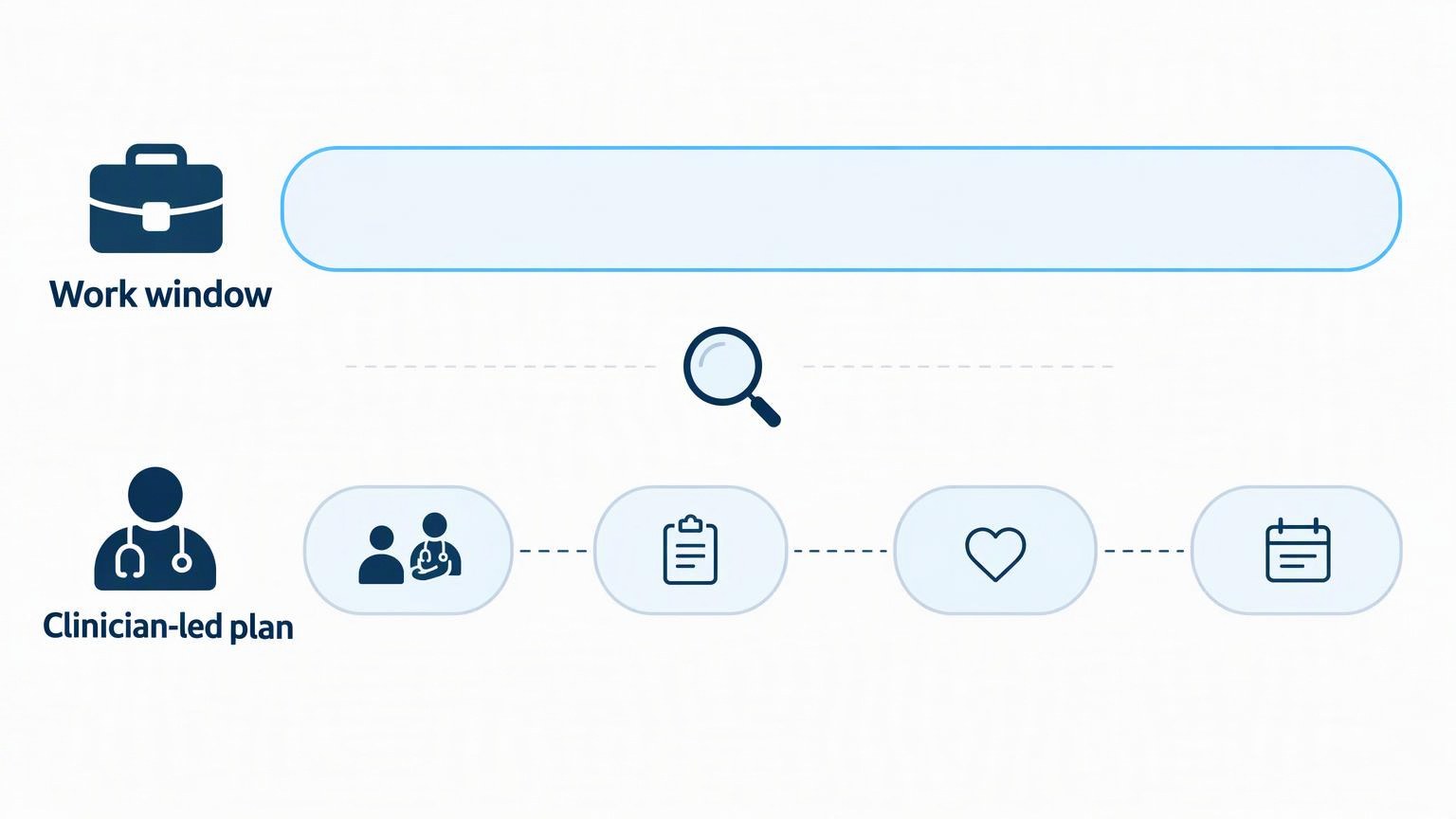
Record the employment window and clinical schedule side by side for your own planning. For related reading, see when to plan a medical tourism visit to Cancun.
Choose a Different Plan When the Return Date Is Fixed
If you cannot move your work return date and the clinician has not yet established the care schedule, do not commit to treatment travel on the assumption that everything will fit. Keep researching, pursue a different leave arrangement, or defer the trip.
Say you have an approved break followed by an on-site project that you must attend. You find a consultation opening, but the provider has not yet established whether treatment is suitable or what local follow-up would involve.
The opening solves appointment availability, not the return-date problem. Booking treatment-related travel now would make the plan depend on answers you do not yet have. Seeking a broader leave window could remove the employment conflict, but would still not establish clinical suitability.
The reasoned choice is to use the break for research, or consider a consultation-only visit if its own requirements can be established and accommodated. Treatment travel stays undecided. If the clinician later provides a schedule compatible with approved leave, revisit the travel decision rather than treating the earlier consultation opening as a commitment.
Plan for a Delayed Return Without Assuming Who Pays
A delayed return creates separate employment, clinical, and travel decisions. Establish the employer's notification and extension process before departure, and identify who will cover unfinished work if your absence changes.
If the clinician changes departure guidance, follow the individual clinical advice and address workplace notification through the agreed process. A revised flight or lodging reservation is a logistics task; it does not, by itself, define what clinical support you need.
Consider an additional hotel night requested because the care plan changes. It remains a lodging service, even though the cause is clinical. That cause does not establish whether the night is included, who pays, or what cancellation terms apply. Those answers come from the applicable written proposal and supplier contract.
Read flight and hotel change, cancellation, and refund terms before paying. Insurance is a separate contract: coverage for cancellation, medical expenses, or evacuation depends on the policy and claim conditions. Do not count an employer extension, supplier refund, or insurance payment as available merely because the delay is medically related.
Research Destinations After the Work Window Is Clear
Move to destination comparison when you can explain both your employment limits and the clinical information still needed. A destination description can orient your research, but it cannot establish a provider's credentials, treatment suitability, or appointment availability.
Start with the specialty relevant to your consultation and identify a named provider for further evaluation. Obtain the provider's exact practice location and appointment process, then verify credentials through the relevant issuing authority. Use the location to compare actual flight options, ground transport, and lodging for the proposed visit rather than choosing accommodation first.
Compare itineraries by connections and arrival flexibility, not just the lowest displayed fare. Examine lodging change terms and whether the property suits requirements established by the care plan. No destination label settles those choices.
Keep holiday interests on a separate list so they do not become assumptions about clinical availability. The related guide to keeping care separate from vacation in Mexico addresses that distinction.

Frequently Asked Questions
Should I disclose a diagnosis to my manager?
First establish what your employer's leave process requires and who is designated to receive documentation. Do not assume your manager needs your complete clinical history. This guide cannot determine the disclosure rules that apply to your workplace; resolve them through the employer's formal process before providing sensitive information.
Does a companion's approved leave solve my scheduling problem?
No. Your companion's availability is a separate planning input, not evidence that your own leave or care schedule works. Compare their departure limits with any support requirements established by the treating clinician. If those do not align, reconsider the support arrangement without assuming that a hotel stay supplies clinical assistance.
Can I use a holiday weekend instead of requesting leave?
A holiday weekend can be a possible calendar window, but it does not establish provider availability, treatment suitability, or follow-up timing. Evaluate it against the clinician's plan and your next work obligation. If the plan remains uncertain, keep the weekend as an option rather than a treatment deadline.
Does an all-inclusive package protect my work return date?
No package label establishes a guaranteed return to work. Evaluate the stated clinical schedule separately from flights, lodging, and other inclusions. Written supplier terms determine contractual changes and refunds; the clinician determines individual clinical guidance. A bundled proposal does not merge those responsibilities or establish who pays for a delay.
What belongs in the first website inquiry?
Clarify the recipient and purpose before submitting any information. The first submission is limited to name, email, and optional contact-method preference. Discuss travel details later with the confirmed travel contact. Requested replies, optional marketing, and referral to a specifically named provider are separate choices. Clinical records belong only in a named provider-confirmed secure channel; do not submit attachments, insurance identifiers, or payment details through a general inquiry.