

Consultation and Travel Planning
Build your travel window around the appointments your treating provider requires, then compare lodging coverage and the consequences of changing plans.
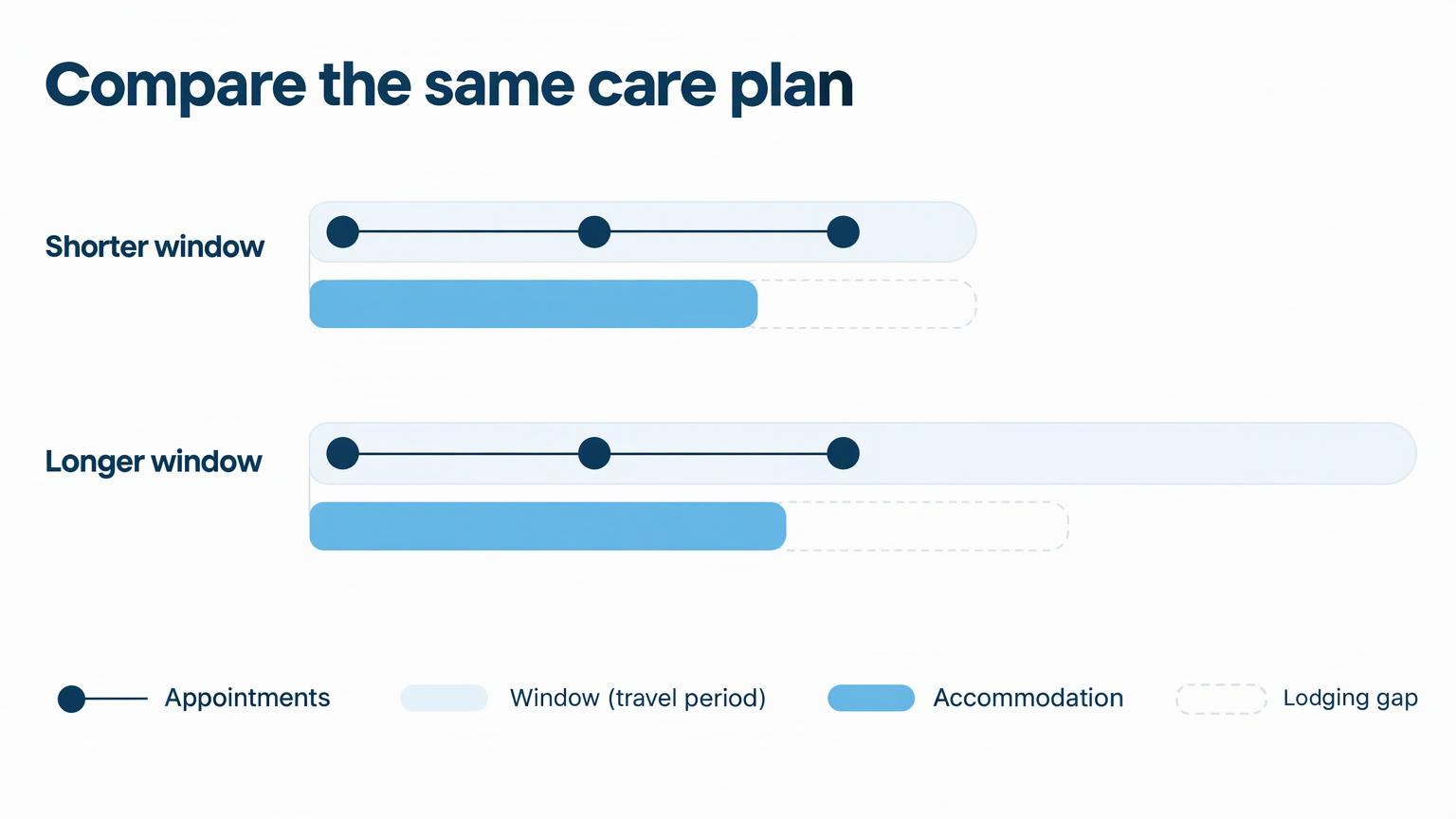
A stay estimate matters only when you know what it measures. Arrival for assessment, hospital time, hotel accommodation and follow-up appointments occupy different parts of the calendar. Compare the same starting and ending points so a shorter estimate does not hide an appointment or an arrival requirement.
Confirm the Treatment Location Before Choosing an Airport
Confirm the facility address and each in-person appointment location with the care provider before comparing flights. A website destination does not establish where your procedure or follow-up will occur.
The Hospitality Cancun homepage's destination information describes Costamed in Riviera Maya and Cozumel Island and lists Cancun, Tulum and Cozumel International Airport as arrival options. These are options to investigate, not interchangeable recommendations for your care plan.
First establish whether assessment, treatment and reviews share an address. Then compare airports and transport to those locations. If appointments use different locations, choose lodging around the appointment sequence, not just airport access.
Keep destination and provider selection separate. An airport listing establishes neither procedure availability nor a treating or referral relationship. For identity and qualifications, use our guide to verifying the mommy makeover care team.
Compare Shorter and Longer Stays Against the Same Care Plan
Consider a shorter window only if the treating clinician says it fits your assessment, procedure, required follow-up and individual travel guidance. A longer window may provide useful scheduling flexibility, but neither length is automatically the better clinical choice.
Ask each provider to separate total destination time, hospital time and purchased accommodation nights. Establish what departure depends on, such as a scheduled review or individual assessment.
Included hotel nights are not provider-recommended stay guidance. Compare check-in and checkout dates against arrival requirements and the final local review, then identify uncovered nights. Accommodation coverage alone cannot establish readiness to leave.
If one proposal explains the appointment sequence and another gives only a duration, they are not ready for like-for-like comparison. Clarify the second schedule before choosing based on its shorter estimate.
| Situation | Suitable Approach | Reason | Trade-Off |
|---|---|---|---|
| A shorter window fits required appointments and individual travel guidance | Consider the shorter stay | Fits the care plan | Less room for schedule changes |
| A longer window fits care and home responsibilities | Consider the longer stay | Adds scheduling flexibility | Extra lodging; inclusion and payer depend on terms |
| Hotel nights are listed without a complete appointment schedule | Leave departure undecided | Lodging does not establish the necessary stay | Complete itineraries cannot yet be compared |
| A required review conflicts with a fixed return deadline | Move the window or defer | Both commitments cannot fit | Preferred travel dates must change |
Turn Required Appointments Into a Travel Calendar
The first required in-person event sets your arrival boundary; follow-up and the clinician's travel assessment shape departure planning. Build the calendar in that order, not around a preferred return flight.
- Establish arrival requirements. Identify consultation, assessment or testing dates and whether they are confirmed.
- Map the procedure. Ask what must happen beforehand and what could change its scheduled date.
- Place follow-up. Identify required local reviews and whether later follow-up can be remote under the provider's plan.
- Identify the travel decision. Establish who assesses readiness to travel and when.
Record each event's location, responsible provider and attendance format. Missing appointments then become visible before you compare reservations.
The final local appointment and permission to travel are separate facts. Completing a review does not automatically establish flight readiness; departure decisions still depend on the clinician's individual guidance.
Test a Fixed Return Deadline Before Committing
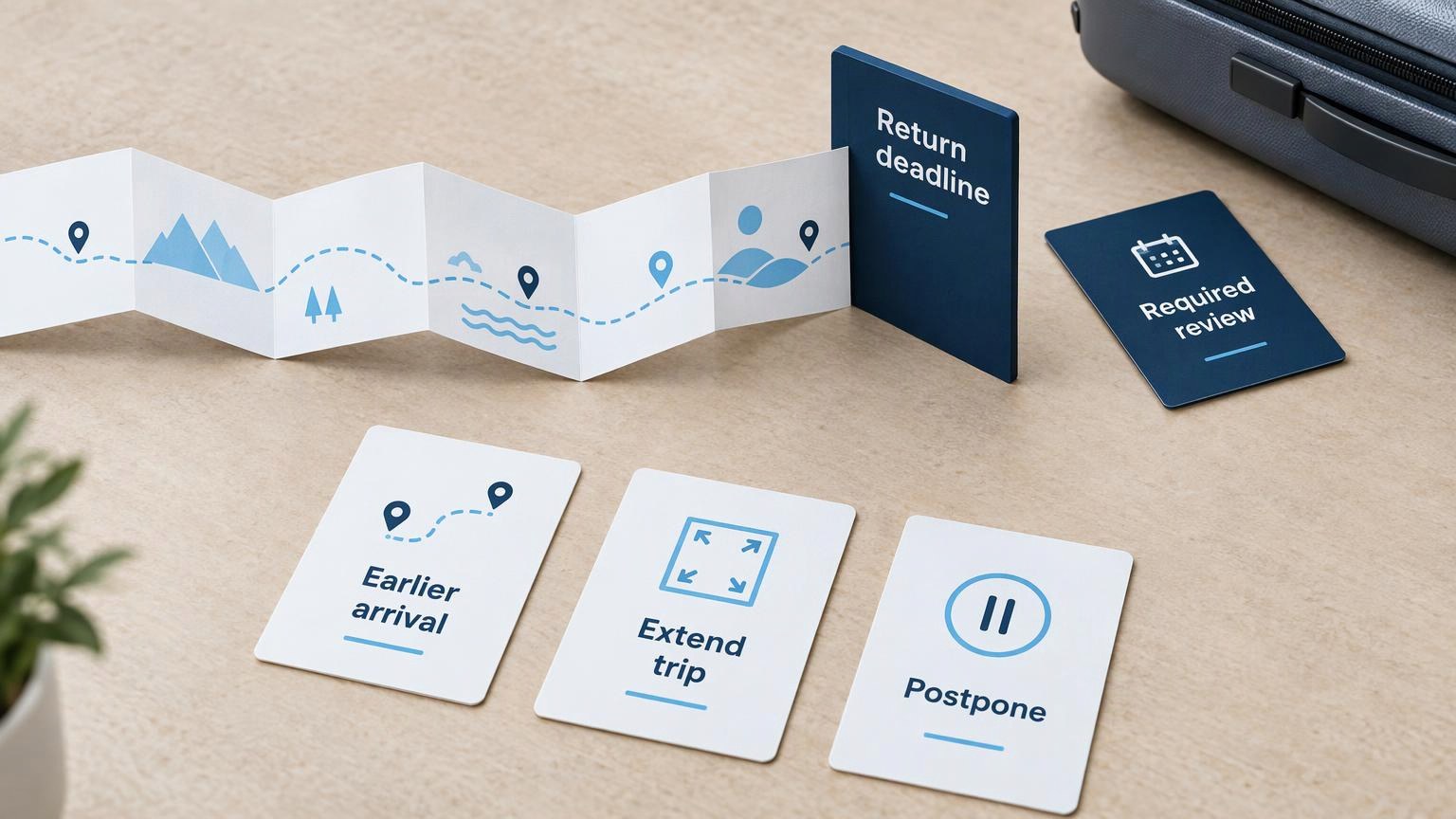
If a required local review falls after your fixed return deadline, move the travel window or defer. Do not assume the review can be skipped or changed to a video call.
For example, you have an immovable work obligation at home. The hotel's checkout date makes the trip look workable, but the provider's final in-person review falls too late for your intended return.
Compare three alternatives: arrive earlier if the clinician approves a different schedule, extend the trip if work can move, or postpone. The clinician decides whether schedule changes are appropriate; you decide whether the resulting window fits your responsibilities.
If neither calendar can change, postpone. Extra hotel nights solve an accommodation gap, not the return conflict. A longer reservation helps only when it addresses the actual constraint.
Separate Extension Charges From the Reason for Staying
An extension can change lodging, flight and appointment costs, but its cause does not determine who pays. Compare written terms before committing to a narrow departure window.
If the clinician directs you to remain longer, an extra hotel night is still lodging. Inclusion, payment responsibility and applicable hotel terms depend on the agreement, not the clinical instruction.
Keep one terms checklist: accommodation coverage dates; extension availability and charges; flight change and cancellation conditions; additional appointment charges; and the payer for each service. Hotel refunds and airline changes follow the respective supplier contracts.
Insurance is separate. Cancellation, medical and evacuation policies have their own coverage, exclusions and claim conditions; they do not change supplier obligations. Do not assume an extension is covered without applicable policy evidence. For broader proposal comparisons, see our guide to comparing mommy makeover costs in Mexico.
Keep the Clinical Plan and Travel Handoff Separate
Your treating provider determines stay guidance, required reviews and travel readiness. Use that schedule for reservations and transport; changing a hotel booking is not clinical follow-up.
Prepare a private calendar distinguishing confirmed dates from estimates. Discuss travel dates, lodging and companions later with a travel contact whose identity and purpose are clear. Clinical records belong only in a named provider-confirmed secure channel.
Before submitting any information through Hospitality Cancun's contact section, clarify who receives it and why. The first submission allows only name, email and optional contact-method preference. Exclude trip details, narratives, health information, financial or insurance identifiers, payment details and attachments.
Permission to answer your inquiry, optional marketing and referral to a specifically named provider are separate choices. A requested reply is not marketing consent. Opening the contact section establishes neither an appointment nor a provider relationship.
Frequently Asked Questions
Can I use someone else's stay length as my starting estimate?
Use it to identify discussion topics, not to set departure. Another person's procedure combination, assessment and follow-up may differ from yours. Ask your treating provider to explain the milestones behind your estimate rather than matching another traveler's calendar or hotel booking.
Does returning to work mean I am ready to fly?
No. Returning to work and readiness for air travel are different decisions. Do not substitute a work-recovery estimate for individual flight guidance. Discuss both with your treating clinician, explaining what your work involves and the travel you are considering before making commitments.
Should I plan sightseeing during the stay?
Do not let sightseeing determine the care trip's length. Establish appointments first, then ask your clinician about activity limitations. Keep leisure reservations separate so they do not pressure you to miss a review or override guidance, even if the calendar appears open.
Can my companion leave before I do?
It depends on the assistance your care plan requires and what remains after your companion leaves. Ask the provider to distinguish ordinary help from required clinical support. An earlier companion flight changes logistics but does not establish a need for professional clinical assistance.
What should I keep after the provider explains the schedule?
Keep a dated appointment calendar showing which dates remain unconfirmed. Retain individual travel instructions separately from hotel and airline confirmations. Update the calendar when plans change so an old checkout date or flight reservation is not mistaken for the provider's current guidance.