

Dental Travel Planning
Use the reunion to frame your travel options, not to set a deadline for dental treatment.
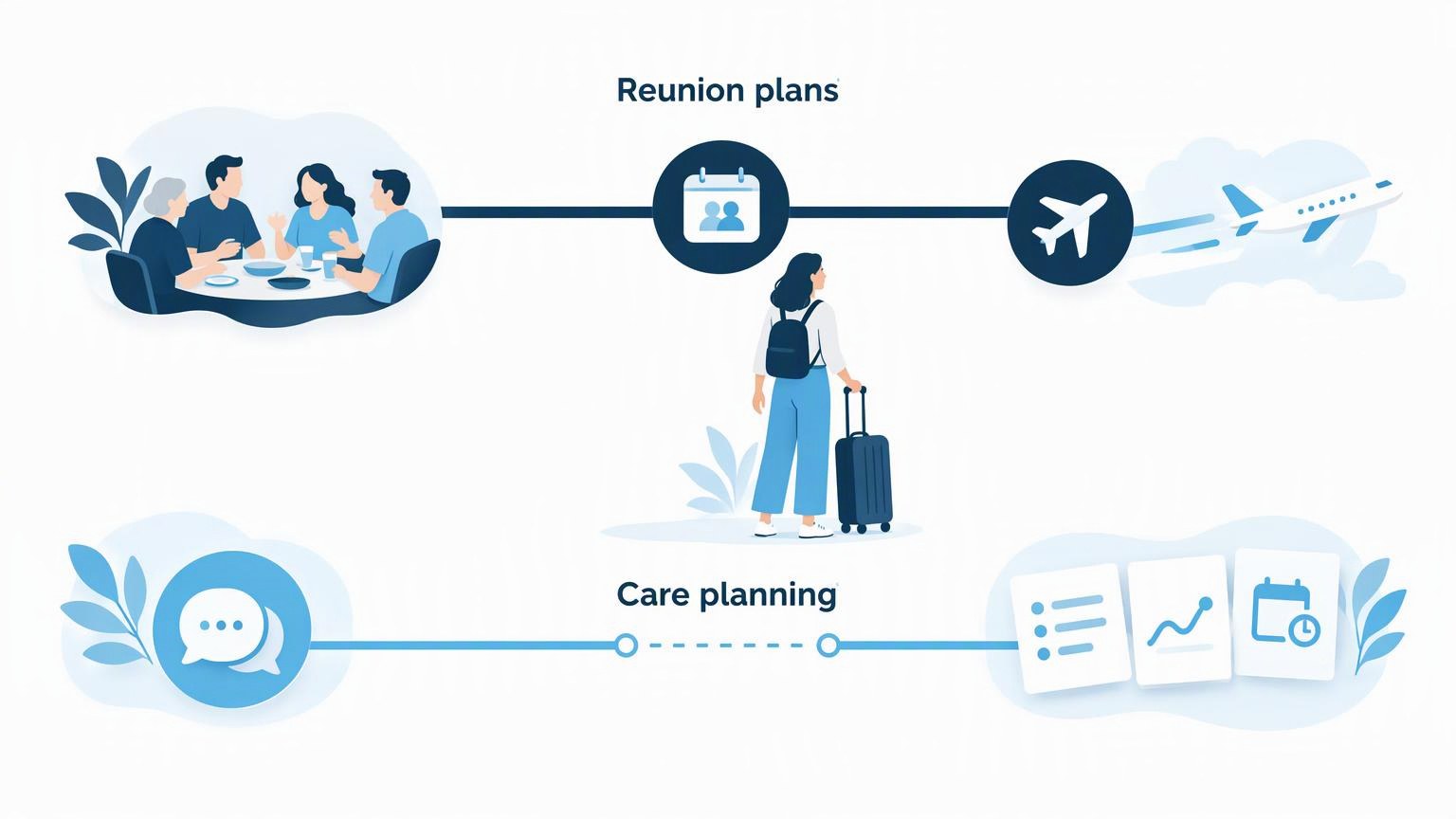
A reunion comes with commitments that a dental inquiry does not: a shared meal, family photographs, group lodging and an expected return home. The useful question is not whether you can squeeze in an appointment. It is whether the purpose of that appointment is clear enough to make the rest of the trip workable.
Choose reunion-only travel, consultation or treatment
Keep the trip reunion-only when being fully available for the gathering is your priority and care planning is unfinished. Consider a consultation when your goal is to understand options, not to promise treatment during the visit. Treatment belongs on the itinerary only after the treating clinician has explained the individual plan.
These choices carry different commitments. A consultation may help inform a later decision, but it does not establish eligibility, a final price or permission to begin treatment. Confirm its scope with the provider so you know whether you are arranging an evaluation or accepting a proposed procedure.
A combined treatment trip can be reasonable when the clinical requirements and your social priorities are compatible. The trade-off is that reunion activities become optional wherever they conflict with care instructions. If missing the main gathering would defeat the purpose of traveling, a separate care trip may be the better choice, even when combining travel initially seems convenient.
Research the care option before matching it to dates
Begin with the dental question you want evaluated, then look for a named clinician who can explain the proposed care. Do not start by choosing a package because its advertised schedule appears to fit the reunion.
Use searches combining the dental service under consideration and the reunion destination to find candidates, not to establish suitability. On each provider's own site, identify who would evaluate and treat you. Seek credential evidence that matches that person and the work proposed, rather than treating a clinic logo, membership badge or testimonial as proof.
Next, assess whether you can understand the consultation, consent discussion and follow-up instructions in English. Then examine how the provider proposes to handle questions after you return home. If the treating person or follow-up arrangement remains unclear, keep that option in the research stage instead of building travel around it.
Our guide to comparing dental providers in Mexico offers a related starting point. The reunion narrows your travel preferences; it does not establish which provider is appropriate.
| Situation | Suitable route | Reason | Trade-off |
|---|---|---|---|
| The reunion and return date are fixed; care planning is unfinished. | Reunion-only trip | Preserves the social commitment without relying on an unknown care schedule. | Dental evaluation happens separately. |
| You want an evaluation and have not decided on treatment. | Consultation during the visit | Keeps research distinct from accepting treatment. | The consultation takes time from the reunion and may lead to later travel. |
| An individualized care plan supports the travel window and follow-up. | Consider combining treatment and reunion | The decision rests on clinical planning rather than the event deadline. | Care instructions may take priority over social activities. |

What must the care team clarify before you commit to dates?
The care team must explain what is known about your proposed sequence and what still depends on evaluation. A reunion invitation cannot establish treatment suitability, length of stay or clearance to fly.
Privately mark your immovable commitments, such as the main gathering and return-to-work date. Use those to assess the clinician's plan, rather than asking the clinician to compress care around them. Clarify these points in the clinical planning conversation:
- Whether the visit is for evaluation, treatment or a defined stage of care.
- Which decisions remain dependent on the examination or requested records.
- What appointments, follow-up and possible later visits the plan requires.
- What instructions affect reunion participation, eating, activities or assistance.
- How the clinician will determine appropriate departure timing.
The result should make clear which dates the care plan supports and which still depend on evaluation. If departure depends on a later assessment, an added travel buffer is not itself clearance to fly. For implant research, our guide to dental-care records provides further preparation for a provider-led discussion.
Test the plan against a fixed reunion and return flight
A fixed return flight is a reason to separate the trips when the care team cannot yet establish an appropriate departure. The number of reservations matters less than whether a pending clinical decision controls them.
Say you are attending a reunion in Cancun, sharing a room with a relative and planning to return on the group flight. You are also researching dental implants, but no treating clinician has established your individual treatment stages or follow-up schedule.
Reunion-only travel preserves the gathering and the agreed return. A consultation-only visit could support later research if its purpose is clear and it fits the social itinerary. Committing to treatment is a different decision: the group flight cannot answer whether your care will be complete or whether departure is appropriate.
The reasoned choice is to preserve the reunion, with a consultation only if separately arranged and suitable. If a later clinical plan supports treatment, reconsider travel then. Your relative's departure is a lodging and companionship issue; any clinical assistance requirement must come from the care plan, not from sharing a room.
Compare dental charges, travel terms and insurance separately
Assess the combined trip using separate care and travel commitments, not an assumed saving from being in Mexico already. A reunion booking may cover travel you planned anyway, but it does not establish the total cost of dental care or a later visit.
Compare provider proposals on the services actually specified, including evaluation, treatment stages and follow-up. Keep lodging, transport and flight charges separate unless the applicable offer explicitly includes them.
If a clinician advises a longer stay, an extra hotel night is still a travel charge. The clinical reason does not establish who pays, whether the night is included, or which hotel change terms apply. You cannot determine those from the recommendation alone; the written agreements must address them.
Supplier cancellation, refund and change terms determine the consequences of altering each booking. Insurance is separate: cancellation, medical and evacuation coverage depend on the actual policy and claim conditions, including its treatment of planned dental care. Neither the provider's recommendation nor the existence of a policy establishes reimbursement. Compare both sets of terms before relying on flexibility.
Keep travel planning and clinical decisions in separate hands
We publish travel and consultation-planning guidance for adults considering care in Cancun or the Mexican Caribbean. Use that guidance to organize your research, then clarify whether your dental-care inquiry is within Hospitality Cancun's current scope. Eligibility, diagnosis, treatment suitability, recovery instructions and departure advice belong with the qualified treating clinician.
Before submitting any information through the contact section, establish who will receive it and for what purpose. If either is unclear, wait. The first submission allows only your name and email, with an optional contact-method preference. It does not include reunion details, dates, destination, a planning narrative or attachments.
Later, after the recipient and purpose are clear, ordinary travel details may be discussed with the confirmed travel contact. Diagnoses, scans and clinical records belong only in a named provider-confirmed secure channel. Do not send payment details or insurance identifiers through a general inquiry.
Permission to reply to your inquiry, optional marketing and referral to a specifically named provider are separate choices. A requested planning reply is not marketing consent or permission for a referral.
Frequently Asked Questions
Does an already-paid reunion trip make dental care cheaper?
It may reduce some additional travel spending, but it does not prove overall savings. Compare the complete care proposal, any added lodging or transport, and possible later travel. A fare you have already paid also does not remove the cost consequences of changing your return.
Should I promise a new smile before the family photographs?
No. A photograph date is a social preference, not a treatment outcome or clinical deadline. Tell the treating clinician about your goals during the appropriate consultation, but do not make promises to relatives based on an advertisement or an unevaluated plan. Keep appearance expectations separate from travel commitments.
Can a relative handle the dental decision for me?
A relative can help compare travel options or support a conversation, but that is different from evaluating treatment suitability or giving your consent. Arrange a discussion you can understand directly with the provider. Decide separately what information you want shared with family and what assistance you want.
Should I cancel existing dental appointments at home?
Do not cancel them merely because you are researching care abroad. Discuss continuity with your current dentist and the prospective treating provider before changing arrangements. An inquiry overseas is not a replacement care plan, and you should not assume a dentist at home has agreed to provide follow-up.
What if relatives expect me to join every reunion activity?
Set expectations before accepting shared plans. You can explain that a consultation takes time away from the gathering without sharing health details. If treatment becomes part of the trip, use the clinician's actual instructions to decide participation. Family enthusiasm does not establish that an activity is appropriate for you.