

Family and Travel Planning
Build a workable household plan before turning a possible travel window into a commitment.
A blank week on your calendar is not necessarily a supported week. School, work, caregiving, and the routines you usually manage still need owners while you are away. Start with the family arrangements you can control, then use the provider’s assessment to decide whether a possible window is workable.
Choose a Window With Coverage, Not Just Free Time
A regular school week may be the stronger option if established routines reduce the work your household helper must take on. A school break may work better when dependable daytime care is already arranged. Wait on travel commitments if either option leaves essential responsibilities uncovered.
Compare your own leave with the availability of everyone the plan depends on. A partner’s time off might make travel possible while removing the person who normally handles bedtime at home. A relative may be available for school pickups but unable to provide overnight care.
Begin by identifying possible windows privately. For each, mark fixed obligations and responsibilities that can move. Discuss availability directly with the provider before treating any window as possible; a family-friendly week does not establish that a procedure is offered or that the timing is suitable.
The comparison below helps you choose a window to investigate, not a surgery date to book. Its deciding factor is the work that remains covered while you are absent.
Give Each Household Responsibility an Owner
Reliable support means someone has agreed to specific duties and can realistically perform them. “Family will help” is not enough to distinguish a workable plan from one that still depends on you.
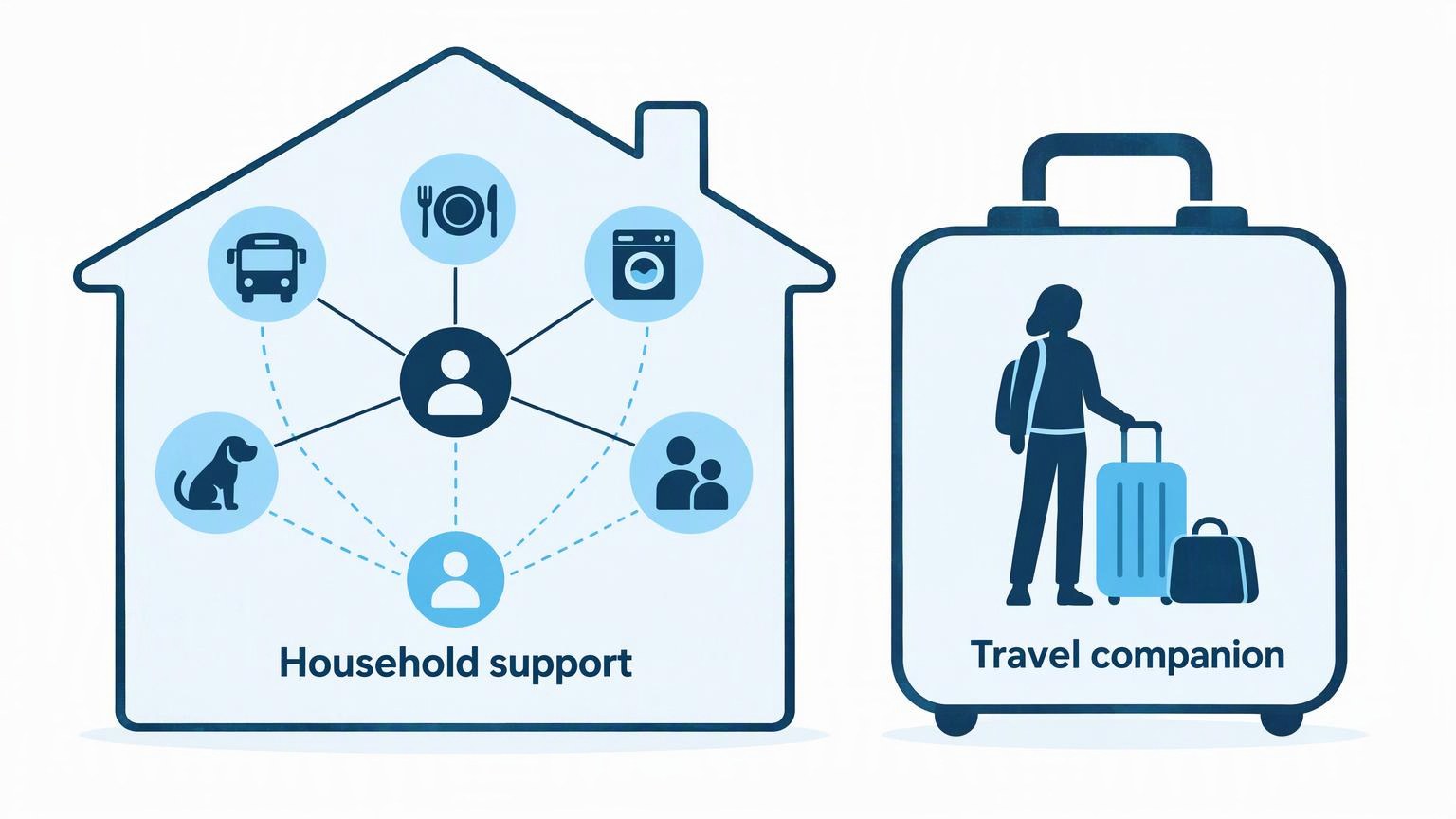
Build a short household coverage sheet for your own use:
- School or childcare drop-offs, pickups, and schedule changes.
- Meals, bedtime, laundry, and routine shopping.
- Care for other dependents and pets.
- A backup for illness, a missed pickup, or the main helper becoming unavailable.
Next to each duty, write the responsible person and backup. Include practical access arrangements and routine instructions where needed. If someone is unfamiliar with the routine, walk through it together before relying on that coverage.
Keep this home plan separate from travel-companion duties. Someone accompanying you cannot also be the person physically responsible for children at home. Likewise, a helper covering the household does not automatically provide the assistance your care plan may require in Mexico.
Resolve gaps by reallocating tasks, arranging additional help, or choosing another window. Do not count an unconfirmed offer as settled coverage.
| Situation | Suitable Option | Reason | Trade-off |
|---|---|---|---|
| Established school routines and dependable pickup help | Explore a regular school week | Existing daytime structure reduces replacement caregiving | School transportation and evenings still need owners |
| School break with confirmed daytime and overnight care | Explore the break | Coverage can accommodate the absence without school logistics | Work leave and companion availability must also fit |
| Essential duties depend on an exact return date | Postpone travel commitments | There is no dependable fallback if timing changes | The preferred window may need to be reconsidered |
Let the Provider Define the Medical Timing
The treating clinician must determine suitability, the proposed care plan, follow-up needs, and individual travel guidance. Your family calendar is an input to that discussion, not a reason to shorten it.
Keep the timing decisions separate: consultation, any proposed procedure, follow-up in Mexico, return travel, and resuming household tasks. A date for one does not settle the others. Length of stay and flight timing depend on the clinician and follow-up plan, rather than a standard number of days found in a package description.
During the provider discussion, explain the responsibilities you normally perform. Concrete examples such as carrying a child, driving for pickups, or caring for another adult give the clinician clearer context than “I need to get back to normal.” Ask how the proposed plan affects those tasks.
Also distinguish ordinary companion assistance from clinical support. Do not assume a relative or hotel service can perform clinical duties. Our guide to clarifying care roles in Cancun provides a separate framework for that discussion.
Work Through a School-Break Conflict
When companion availability and childcare compete, favor the window with complete household coverage, provided the clinician’s plan can also fit. The most convenient week for one adult may not work for the whole household.
Say you handle school transportation and bedtime. Your partner can travel during a school break, but your child has no established daytime care then. During a regular school period, a relative can handle pickups and evenings, while another trusted adult may be able to accompany you.
The break offers partner availability but leaves daytime childcare uncovered. The regular school period preserves daytime structure but requires the other adult to confirm the travel role and availability. Neither option is complete simply because someone has time off.
If that adult agrees and the home coverage is dependable, the regular school period becomes the stronger window to discuss with the provider. If the needed support or clinical timing cannot fit, postpone travel planning. Do not make the school break work by expecting yourself to manage childcare during a procedure trip.
Plan the Return Handoff and a Changed Itinerary
Household coverage should continue through the transition home, with duties reassigned according to the clinician’s guidance. Landing does not itself establish readiness to resume your usual tasks.
Make the arrival-day handoff concrete: who handles meals, collects the children, and manages bags or transportation? Agree on how your helper will receive any schedule update. Identify what activates the backup, such as a delayed return or the primary helper becoming unavailable.
Keep ordinary booking changes separate from clinical support. If a longer stay is recommended, changing flights and lodging is a logistics task; any additional clinical assistance must come from the actual care plan.
An extra hotel night remains a travel charge even when the reason is clinical. Who pays, whether it is included, and what cancellation or change terms apply depend on the relevant written agreements. Insurance coverage and claim conditions are separate from supplier obligations; neither should be assumed.
For the financial comparison beyond household scheduling, see what to compare in a mommy makeover Mexico cost plan.

Separate Travel Planning From the Provider Conversation
Use our travel and consultation-planning guidance to organize the visit, then discuss procedure availability, timing, and required support directly with the provider you are considering. Destination information is not confirmation of a clinical service.
Before submitting any information through a general inquiry, clarify the recipient and purpose. The first submission is limited to name and email, with an optional contact-method preference. Do not include a family plan, dates, companion details, health narrative, attachments, payment details, or insurance identifiers.
Later, ordinary travel arrangements can be discussed with the confirmed travel contact. Diagnoses, scans, and clinical records belong only in a named provider-confirmed secure channel.
Permission to answer your requested inquiry, optional marketing, and referral to a specifically named provider are separate choices. A requested reply does not authorize marketing or referral. Keep your household notes private until the appropriate later discussion.
Frequently Asked Questions
How much should I tell my children about the trip?
Focus on the practical changes they will experience: who will care for them, which routines stay the same, and how you will stay in touch. You can keep personal treatment decisions private. Avoid promising an exact return or immediate return to every activity while those details remain unsettled.
Does remote work count as time available for the trip?
Do not count remote work as leave simply because it can be done away from home. Separate employer obligations from the time the provider’s plan may require. Resolve availability expectations with your employer and discuss work demands with the clinician before building a schedule that depends on working during the visit.
What if I am also responsible for an older relative?
Include that care in the household plan rather than treating childcare as the only responsibility. Identify the visits, meals, transportation, or other tasks you normally provide and assign them to someone who can actually perform them. Where professional care is involved, arrange the handoff with that existing care service.
Can a friend help without knowing my medical details?
Yes, household help can be organized around tasks without sharing diagnoses or records. A friend handling school pickups needs the relevant routine and access arrangements, not your clinical history. If someone will assist with care during the trip, discuss the information and instruction needed for that role with the treating provider.
Is it reasonable to explore care now but travel later?
Yes. Learning about a provider’s availability and discussing your priorities does not require committing to a travel date. You can use that discussion to understand the planning demands, then revisit your calendar when support is dependable. Any later clinical plan and timing still need to be settled with the provider.